NUS centre promotes Japan-ASEAN research on regional security, technology, migration and economic cooperation.
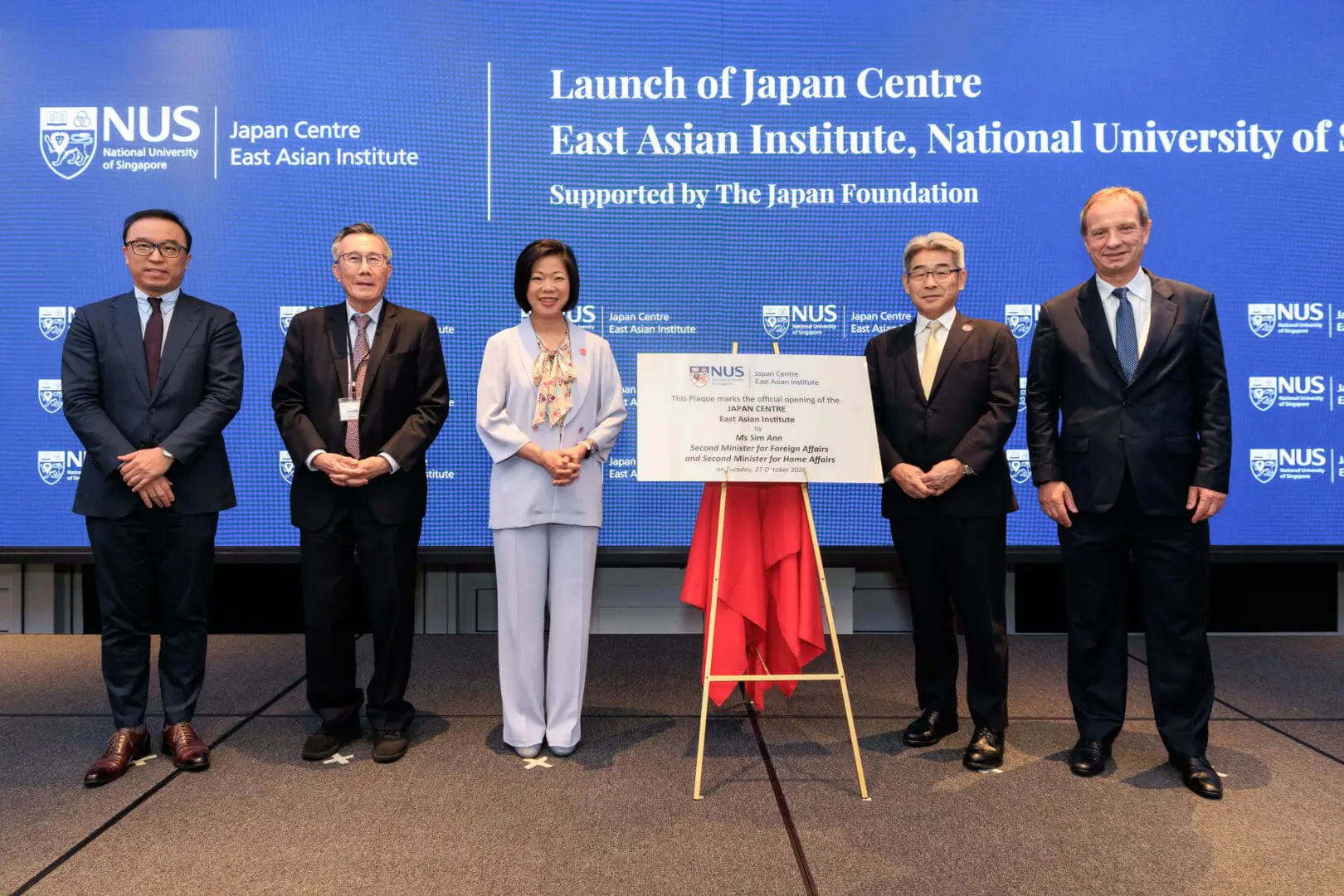
The National University of Singapore’s (NUS) East Asian Institute (EAI) launched its Japan Centre on 27 October 2026 at the Four Seasons Hotel in Singapore, with Ms. Sim Ann, Second Minister for Foreign Affairs and Second Minister for Home Affairs, officiating the launch and delivering a keynote address. The centre aims to advance research on contemporary Japan and its relations with Asia, while developing partnerships between Japan and ASEAN through academic exchange, policy dialogue and collaborative research.
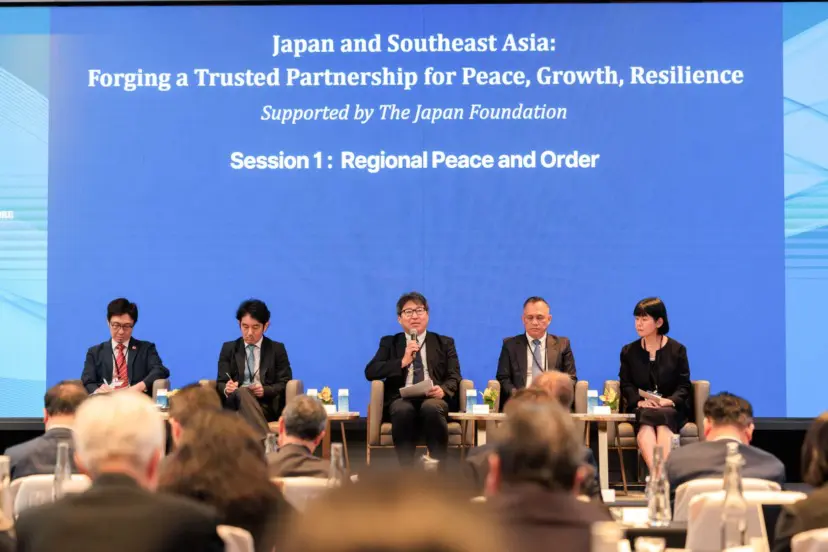
The launch followed the centre’s inaugural conference, titled “Japan and Southeast Asia: Forging a Trusted Partnership for Peace, Growth, and Resilience”. The conference examined regional security and order, economic cooperation and resilience, and technology, society and culture. The Japan Foundation supported the centre and conference through a grant.
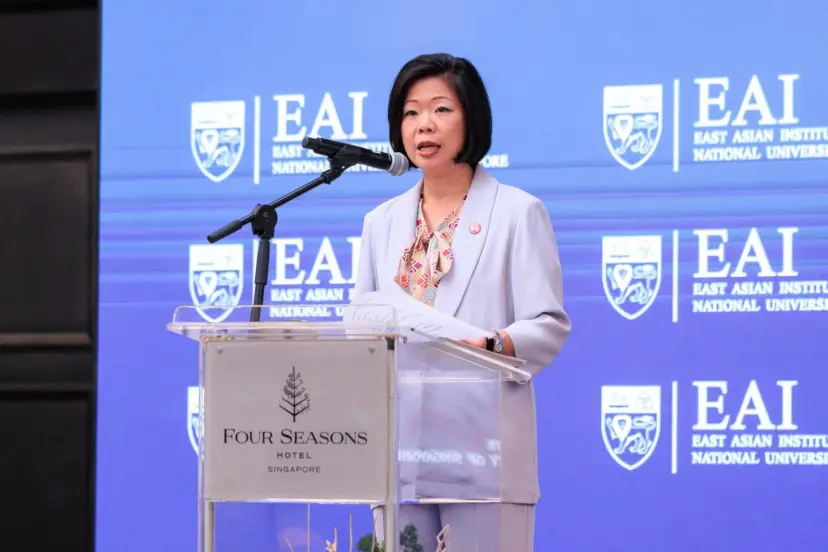
In her keynote address, Ms. Sim Ann, Second Minister for Foreign Affairs and Second Minister for Home Affairs, highlighted the evolution of Japan-Southeast Asia relations into a partnership based on trust, mutual respect and shared interests. She emphasised the importance of cooperation in trade, investment, technology and regional security, while identifying the Japan Centre’s potential to advance independent research, develop practical policy ideas and nurture future experts through academic exchanges. “I hope the Japan Centre can carry forward the spirit of heart-to-heart understanding, building bridges between our societies, deepening our knowledge of one another, and developing new ideas for a peaceful and prosperous future,” she said.
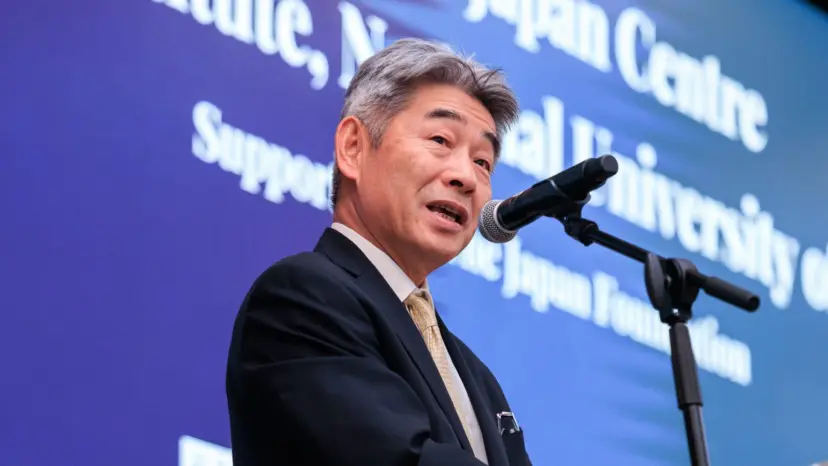
At the launch, H.E. Ishikawa Hiroshi, Ambassador of Japan to Singapore, highlighted the Japan Centre’s role in strengthening academic and intellectual exchanges between Japan and Singapore, particularly as the two countries marked the 60th anniversary of diplomatic relations in 2026. Looking ahead to Singapore’s ASEAN chairmanship and the 50th anniversary of the Fukuda Doctrine in 2027, he expressed hope that the centre would deepen regional cooperation. “I hope the Japan Centre will serve as a vital hub for the accumulation and sharing of knowledge between Japan and ASEAN nations,” he said. He also underscored the importance of upholding international maritime law and strengthening regional economic resilience amid geopolitical tensions, citing Japan’s Power Asia initiative to support energy security in Asia.
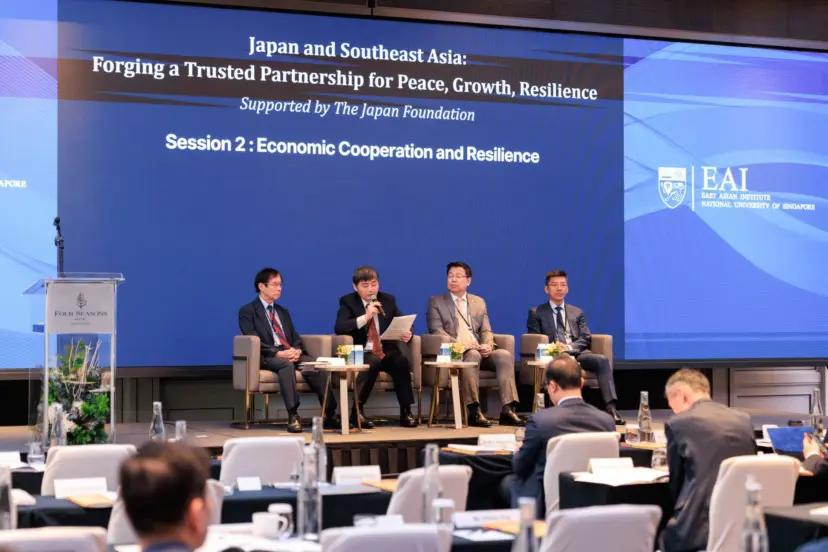
During a discussion on science, technology and society, Professor Nobuhiro Aizawa, Dean and Managing Director, ERIA School of Government, ERIA: Economic Research Institute for ASEAN and East Asia, examined Japan’s approach to balancing prosperity, safety and freedom. He described Japan’s social model as one that catered to the middle class, emphasising investment in human capital, scientific research and technology to support public welfare.
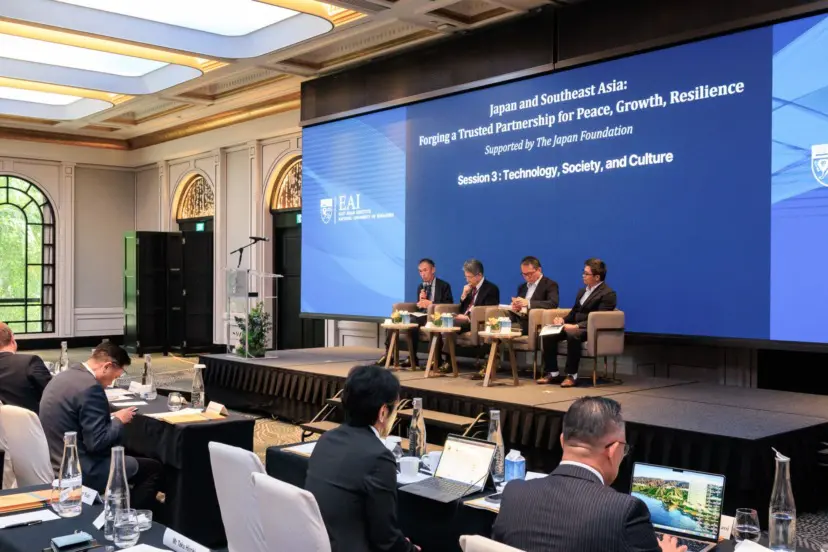
“Society 5.0”, introduced in Japan’s science and technology policy framework in 2016, prioritised public benefit and human well-being. Professor Aizawa explained that the subsequent concept of “co-creation”, introduced in 2023, reflected the need for Japan and Southeast Asian countries to work together in addressing shared social and technological challenges.
He cited Japan’s development of QR code technology and support for Cambodia’s Bakong payment system as examples of regional technological cooperation. He noted that such initiatives demonstrated how cooperation could facilitate domestic financial access and cross-border payments.

Another presentation examined migration pathways between Japan and Southeast Asia. Assoc Prof Ron Vilog, Associate Professor, De La Salle University, Philippines, discussed the experiences of migrant workers, particularly from the Philippines, Vietnam and Indonesia, alongside Japan’s demographic challenges and evolving labour policies. His presentation addressed concerns surrounding the Technical Intern Training Programme and the transition towards the Specified Skilled Worker system.
The subsequent discussion considered human resource development and migrant integration. Participants also highlighted the Japan-Singapore Partnership Programme for the 21st Century, established in 1997, which had trained more than 7,000 participants through 420 courses, covering technical skills and government knowledge.
The Japan Centre will conduct research on Japanese domestic policy, foreign relations and regional partnerships, while supporting academic exchanges and engagement with ASEAN.
Source: IN Diplomacy Reporter