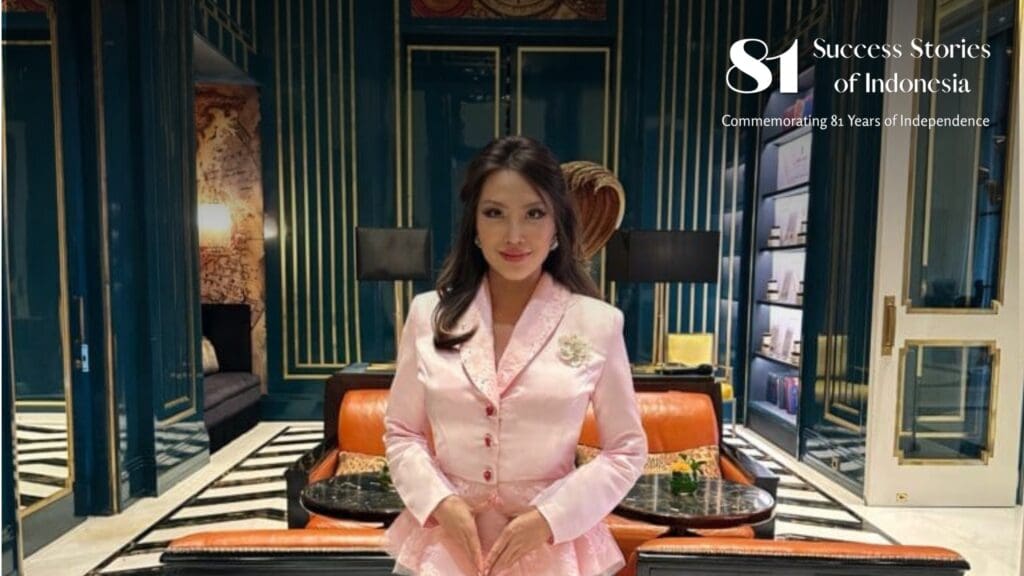
Vindy Lee reflects on Indonesia, cultural identity, food and the enduring value of respect.
As Indonesia marks its National Day, Sun Media’s 81 Success Stories of Indonesia celebrates people whose work, experiences and perspectives reflect the many ways Indonesia continues to make an impact at home and abroad. The series brings together stories of Indonesians and Indonesia-connected individuals across different fields, highlighting the people, values and achievements that contribute to the country’s story and strengthen its connections with the world.
Among them is Ms. Vindy Lee, an Indonesian chef, cookbook author and certified etiquette trainer whose career has taken her across Indonesia, Singapore and the United States. Her work spans food, television and etiquette, while her experiences across cultures have shaped how she sees Indonesian identity, hospitality and the importance of respect.
Ms. Lee is an Indonesian chef, cookbook author and certified etiquette trainer who has also built a television career around food. She has authored three cookbooks and hosted several Indonesian cooking programmes. Today, she focuses on etiquette training and shares short-form educational content on social media.
Ms. Lee spent her first seven years in Indonesia before moving to Singapore. She later moved to Los Angeles in 1999, attended Santa Monica College and graduated from the University of Southern California with a double degree in International Relations and East Asian Language & Culture. She subsequently returned to Indonesia, where she continued her culinary career before moving into etiquette training.
Speaking to IndoConnect for Indonesia’s National Day, Ms. Lee reflected on the experiences that continue to shape her connection with the country.
For Ms. Lee, Indonesian food is closely associated with childhood. She remembers the tastes, sounds and familiarity of Indonesia, along with her parents, herbs, spices and the food around her. She also recalls visiting kampungs and encountering food that was mostly naturally organic. Later, Indonesian coffee became another connection to the country as she saw it exported around the world.
Her understanding of etiquette developed alongside those early experiences. Growing up in a Chinese family, Ms. Lee was accustomed to many formalities, particularly from her father’s side. She recalled learning that personal presentation could demonstrate respect for others. As she grew older, she came to understand why those habits mattered. Even sitting straight, she explained, can show consideration for the people around you.
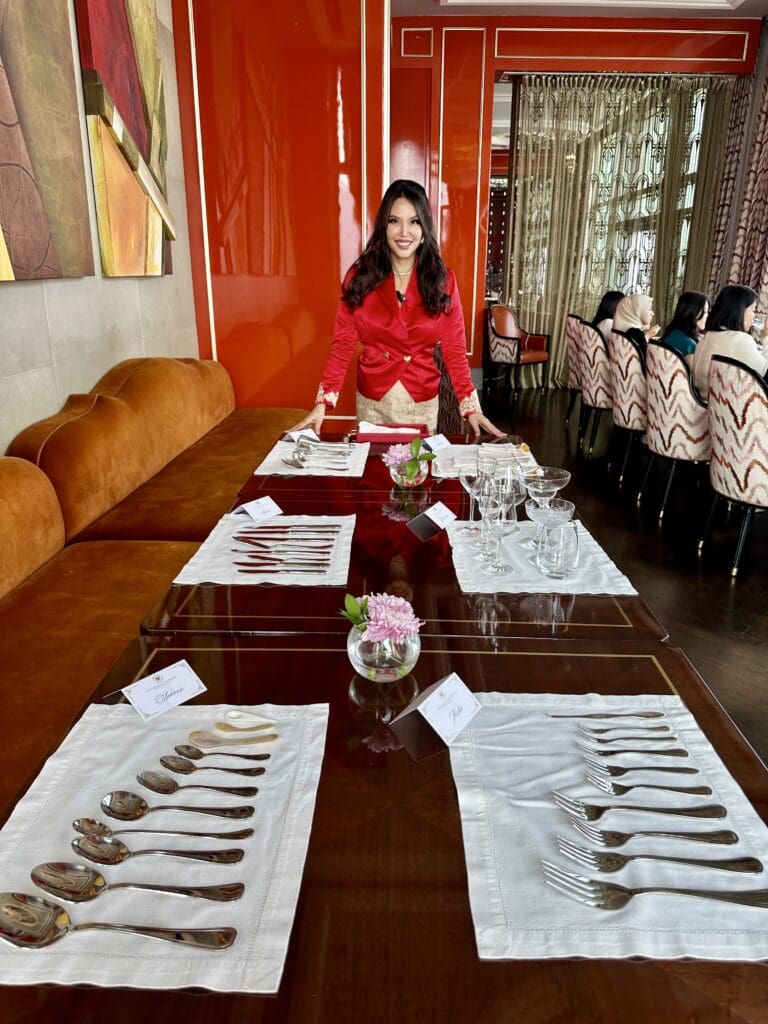
That principle of respect is also central to how Ms. Lee views dining across cultures. Indonesian and Western dining traditions have different customs and practices. In Indonesia, particularly among the Muslim population, eating with the right hand is common, while Western dining involves different utensils for different courses and foods. For Ms. Lee, however, the differences do not change the underlying principle of respecting others.
Ms. Lee now shares these ideas through social media, although she initially did not expect her content to gain significant attention because etiquette is a niche subject. The response eventually showed her that people were interested in learning about it. Some followers living in kampungs told her they might never experience fine dining but continued to follow her content.
Those responses made Ms. Lee think about access to information. She sees etiquette as extending beyond formal dining to everyday interactions, including how people speak to their parents, handle difficult situations and deal with bullying. She also believes the subject has become increasingly relevant as people have fewer opportunities to meet and practise social interaction.
Traditional Indonesian families, she noted, continue to teach etiquette in their own ways. At the same time, Ms. Lee believes modern families need this education more than before. With fewer opportunities for face-to-face interaction, she said people may have fewer chances to practise social skills and learn how to make a good impression.
Her experiences across cultures also inform how she sees Indonesia. Ms. Lee describes the country as rich in resources and its people as energetic, kind and courteous. She points to the willingness of even strangers to help, alongside Indonesia’s food, islands and colourful cities. Although she feels the country can sometimes be misunderstood, her view is that people should experience Indonesia for themselves.
That connection continues to keep Ms. Lee in Indonesia. Her family is there, while the country also offers a wide range of experiences, from the mountains around Bogor to the bustle of Jakarta and the resort atmosphere of Bali.
For Ms. Lee, Indonesia remains closely connected to its food, people and everyday kindness. Her experiences abroad have given her a broader perspective, but they have not diminished her connection with home. Her hope for greater connection across cultures is captured in the words with which she ended the conversation: “One life at a time together.”
Written by: Ciara Leon