Driverless metros, energy-efficient locomotives and advanced engineering shape Alstom’s journey in India.
India’s railway sector is undergoing rapid expansion, with new metro networks, advanced signalling systems and electric locomotives changing how people and goods move throughout the country. For Alstom, whose journey in India began with the Kolkata Metro project in the 1990s, the country has grown into an important manufacturing, engineering and export base serving both domestic and international markets.

In an exclusive interview with INDiplomacy, Ms. Ling Fang, President of Alstom Asia Pacific, explaines the company’s industrial footprint in India, growing demand for modern rail solutions and its contribution to the Make in India initiative. She also shares insights into driverless train technology, green engineering and last-mile connectivity, highlighting Alstom’s efforts to support India’s ambitions for more accessible and sustainable transport.
How has Alstom evolved in India from your first Kolkata Metro project in 1990 to 6 factories and 12,000 employees today?
Alstom’s journey in India includes large scale transformations in the rail space. Starting with the Kolkata Metro project back in the 90’s, today, we are a fully integrated, self-reliant mobility partner. With 6 manufacturing facilities, 5 engineering centres, and over 12,800 employees, India is now a central node in Alstom’s global network. We have transitioned from import dependency to deep indigenisation.
We are driving the rail network modernisation in India through advanced manufacturing, maintenance, and signalling technology across urban, regional, and mainline sectors. In urban mobility, Alstom provides a combination of rolling stock, signalling, maintenance solutions to nearly all metro projects, including major cities such as Delhi, Chennai, Mumbai, Bengaluru, etc.
We are committed to supporting newer metro networks in the country, as we gear up for some noteworthy milestones in Mumbai, Chennai, Kochi and more. For mainline operations, Alstom’s WAG-12B electric locomotives are upgrading freight transport and helping Indian Railways achieve decarbonisation targets.
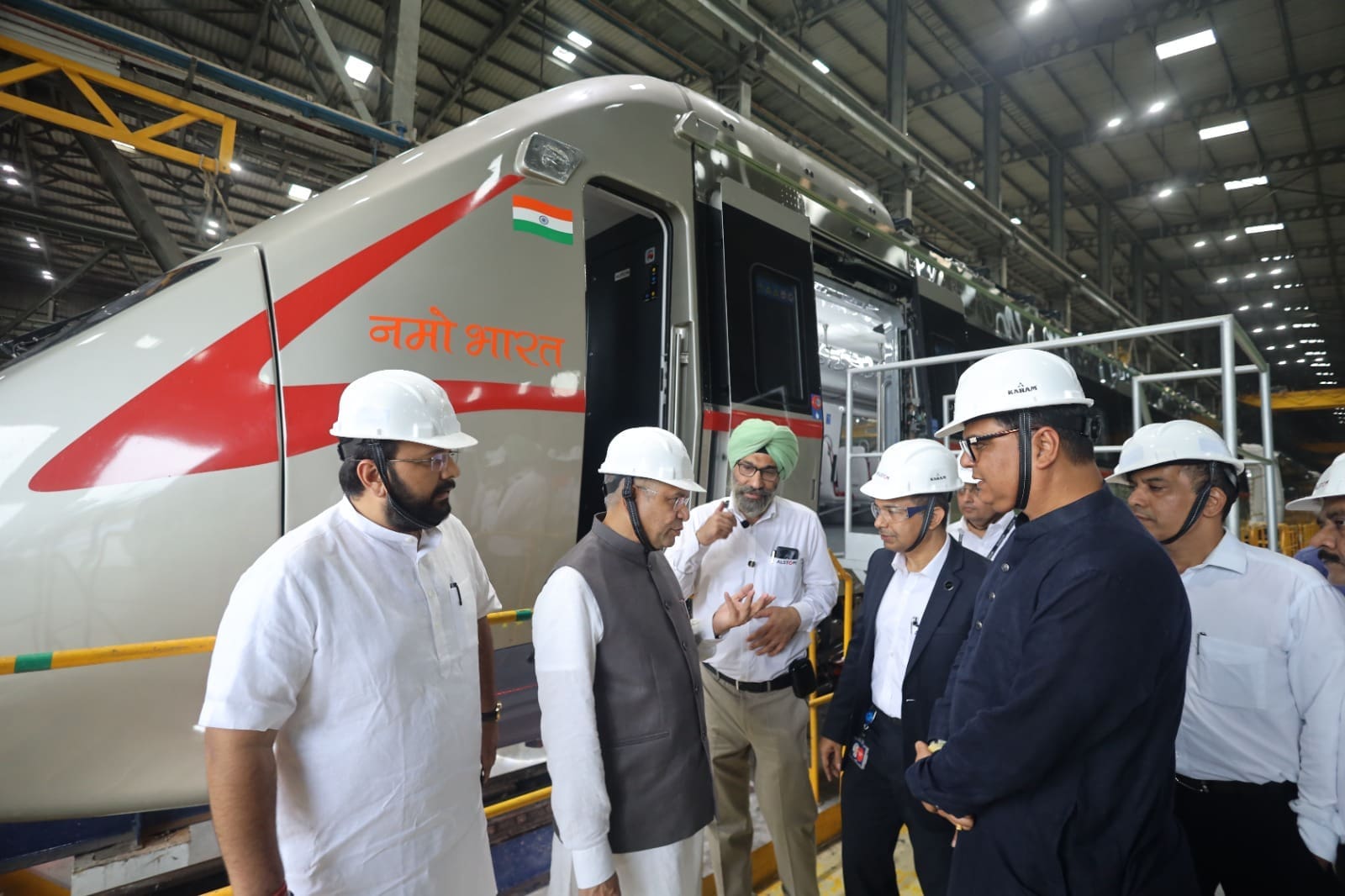
Further, we have provided electrification and signalling along 343 km of the eastern dedicated freight corridor. Alstom has also supplied ‘Made in India’ NaMo Bharat trains to NCRTC, India’s first and only semi high-speed regional rail system. This provided an opportunity for Alstom to also make the world debut of European Train Control Systems (ETCS) for this service.
Which part of your portfolio is seeing strongest demand in India right now – metros, mainline e-locos, or services?
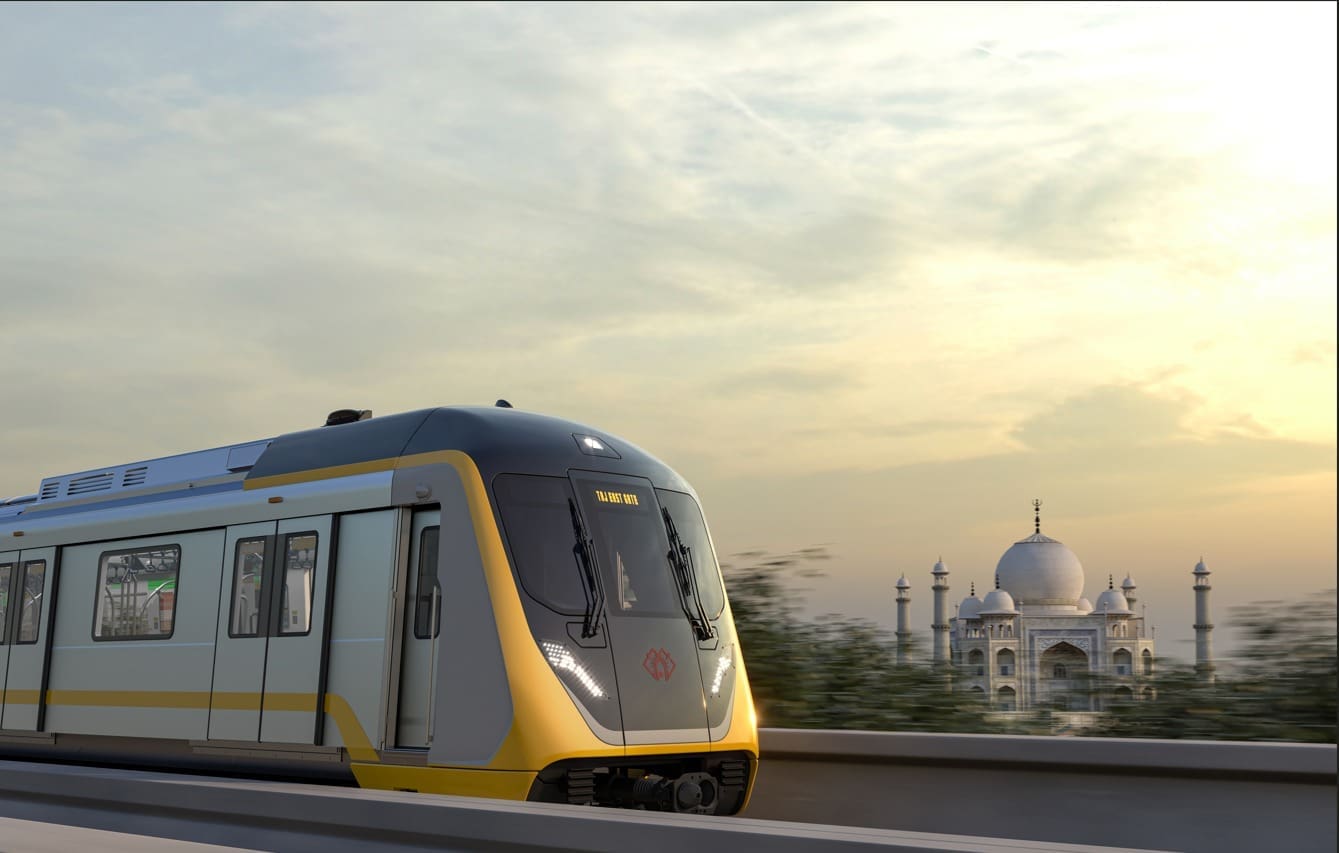
In India we have a very robust pipeline as per our orderbook and tenders ahead. Given our depth and breadth of domestic market experience, we are well positioned to take on the big-ticket projects in high speed, urban and mainline rail space. As a case in point, urban metros remain a massive volume driver—we are currently executing highly integrated projects like the 312 driverless cars for Delhi Metro Phase IV and 204 cars for Chennai Metro Phase II.
Rail maintenance is a growing domain for asset longevity and reliability in India’s advanced railway ecosystem. As tenders are getting shaped with maintenance bundled-in and the sector is also gradually moving to a total cost of ownership model, we are poised for a consistent growth in this domain too.
As India’s rail networks mature, operators are shifting their focus to Total Cost of Ownership (TCO). They want long-term lifecycle partnerships extending 15 to 35 years. By integrating our manufacturing prowess with our digital predictive maintenance tools, we are securing these long-term service contracts, guaranteeing fleet availability, and ensuring that our Services portfolio remains a central pillar of Alstom’s growth story in India.
How are you scaling Make in India at Sri City, Savli and Madhepura to keep up with India’s metro and railway expansion?
We scale by assigning highly specialised, distinct mandates to each facility. Sri City and Savli are our urban and export powerhouses. This allows us to adapt precisely to the bespoke needs of each city for their domestic metro projects, ensuring strong output in terms of quality and timeliness, while also engineering exports.
Our facility in Sri City (Andhra Pradesh) is the hub for smart manufacturing of rolling stock for both domestic and international projects. It boasts the longest dynamic test track in India and achieves approximately 90% localization in its production. Savli (Gujarat) is one of our leading sites for the manufacturing, testing, and commissioning of trains for domestic projects. It also plays a crucial role in our global supply chain by exporting bogie frames and flat packs internationally. Coimbatore (Tamil Nadu) is Alstom’s largest components manufacturing facility globally. It specializes in the mass production and testing of converters, motors, and electrical components, supplying to over 70 projects across five continents.
Madhepura, is home to our joint venture with Indian Railways, MELPL, it is the anchor of India’s freight modernisation where the WAG-12B—India’s most powerful electric locomotive—is being made. In addition to the above we have manufacturing capabilities in Kolkata (West Bengal) and Maneja (Gujarat) that ably support our project needs. Our scale of operations also come from our focus on localization which we have strengthened over the years to nearly 85%-90%.
With 25% of Group engineering done in India, what is India’s role in your global engineering and innovation network?
We have built a robust local industrial ecosystem supported by extensive development capabilities and supply chain. This has allowed us to Make in India, not only to meet the domestic demands but also significantly contribute to exports. This is in line with the Viksit Bharat vision of the government of India. To that end, currently, almost 33% of our global engineering activities are executed in India, and we aim to increase this further, strengthening our contribution to domestic and international needs.
Our Indian teams lead and support global product engineering, manufacturing and innovation. In signalling, for example, 30% of our global engineering is executed from India driven by investments like our Digital Experience Centre in Bengaluru. Our know-how to develop products and solutions for India and the world, is very strong, making us command a leadership position in the rail space.
India is your 3rd largest market and a third of APAC revenue. How do you see India as a manufacturing and export hub beyond domestic projects?
India is one of the key pillars of our global supply chain. In keeping with the domestic and international needs our facilities are built with a clear “Make in India for India and the World” focus. For example, our components manufacturing unit in Coimbatore is the largest for us in the world, exporting traction converters and motors to over 70 projects across five continents.
Savli consistently exports bogie frames internationally and will build the battery trains for Wellington New Zealand and Sri City designs and manufactures complete trainsets for global mega-cities like Sydney and Montreal. As our local supplier ecosystem deepens, India’s role as a highly competitive, export-grade manufacturing hub is set to grow.
You brought ETCS Hybrid Level 3 over LTE to the Delhi-Meerut RRTS. Which technologies will matter most for India’s next phase – CBTC, Kavach, or battery trains?
India’s rapid urbanization means the challenge is no longer just laying tracks, but maximizing network capacity, frequency, and safety. Therefore, our signalling technologies address distinct, complementary needs. To manage massive urban footfalls, CBTC is essential for running trains safely at tighter intervals. We are driving CBTC innovations—including advanced driverless GoA4 technology—across major metros to maximize passenger throughput. Further, Alstom supported the global debut of ETCS Hybrid Level 3 from India with the Delhi-Meerut Rapid Rail Transit System (RRTS) by NCRTC and ETCS will likely have a long runway in the India context.
We are among the largest signalling solutions provider for railway networks around the world. Our global expertise and local understanding places us uniquely in India’s rail modernisation roadmap, by building technologies required to push this agenda forward. One of our largest signalling innovation labs is in India in Bangalore and it is equipped to consistently improve and innovate on the current and next generation signalling technologies for both urban and mainline rail.
How are you adapting green technologies like energy-efficient traction for India’s cost and climate conditions?
We address cost and climate resilience through “eco-design” and deep localisation. India’s operating conditions are extreme. Our WAG-12B freight locomotives feature sealed, thermally resilient propulsion systems designed to endure intense summer heat (up to 50°C) and heavy monsoons.
To optimize energy, we use smart, occupancy-based HVAC systems and lightweight composite materials. Furthermore, our regenerative braking systems reduce traction energy consumption by 15-20% in mass transit. By engineering and sourcing these advanced green technologies locally, we achieve the cost efficiencies necessary for the Indian market without compromising on global performance standards.
What are the biggest challenges in delivering large rail projects in India, and how have you adapted?
The sheer scale and complexity of Indian rail projects require immense supply chain resilience and operational agility. We adapted through aggressive localisation—bringing our domestic sourcing at Madhepura to nearly 90% by actively developing local MSMEs into world-class suppliers. To manage tight project timelines and scale, we have deployed digital solutions at varied stages of a project’s lifecycle.
How does Alstom’s vision align with India’s vision for sustainable mobility for 1.4 billion people?
Alstom’s vision for India is not only to grow the network, but to expand who can access it — and we pursue that through three connected levers: continuous innovation in our products, a green-first approach to design, and community programmes that solve the last mile.
On products, our growth is increasingly powered by innovation conceived and engineered right here in India — I’ve referenced already examples such as GoA4 driverless metros and CBTC signalling. This pipeline of innovation is what lets India’s rail expansion happen faster, and smarter.
We are also convinced that the future of mobility is green, and we are already engineering for it: energy-efficient traction, regenerative braking, lightweight composites and thermally resilient systems built for India’s climate. This is how Alstom is answering the call for decarbonisation — by making sustainability a design principle in every train and locomotive we build.
But India’s mobility vision, and ours, is ultimately about accelerating a modal shift to rail — getting more people onto rail, not just running more trains. That is why our community work is such an important complement to our core business: Programs like Low Emission Access to Public Transport (LEAP) is improving last-mile access to metro stations in Bangalore, while Sugati extends that same first-and-last-mile connectivity to underserved communities and through research has proposed a mobility Rubrik that can assist in how we design the last mile, so the journey to and from the station is as seamless as the journey itself. By pairing product innovation and green design with programmes that solve the last mile, Alstom is helping accelerate rail expansion and moving more of India’s 1.4 billion people, sustainably.
Source: IN Diplomacy Reporter