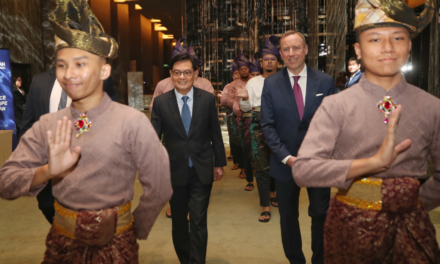
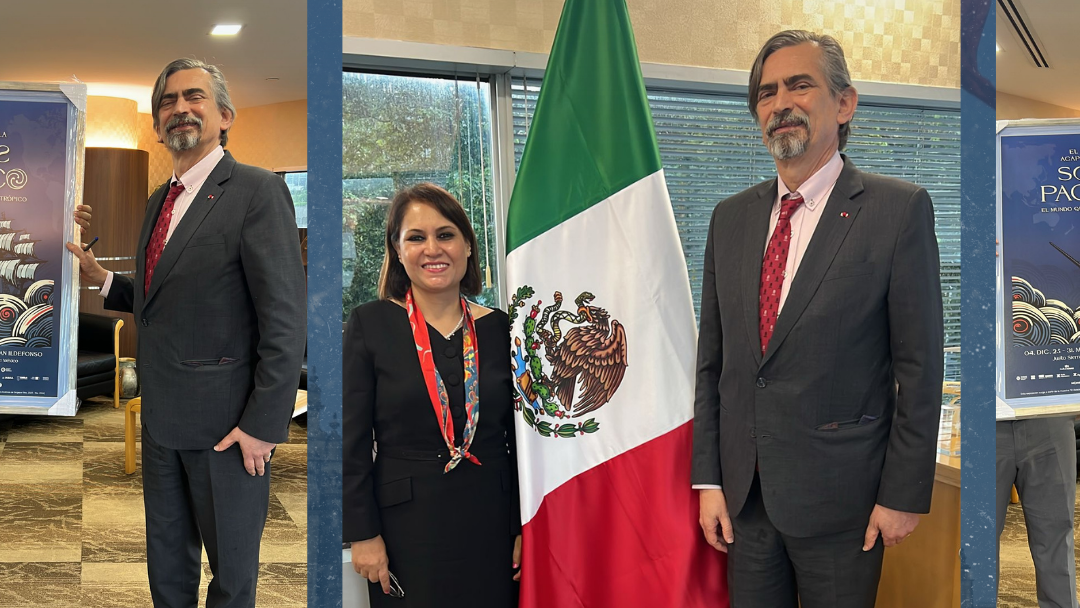
The courtesy call highlighted the historical, cultural, and economic ties connecting Mexico, Asia, and Singapore, underscoring a shared Pacific heritage
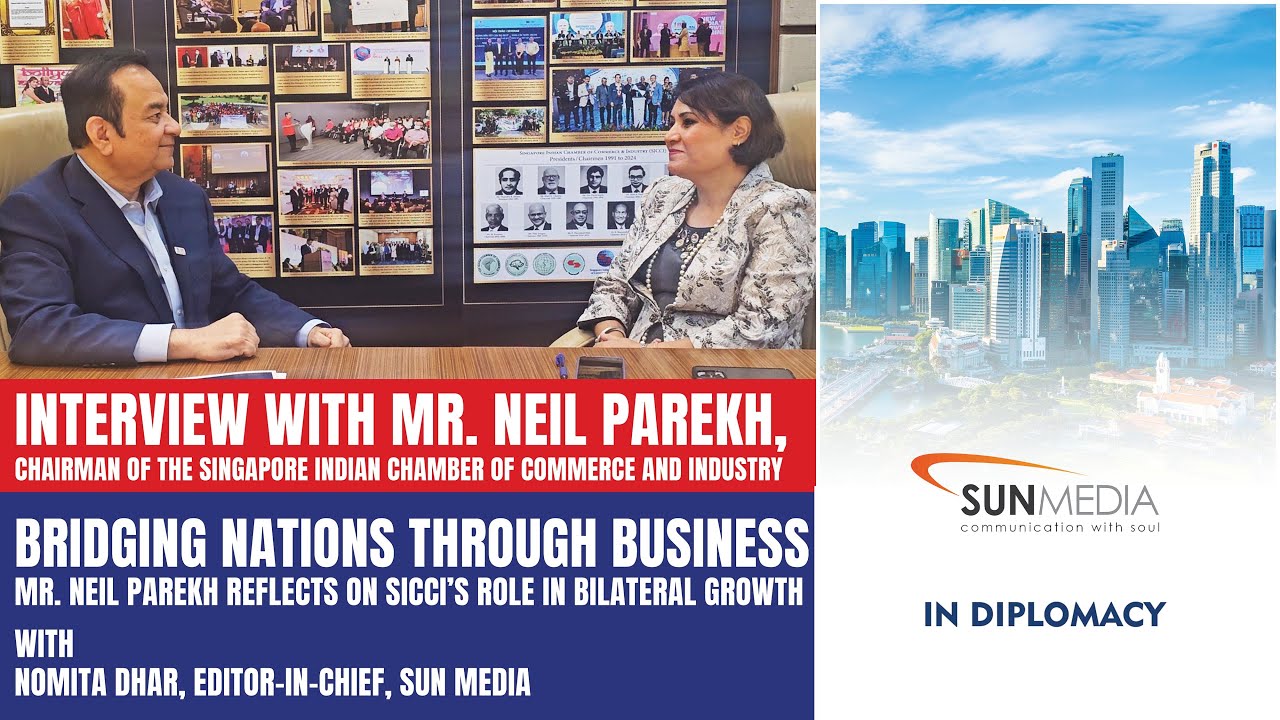
IN Diplomacy sat down with Ms Nomita Dhar, Editor-in-Chief of Sun Media, in conversation with Dean of Diplomatic Corps, the Mexican Ambassador Agustín García-López Loaeza, to discuss the deep historical roots and evolving partnership between Mexico and Singapore.
The wide-ranging interview explored centuries-old maritime trade routes across the Pacific, the cultural and economic exchanges that shaped early globalisation, and the contemporary significance of Mexico–Singapore relations amid shifting geopolitical dynamics. Against the backdrop of the 50th anniversary of diplomatic ties and Singapore’s announcement of a resident embassy in Mexico, the discussion highlighted shared values, growing economic cooperation, and the strategic importance of strengthening bilateral engagement for the future.
You mentioned earlier that Mexico and Singapore share historical connections that go back centuries. Could you elaborate on that?
Yes, absolutely. One interesting anecdote is that when then–Prime Minister Lee Hsien Loong visited Mexico and addressed the Senate, he referred to how Sir Stamford Raffles acquired land from the Sultan using Mexican silver coins. This reflects how deeply interconnected our histories are through global trade.
Here at the museum, you can even see chests containing original silver coins. These coins were highly valued because they were difficult to counterfeit. China, in fact, decided to accept these silver coins instead of gold for taxes and trade, as their authenticity could be trusted. Over time, China accumulated one of the world’s largest silver reserves.
Why were these silver coins so important, particularly in Asia?
China made a deliberate decision to accept silver coins instead of gold for taxes and trade, as their authenticity could not easily be altered. Unlike other coins that could be cut or diluted with cheaper metals, these silver coins maintained their integrity. As a result, China accumulated one of the world’s largest reserves of silver, driven by its successful trade networks.
These coins also played a role in shaping modern currencies, didn’t they?
Yes. The Spanish dollar, also known as the Pillar Dollar, became the first widely used currency in the American colonies because they were not allowed to mint their own coins. This Spanish dollar later became the model for the US dollar. The two columns on the coin inspired the dollar sign we recognise today, and the image of the Spanish king was eventually replaced with George Washington.
How did Mexico, the Philippines, and Asia become so closely linked historically?
It began with early European exploration. Christopher Columbus believed he had reached Asia when he arrived in the Caribbean. Later, Ferdinand Magellan discovered a navigable route around South America, now known as the Strait of Magellan, which allowed ships to reach the Philippines.
Eventually, under the Viceroyalty of New Spain, based in Mexico, the Philippines became administratively connected to Mexico. In 1565, Andrés de Urdaneta discovered a return route across the Pacific, making regular trade between Acapulco and Manila possible. This marked the beginning of the Manila–Acapulco Galleon Trade, which lasted for 250 years and represented one of the earliest forms of globalisation.
This shared history seems to be reflected in cultural collaborations as well.
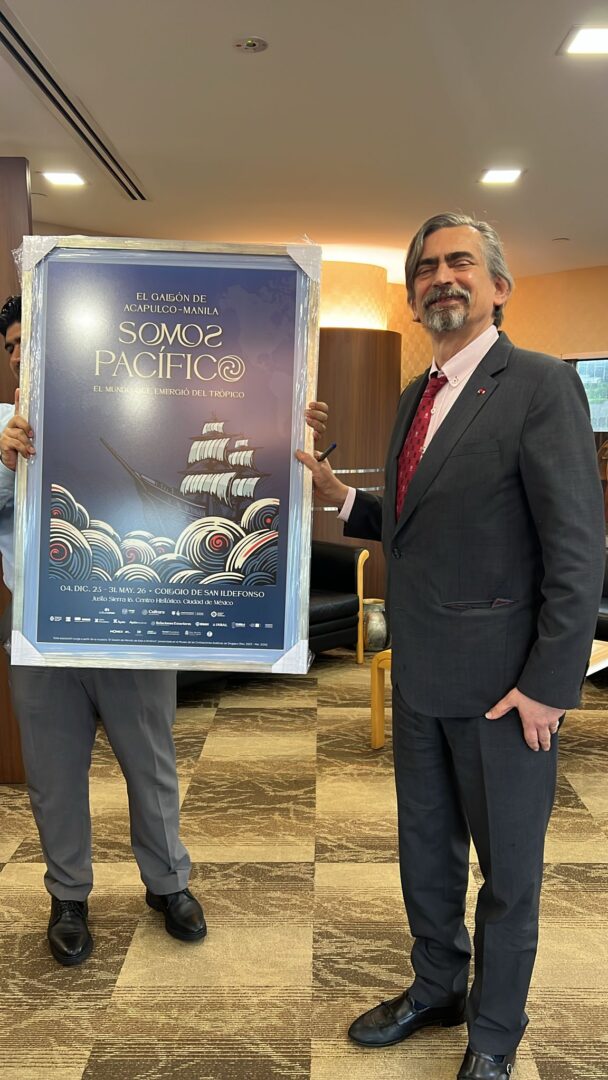
Very much so. The exhibition Somos Pacífico (“We Are the Pacific”) tells the story of how our relationship is not new but deeply rooted. Mexico once acted as a bridge between the Pacific and the Atlantic, and today continues to play that role between Asia and the Americas.
We also collaborated closely with institutions such as the Asian Civilisations Museum and the National Gallery. These exhibitions highlight how Asian aesthetics influenced Mexican art and vice versa, including the work of Mexican artists who were inspired by Asia.
This visit also marked an important diplomatic milestone between Mexico and Singapore.
Yes, it coincided with the 50th anniversary of diplomatic relations between our two countries. A major announcement was Singapore’s decision to open a resident embassy in Mexico. This will be Singapore’s 34th embassy worldwide, the third in the Americas, and its first in a Spanish-speaking country.
This reflects how strategic Mexico is for Singapore and how both countries see each other as like-minded partners in a challenging global environment.
There also appears to be a symbolic connection between both countries’ leaders.
Indeed. When Mexico’s President was Mayor of Mexico City, she won the Lee Kuan Yew World City Prize, one of Singapore’s most prestigious awards for urban governance. It recognises long-term excellence in urban planning, sustainability, mobility, and social policy. That shared experience created a meaningful personal connection between the leaders.
How strong is economic cooperation between Mexico and Singapore today?
It has grown significantly. Trade in goods increased from around US$4 billion in 2019 to approximately US$11 billion, with a fairly balanced trade surplus. Services trade has reached about US$5 billion, covering finance, insurance, digital services, and e-commerce.
Mexico exports products such as avocados, chillies, asparagus, and abalone to Singapore, while Singapore provides advanced electronics, semiconductors, and digital technologies that support Mexico’s manufacturing value chains.
Business engagement also featured prominently during the visit.
Yes. We held a high-level business meeting involving leaders from advanced manufacturing, digital innovation, finance, and logistics. There was strong interest in infrastructure projects, particularly ports and logistics, which are essential for strengthening connectivity between Asia and the Americas.
Major companies expressed confidence in Mexico as a long-term investment destination, reinforcing the complementary nature of our economies.
Finally, what would you consider the ideal outcome of this visit?
The ideal outcome is depth and continuity. The opening of a Singapore embassy in Mexico will allow for stronger networks, better regional knowledge, and deeper engagement across Mexico’s 32 states, each with its own industrial strengths and investment opportunities.
This visit strengthened ties at every level, government, parliament, regional authorities, and the private sector. It laid a solid foundation for a more resilient, strategic, and future-oriented partnership between Mexico and Singapore.