India’s Union Budget makes women central to growth through higher investment, opportunity, and long-term inclusion.
The Union Budget 2026–27 places women at the centre of several policy interventions, supported by increased allocations and programme-based outcomes.
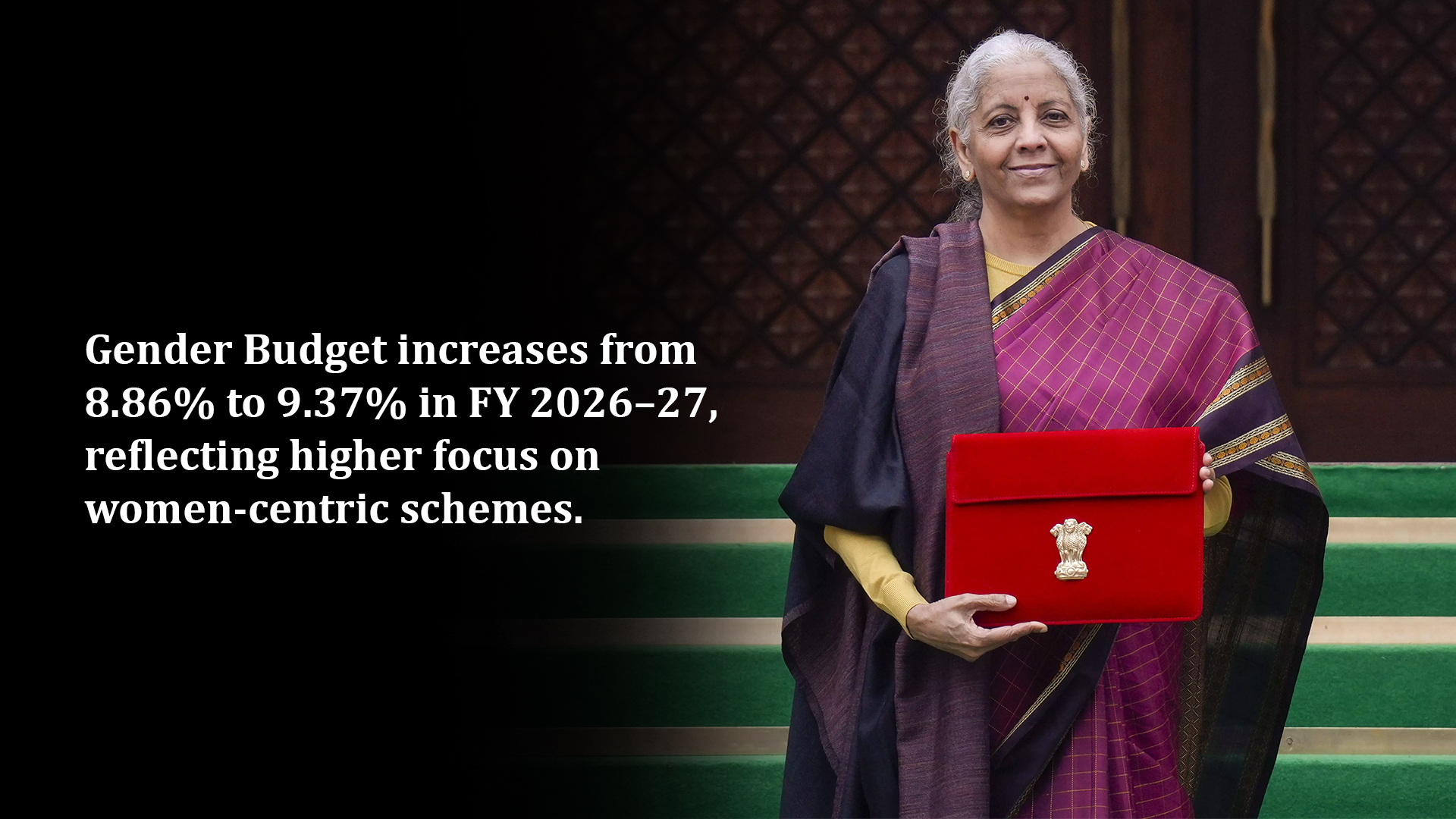
The Gender Budget accounts for 9.37% of the total Union Budget in FY 2026–27, compared to 8.86% in the previous year. The ₹5 lakh crore allocation for women and girls, an 11.36% rise, is intended to strengthen access to health, nutrition, education, livelihoods, and care services.
In the care sector, the proposal to train 1.5 lakh multi-skilled caregivers is expected to address growing demand in child and elder care while creating employment opportunities, particularly for women. Expansion of allied health professional education, with a target of 1 lakh additional professionals over five years, aims to increase women’s representation in the healthcare workforce.
Economic participation at the grassroots level is addressed through Self-Help Entrepreneur (SHE) Marts, designed to provide organised market access for women-led Self-Help Groups. The initiative is expected to support income stability and improve scale for small producers, especially in rural and semi-urban areas.
Support for women-intensive sectors such as fisheries, handloom, handicrafts, and khadi is expected to strengthen local livelihoods through better training, value addition, and market linkages.
In education, the provision of girls’ hostels in STEM institutions in every district aims to improve enrolment and retention of women in technical and emerging fields.
Overall, the Budget’s women-focused measures are structured to expand participation, reduce access gaps, and support long-term inclusion across sectors.
Source: PIB