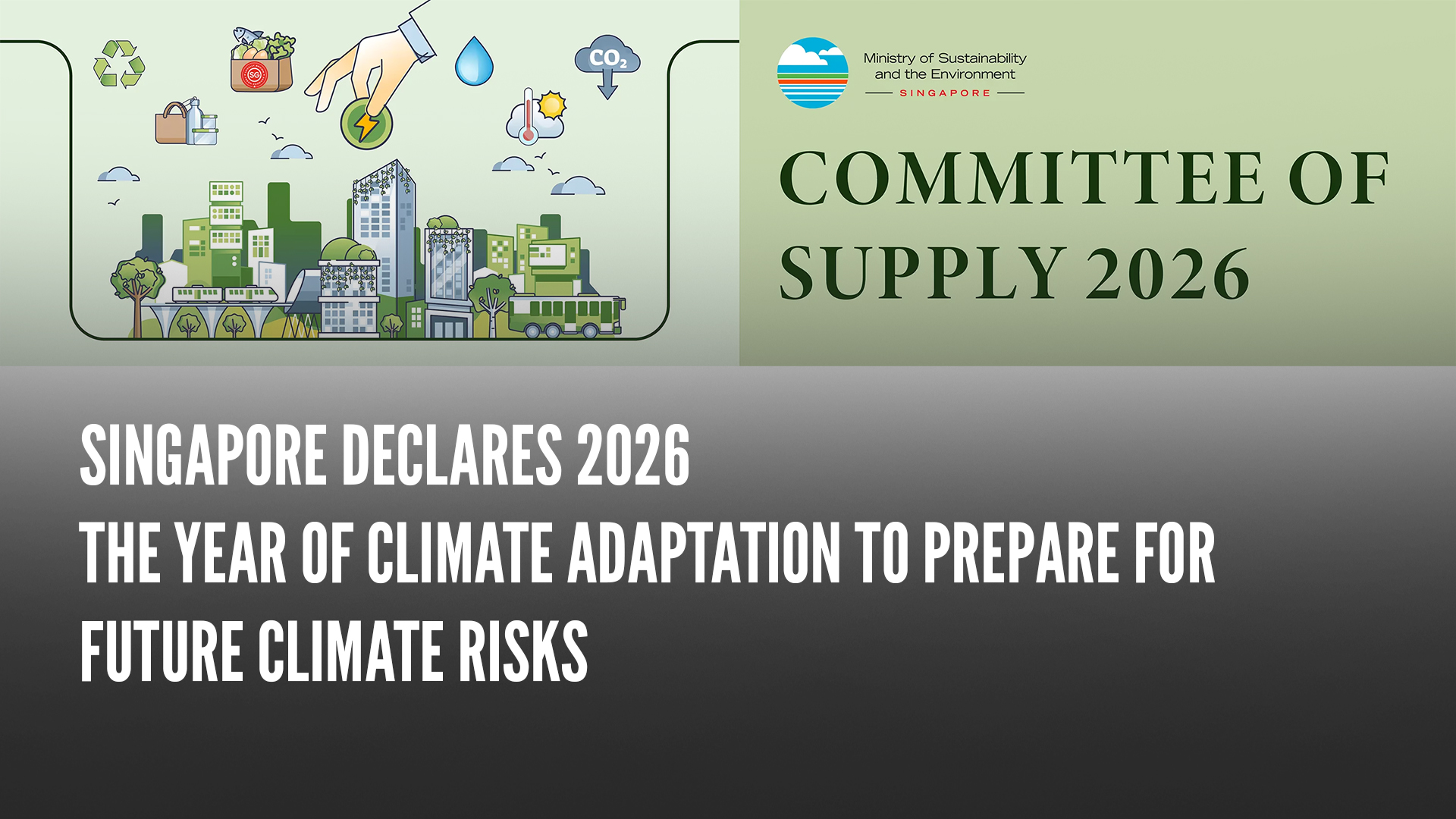
Minister Grace Fu announces a national push for climate adaptation and resilience during the Committee of Supply debate 2026. The initiative will lead to Singapore’s first National Adaptation Plan by 2027.
Singapore’s Minister for Sustainability and the Environment and Minister-in-Charge of Trade Relations, Grace Fu, announced that 2026 will be designated as the “Year of Climate Adaptation” during her speech at the Committee of Supply debate 2026 on 3 March 2026 in Parliament.
Speaking about the growing impact of climate change, Fu said the world is facing more extreme weather events, including higher temperatures, heavier rainfall, and stronger storms. These changes could lead to economic losses, food and water supply disruptions, and risks to infrastructure and public health.
Fu shared a personal reflection about becoming a grandmother this year. She said the birth of her granddaughter made climate change feel more real and highlighted the importance of preparing the country for the future. She noted that by 2050, when Singapore aims to reach net-zero emissions, her granddaughter will be 24 years old, raising questions about the kind of world future generations will experience.
To address these concerns, the government will launch a nationwide effort in 2026 to strengthen climate resilience across infrastructure, businesses, and communities. This effort will help shape Singapore’s first National Adaptation Plan (NAP), which is expected to be released in 2027.
The plan will focus on several key areas. One priority is heat resilience, as rising temperatures affect daily life and public health. The government will invest more in research and development to understand heat impacts and develop new cooling solutions.
Another focus is flood resilience. The government will continue upgrading drainage systems to manage heavier rainfall. Projects include improvements to the Bedok First Subsidiary Drain, the Sungei Serangoon subsidiary drains, and a 900-metre section of the Bukit Timah Canal.
Coastal protection is also a major part of the strategy. Studies have been completed for the north-west coast from Tuas to Lim Chu Kang, recommending stronger tidal gates and higher dykes to protect reservoirs and coastal areas from rising sea levels. A new Coastal Protection Bill will also be introduced in Parliament to support these long-term efforts.
Singapore will also strengthen water and food resilience to ensure stable supplies during disruptions caused by climate change.
In addition, the government is expanding climate science research. The Climate and Weather Research Alliance Singapore (CAWRAS) has launched a $25 million Weather Science Research Programme to improve weather forecasting using advanced technologies such as artificial intelligence.
Fu said the government will involve citizens, businesses, and community groups in developing the National Adaptation Plan through public engagements and discussions. The SG Eco Fund will also expand its support to include climate adaptation projects.
She concluded by urging all sectors of society to work together to prepare Singapore for climate challenges and ensure a safer future for the next generation.
Source: MSE