Discover ketupat’s history, symbolism, and regional traditions across Indonesia.
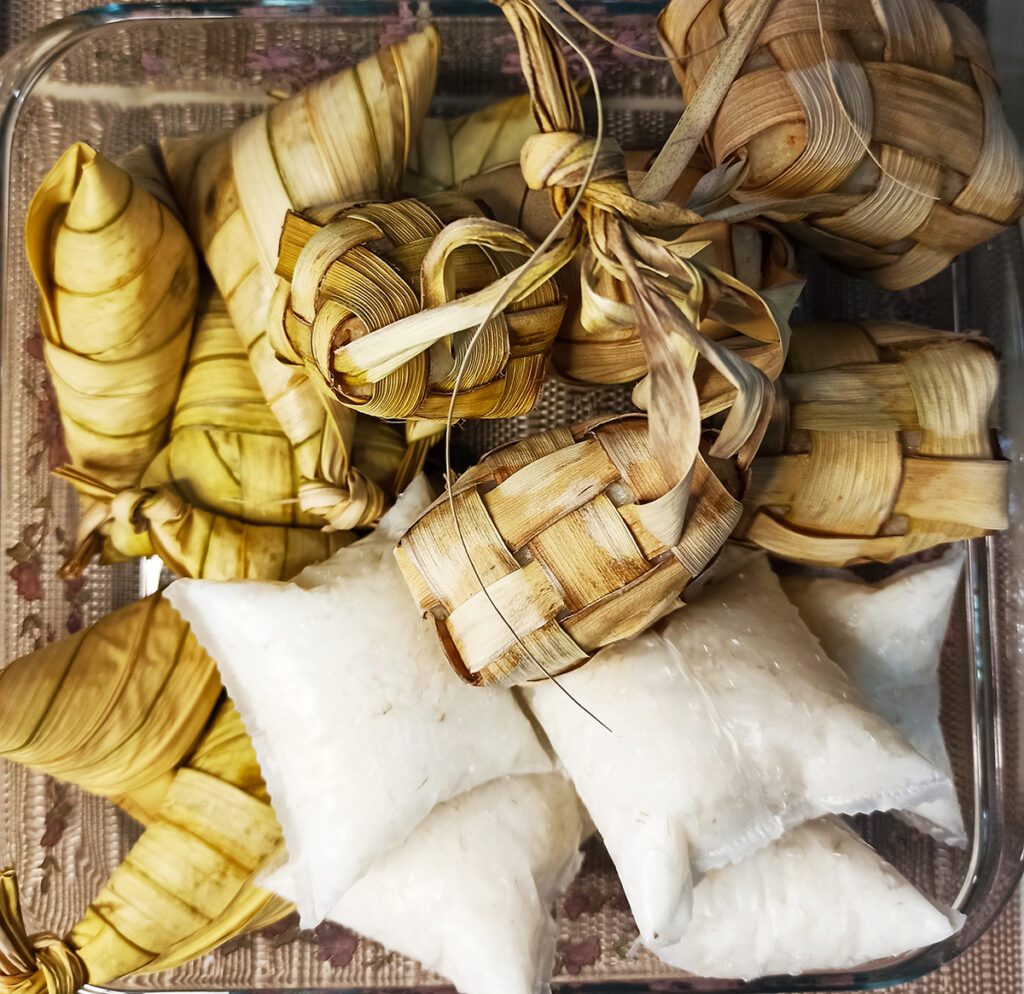
Every Eid al-Fitr celebration in Indonesia is marked by family reunions, festive meals, and cherished traditions. While each region serves its own specialties, one dish appears on tables across the archipelago: ketupat. Made from rice cooked inside woven young coconut leaves (janur), this iconic rice cake has become a symbol of Eid in Indonesia, representing gratitude, forgiveness, and togetherness.
Here are five fascinating facts about ketupat, one of Indonesia’s most recognisable festive foods.
- It Became a Symbol of Eid
Although ketupat existed long before the arrival of Islam in the Indonesian archipelago, it became closely associated with Eid al-Fitr in Java during the 15th and 16th centuries. According to Javanese tradition, Sunan Kalijaga, one of the revered Wali Songo, popularised ketupat as part of Eid celebrations by incorporating familiar local customs into Islamic teachings. The tradition has endured for centuries and remains an integral part of Eid celebrations across Indonesia today. - It Symbolises Forgiveness and Renewal
Beyond being a festive dish, ketupat carries deep philosophical meaning in Javanese culture. It is associated with the phrase ngaku lepat, meaning “admitting one’s mistakes,” reflecting the spirit of seeking forgiveness during Eid. Its four-sided form is also linked to the concept of Laku Papat, comprising Lebaran, Luberan, Leburan, and Laburan. Together, these concepts symbolise generosity, forgiveness, purification, and spiritual renewal. - It Complements Indonesia’s Favourite Eid Dishes
Ketupat’s mild flavour and soft texture make it the perfect accompaniment to many traditional Indonesian dishes. It is commonly served with opor ayam, rendang, gulai, semur, curry, and soto, making it an essential part of festive Eid feasts. - Its Woven Design Reflects Unity
The intricate casing, woven from young coconut leaves, requires patience and craftsmanship. Beyond its practical purpose, the interwoven pattern is widely interpreted as symbolising unity, reflecting the importance of maintaining harmony within families and communities. - It Has Many Regional Variations
Indonesia’s rich culinary heritage has inspired numerous regional variations of ketupat. From Ketupat Glabed in Tegal and Katupek Kapau in West Sumatra to Solo’s Ketupat Cabuk Rambak and Betawi’s Ketupat Bebanci, each reflects the distinctive flavours and traditions of its local community.
More than just a festive food, ketupat remains a powerful symbol of Indonesia’s Eid celebrations. As families continue to prepare and share it across generations, this humble rice cake preserves centuries of cultural heritage while celebrating the enduring values of forgiveness, generosity, unity, and togetherness that define Eid al-Fitr in Indonesia.
Source: Indonesian Ministry of Tourism