Indonesia seeks to turn mangrove expertise into global standards
Indonesia is promoting the World Mangrove Center (WMC) as a platform for international cooperation on mangrove science, policy, financing and sustainable management.
Developed by Indonesia’s Ministry of Forestry, the WMC has been introduced at several international forums, including the ASEAN Working Group on Forest Management (AWG-FM) in Cambodia, the 30th APEC Experts Group on Illegal Logging and Associated Trade (EGILAT) in Shenzhen, China, and forestry cooperation talks with Australia.
The ministry is also seeking broader recognition for the initiative through the 30th United Nations Climate Change Conference (COP30), the 21st session of the United Nations Forum on Forests (UNFF21) and the Asia-Pacific Economic Cooperation (APEC) forum.
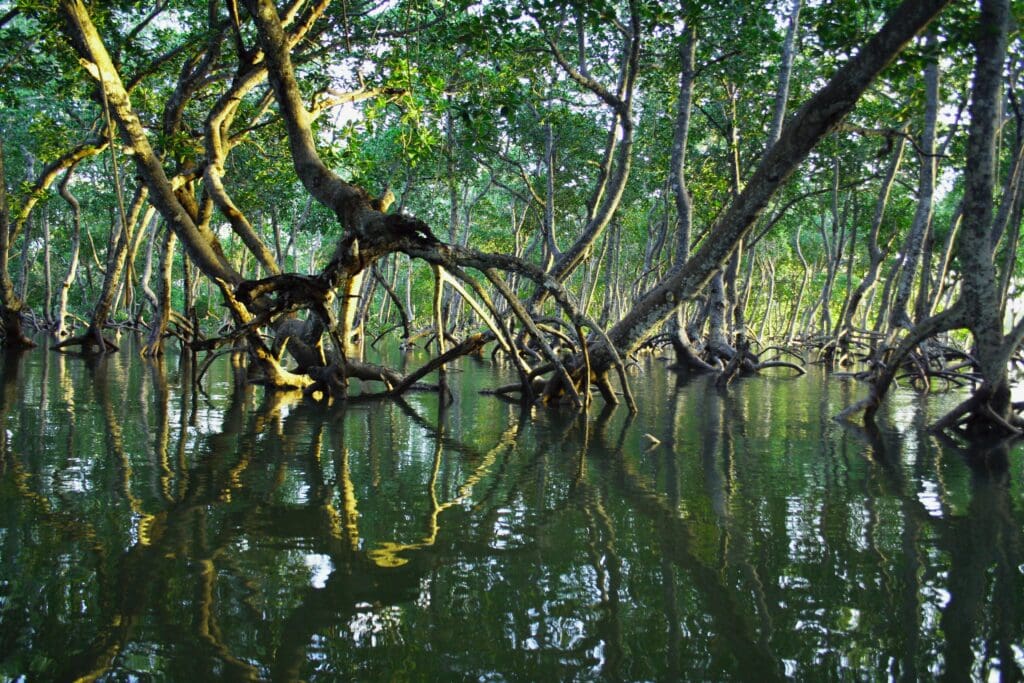
The effort comes as mangroves gain greater attention in global climate and biodiversity discussions. They absorb carbon, support biodiversity, reduce erosion and sustain coastal communities, making them increasingly important as a nature-based solution to climate change.
Indonesia has about 3.44 million hectares of mangroves, representing nearly one-quarter of the global total. As the country with the world’s largest mangrove area, Indonesia has extensive experience in conserving, restoring and managing tropical coastal ecosystems.
The WMC is intended to turn that experience into knowledge that can benefit other countries by linking research, policy, financing and practical management.
At the EGILAT forum in Shenzhen, Mr. Krisdianto, Director for Forest Product Levies and Administration at Indonesia’s Ministry of Forestry, introduced the initiative to Australia and offered cooperation in research, innovation and capacity building for coastal ecosystem management.
Mr. Arief Darmawan, an engineer at Indonesia’s National Research and Innovation Agency (BRIN), said the WMC should bridge science, policy, financing and implementation while promoting common data standards and measurement methods.
Darmawan said mangrove management should also be assessed beyond the number of hectares restored or trees planted. Evaluation should consider ecosystem functions, including hydrology, biodiversity, sedimentation, coastal connectivity, soil carbon stocks and benefits for local communities.
Indonesia’s own programmes provide practical experience for this work. By the end of 2025, 91,678 hectares of mangroves had been restored, while 2026 programmes are targeting more than 17,000 additional hectares through partnerships including Mangroves for Coastal Resilience (M4CR), Forest Programme VI, the Japan International Cooperation Agency (JICA) and NasCLIM.
These programmes could provide lessons for the WMC as it develops its international role. According to Darmawan, its first five years will be particularly important as it seeks to develop into a tropical mangrove data and observation hub connected to international networks such as Global Mangrove Watch.
If the WMC can turn Indonesia’s practical experience into credible research, reliable data and useful standards, it could help strengthen mangrove management across countries while giving Indonesia a stronger role in shaping global coastal ecosystem governance.
Source: ANTARA News