Jazan’s mountains and valleys reveal geological history, ancient heritage and opportunities for adventure tourism.
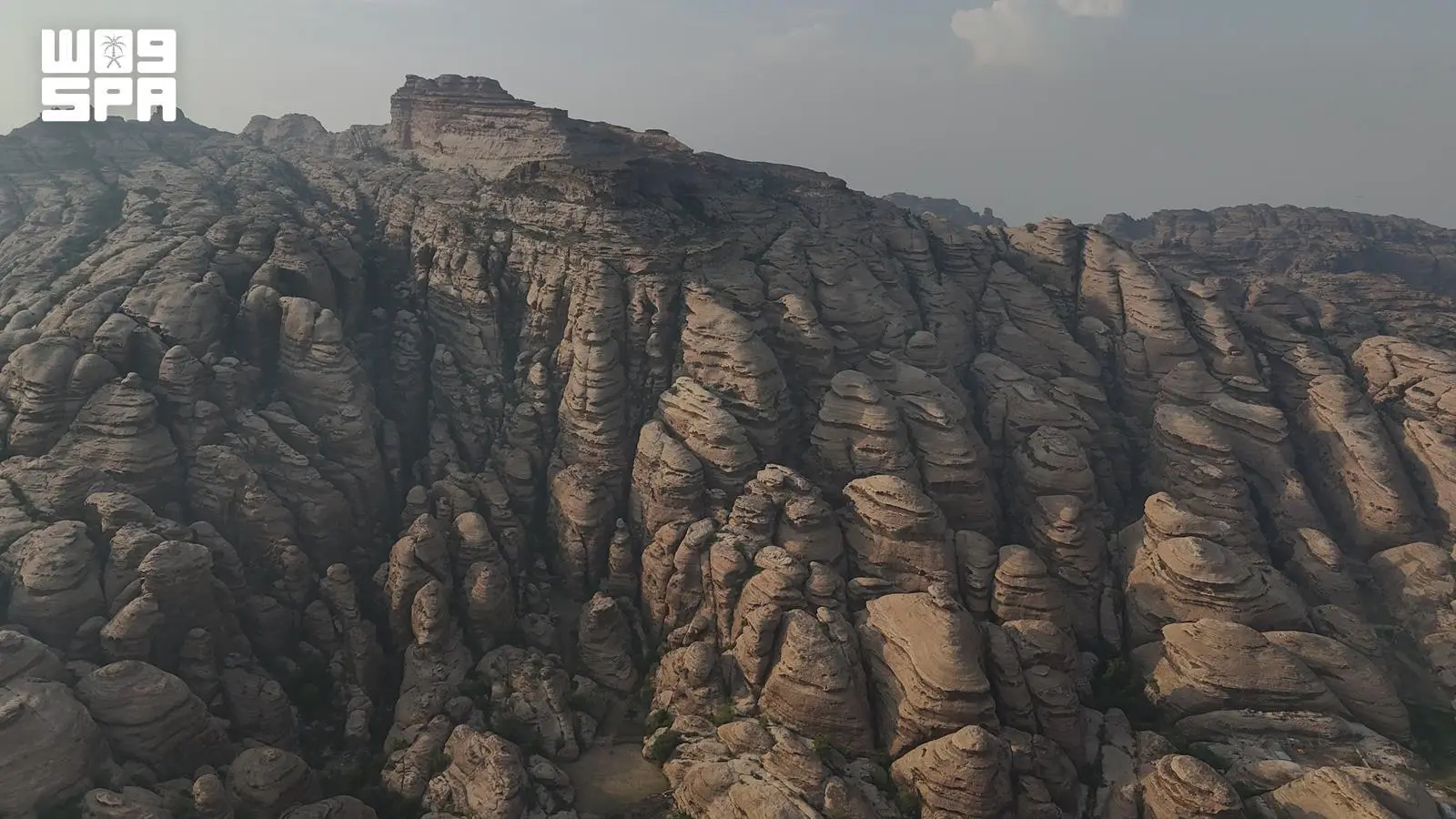
Jazan Region offers a range of geological landmarks shaped by millions of years of erosion, presenting opportunities to develop geotourism and adventure tourism in southwestern Saudi Arabia. Its mountains, cliffs, canyons and valleys feature distinctive rock formations that reveal aspects of Earth’s history while attracting hikers, photographers and visitors interested in natural landscapes.
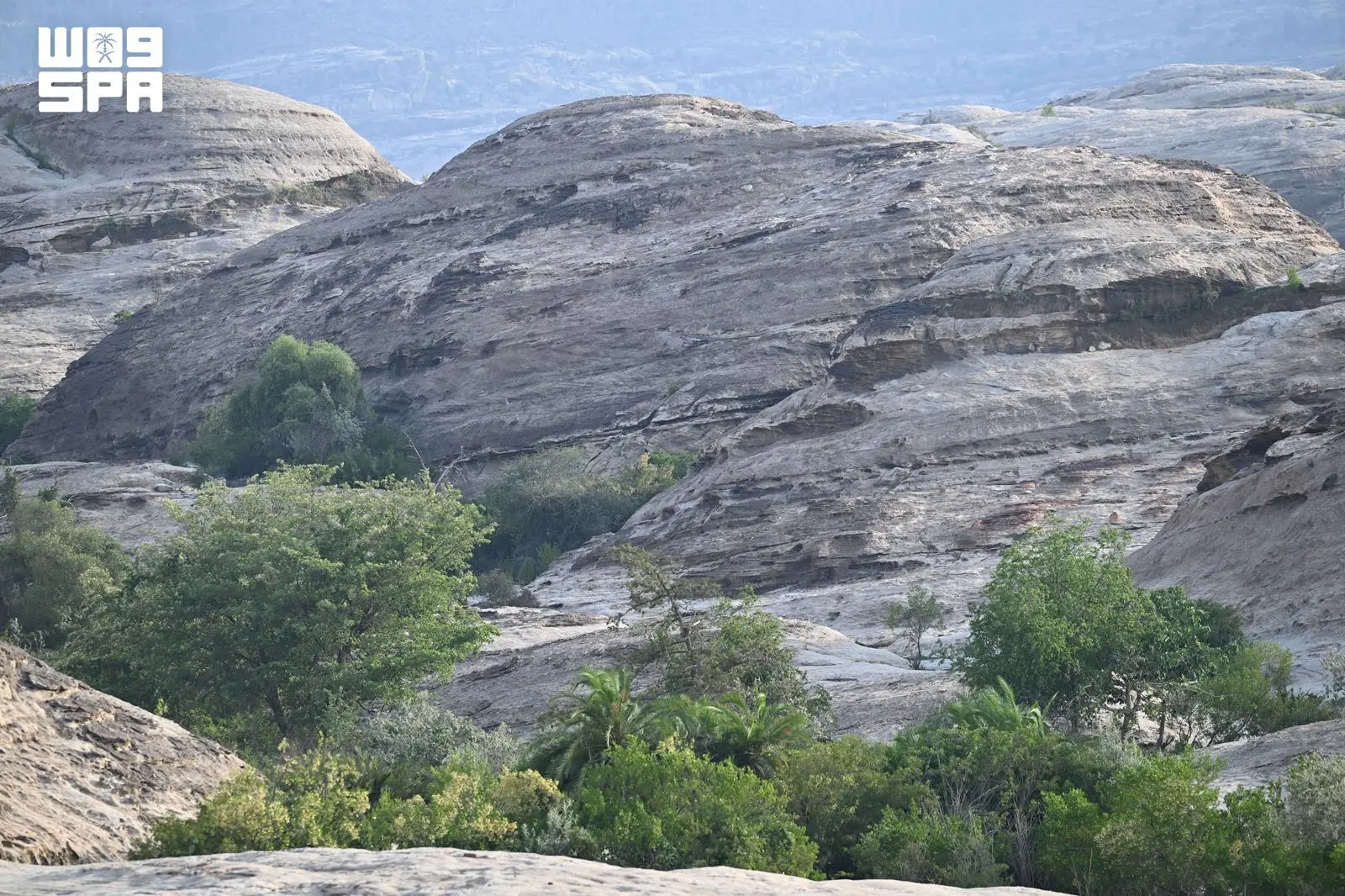
The region’s geological features display varied shapes, colours and textures, from towering cliffs to stepped rock formations marked by fissures and cavities. These landscapes provide opportunities for sightseeing, hiking and nature exploration, while some locations also contain evidence of historical human activity.
In Al-Raith Governorate, the Al-Qahar Mountains and Wadi Lajab showcase the region’s varied terrain. Rocky cliffs extend along mountain slopes, while Wadi Lajab winds between towering rock walls that narrow and widen along its course, creating changing patterns of light and shadow.
Fayfa Governorate offers a different landscape, where mountainous terrain combines with agricultural terraces and traditional stone houses. Meanwhile, Harub Governorate features highlands, valleys and natural trails suitable for hiking, photography and sightseeing.
Beyond their geological characteristics, some sites preserve traces of ancient human presence, including inscriptions and old pathways that once connected villages with highland settlements. These features add historical and cultural dimensions to the natural landscapes, offering visitors opportunities to explore the region’s heritage alongside its geological formations.
Research conducted by Jazan University has also contributed to understanding the region’s geological past. Professor Zarraq Al-Faifi of the university’s College of Science identified evidence at a mountain site suggesting that the area had once been submerged by the sea. The findings included stony coral remains, mollusc shells attached to rocks, calcareous deposits and marine salt grains within sedimentary layers on the mountains.
Professor Al-Faifi noted that further specialised studies would be needed to determine when these geological changes occurred.
Jazan Region has potential to develop dedicated tourism trails connecting geological formations with historical landmarks. Proposed supporting measures include interactive maps, site documentation and safe pathways to improve access and visitor experiences. Such initiatives could help establish a distinct geotourism identity for Jazan and increase awareness of its geological and cultural heritage among domestic and international visitors.
Source: Saudi Press Agency