ASEAN and Russia reaffirm strategic partnership and adopt multi-sector cooperation roadmap for 2026–2030.
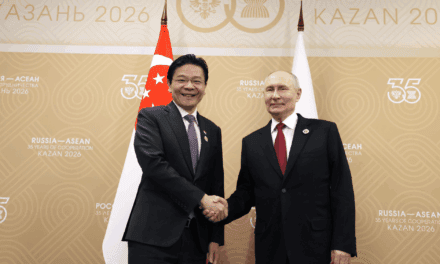
Building on the outcomes of the ASEAN–Russia Commemorative Summit in Kazan, the adopted documents outline a renewed and expanded framework for cooperation between ASEAN Member States and the Russian Federation over the coming years.

The Kazan Declaration reaffirmed ASEAN and Russia’s commitment to strengthen their strategic partnership based on the UN Charter, international law, and ASEAN Centrality. It reiterated support for ASEAN-led regional mechanisms as the primary platforms for dialogue and cooperation.
The declaration reviewed progress since the establishment of relations in 1991 and outlined priority areas for future cooperation, including political-security engagement, economic development, energy, connectivity, education, and culture. It highlighted maritime cooperation, counter-terrorism, and transnational crime, as well as sustainable development and people-to-people exchanges.

Energy was identified as a strategic area of cooperation. Both sides agreed to enhance collaboration to ensure secure, diversified, and reliable energy supplies, including oil, gas, LNG, renewable energy, and nuclear energy for peaceful purposes.
The statement also supported cooperation in energy transition technologies and infrastructure development, including ASEAN initiatives such as the ASEAN Power Grid and the Trans-ASEAN Gas Pipeline. It further emphasised resilience, investment, and capacity building in the energy sector.
The cultural statement reaffirmed the role of culture in strengthening mutual understanding between societies. Both sides agreed to expand cooperation in cultural exchange, heritage preservation, and creative industries, including film, music, design, and digital media.
It also encouraged greater youth engagement, academic exchange, and cultural tourism through exhibitions, festivals, training programmes, and potential future ASEAN– Russia cultural initiatives.
Source: The ASEAN Secretariat