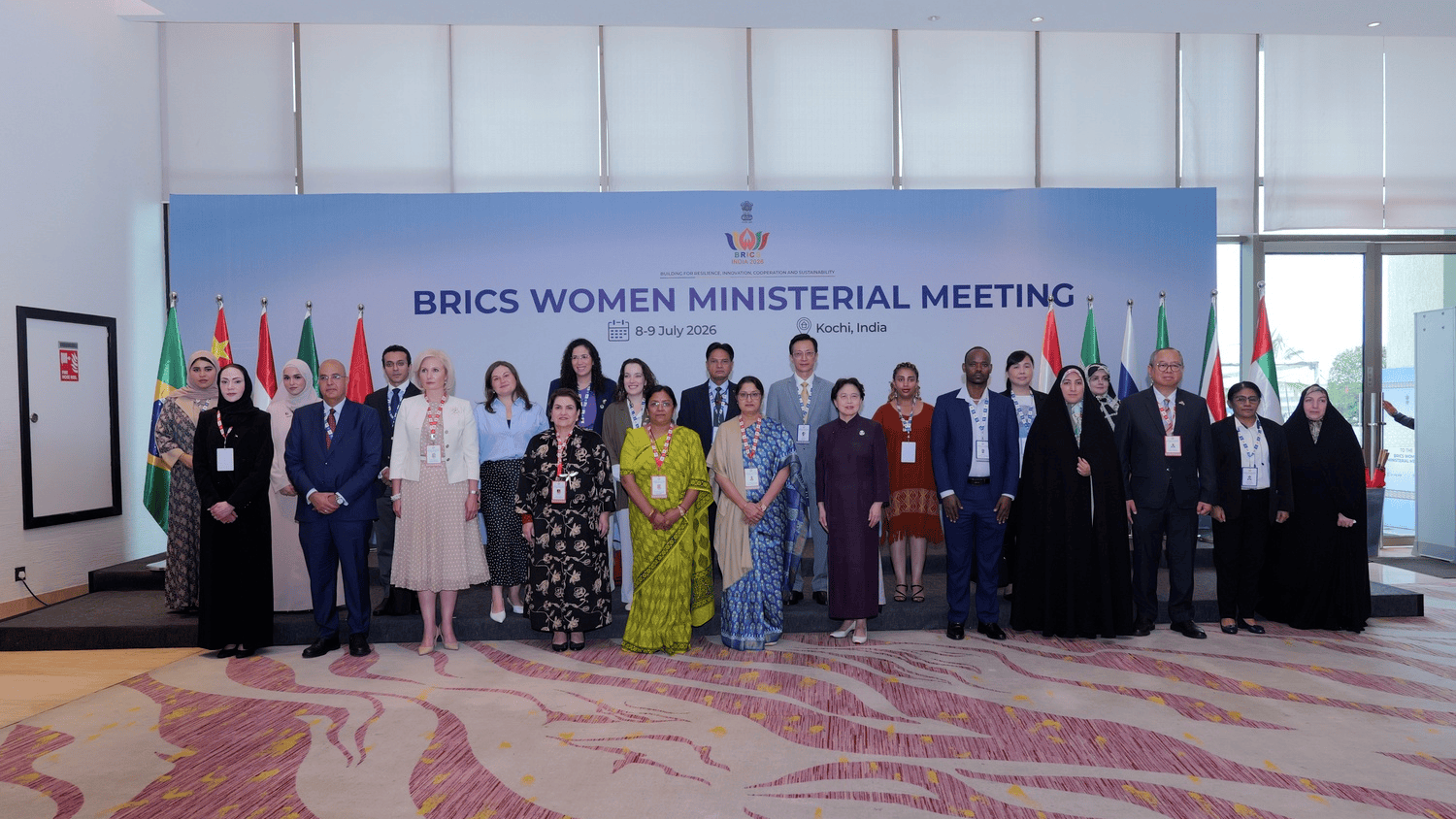
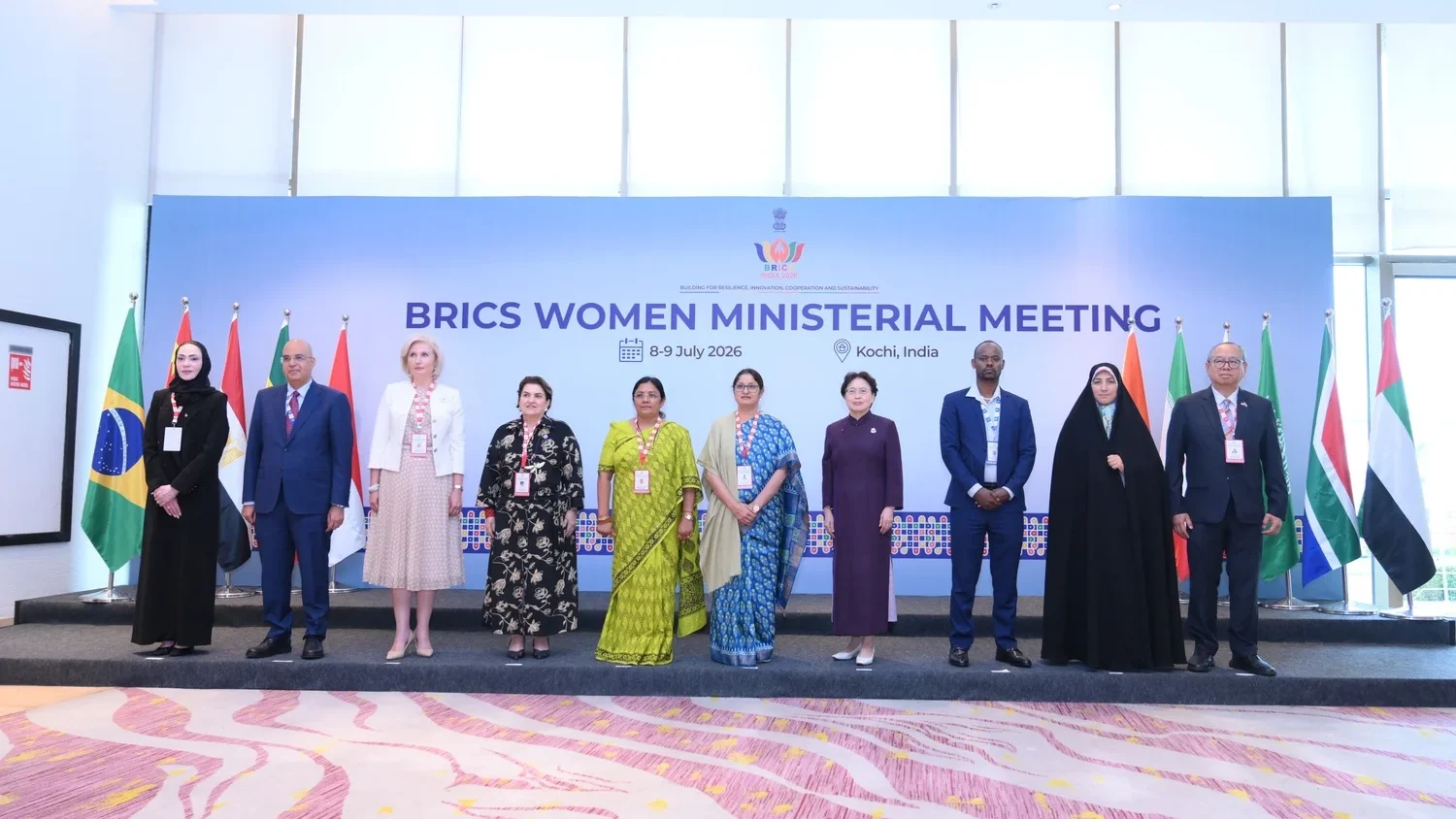
The BRICS Women Ministerial Meeting concluded in Kochi with the adoption of the first-ever Joint Statement under the Women Track and the endorsement of two India-led initiatives to strengthen collaboration on women’s empowerment across BRICS member countries.
The BRICS Women Ministerial Meeting concluded in Kochi under India’s BRICS Chairmanship 2026, delivering a landmark outcome with the adoption of the first-ever Joint Statement under the BRICS Women Track and the endorsement of two new India-led initiatives to strengthen cooperation on women’s empowerment.
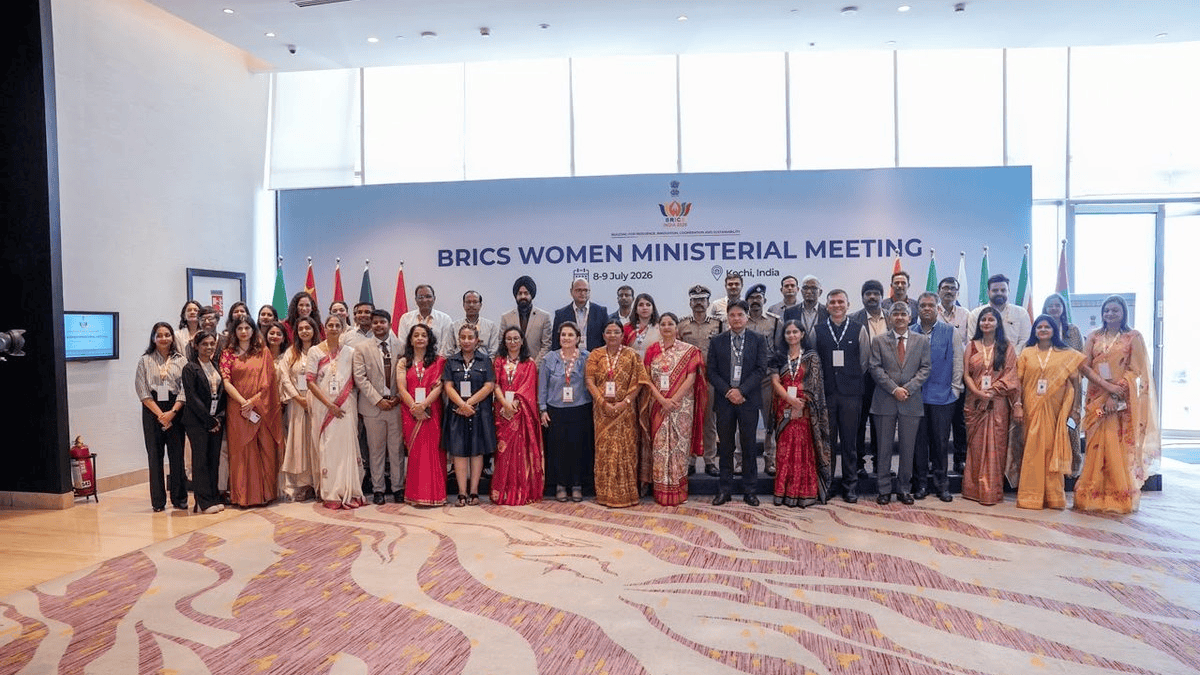
Held from 6 to 9 July, the four-day engagement comprised the BRICS Women Working Group Meeting and the BRICS Women Ministerial Meeting. Ministers, Deputy Ministers and senior officials from across the BRICS family gathered to discuss shared priorities aimed at promoting gender equality and strengthening women’s empowerment.
A landmark achievement of this year’s Ministerial Meeting was the adoption of the first-ever Joint Statement under the BRICS Women Track, reflecting the collective commitment of member countries to deepen cooperation in advancing women-led development across social, economic and institutional spheres.

Speaking at the closing session, India’s Union Minister for Women and Child Development, Smt. Annapurna Devi, highlighted that while BRICS member countries represent diverse geographical, socio-economic and cultural backgrounds, they face many common challenges relating to women’s empowerment. She emphasised the importance of the BRICS Women Ministerial Track as a platform for dialogue, collaboration and the exchange of experiences to address these shared priorities.
Closing the meeting, Mr. Anil Malik, Secretary of the Ministry of Women and Child Development, Government of India, described the adoption of the Joint Statement as a tangible demonstration of the shared determination among BRICS members to address common challenges through collective action.

The meeting also endorsed two new initiatives proposed by India to strengthen long-term cooperation under the BRICS Women Track.
The first, the BRICS Digital Repository of Best Practices, will function as a shared platform for documenting and exchanging successful policies, programmes and innovations related to women’s empowerment across member countries.
The second initiative, the BRICS Digital Capacity Building Guidelines, aims to strengthen institutional collaboration, encourage knowledge sharing and enhance capacity-building efforts to accelerate women’s empowerment through sustained cooperation.
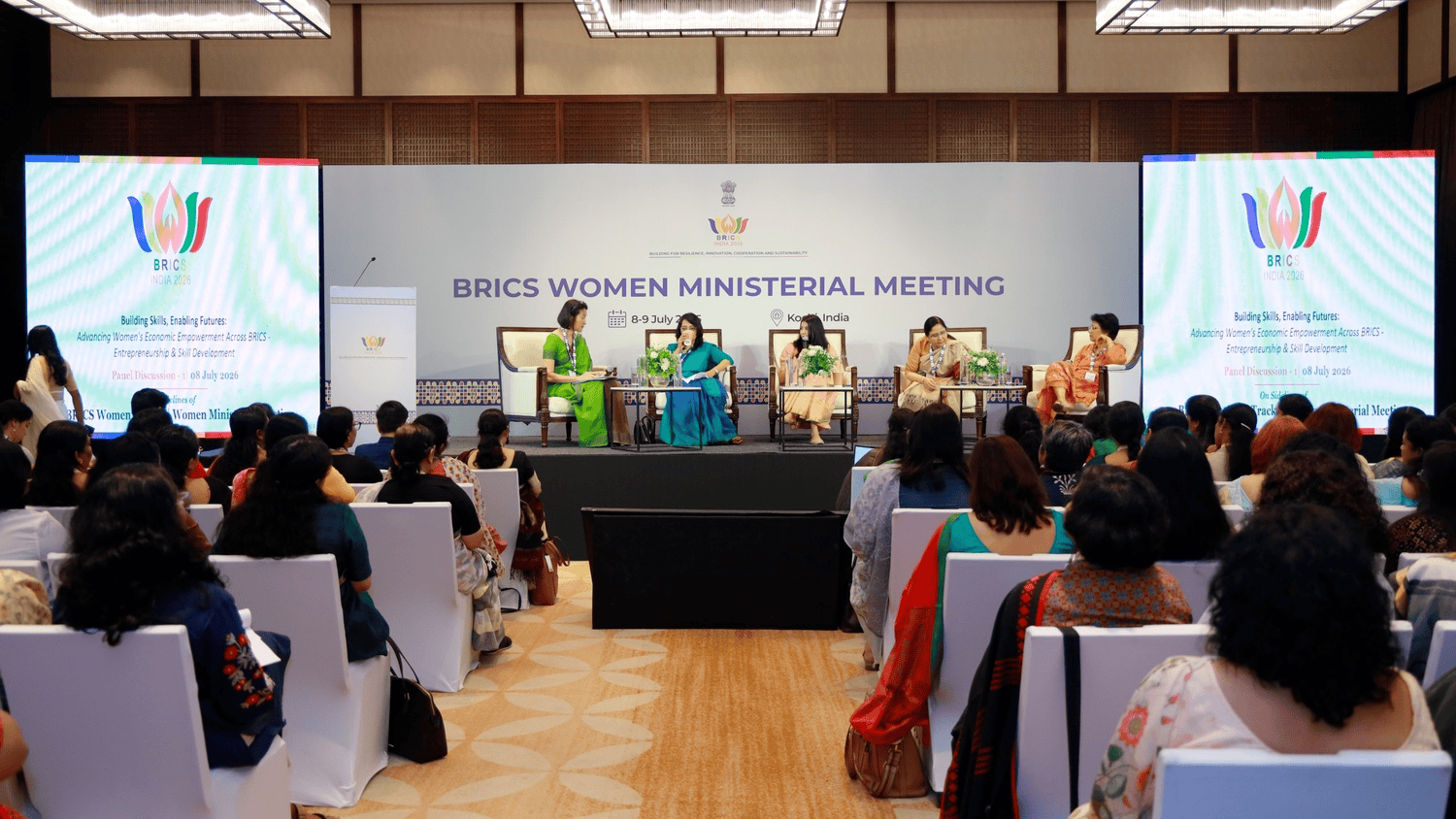
Alongside the ministerial sessions, India organised a series of thematic panel discussions involving policymakers, experts, practitioners and development partners. The discussions explored key issues including digital inclusion, women’s entrepreneurship, financial empowerment, climate resilience, food security and nutrition, providing opportunities for participants to share experiences and identify practical approaches to common challenges.
Delegates also visited an exhibition highlighting India’s women-led development initiatives across multiple sectors. The showcase featured programmes led by various ministries and departments, including rural livelihood initiatives such as SARAS and Lakhpati Didi, women’s participation in sports through ASMITA, initiatives supporting women in STEM, financial inclusion programmes, as well as flagship schemes of the Ministry of Women and Child Development including SHE-Box, One Stop Centres, and the Women’s Helpline.
The conclusion of the BRICS Women Ministerial Meeting reaffirmed the commitment of member countries to strengthen institutional partnerships, expand knowledge exchange, promote best practices and advance women-led development as a key driver of inclusive, resilient and sustainable growth.
Source: PIB Delhi