GIVE TO GAIN AS A PATHWAY TO EMPOWERMENT, COOPERATION, AND SUSTAINABLE DEVELOPMENT
The commemoration of International Women’s Day 2026 underscores a renewed global call to action, placing gender equality at the heart of sustainable development and international cooperation.
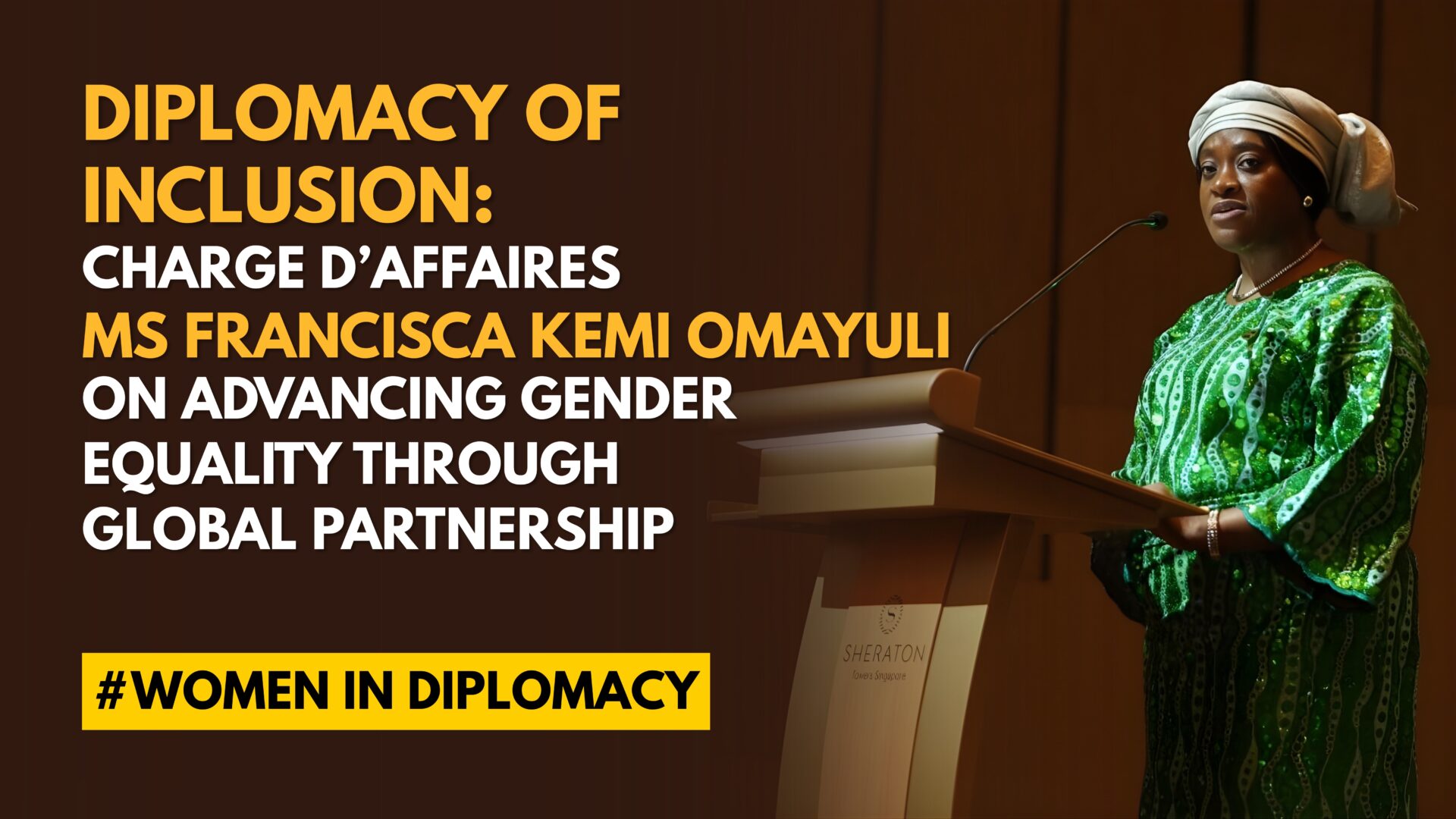
In a reflective written interview with IN Diplomacy, Charge d’Affaires en titre Ms Francisca Kemi Omayuli of Nigeria to Singapore shared insights on leadership, gender equality, and the evolving role of diplomacy in shaping inclusive societies. The discussion centred on the theme “Give to Gain”, exploring how deliberate investments in women and girls can unlock broader societal progress while strengthening bilateral and multilateral cooperation.
Her perspective is grounded in a distinguished career in public service and diplomacy, shaped by engagement in governance, policy development, and international relations. These early influences informed a professional philosophy that places human development and social inclusion at the centre of diplomatic engagement. Over time, this approach has guided her contributions to advancing gender-responsive policies and fostering international partnerships rooted in equity.
Throughout her diplomatic journey, Ms Francisca Kemi Omayuli has navigated complex international landscapes, balancing national priorities with global responsibilities. Her work has involved participation in multilateral platforms and bilateral engagements, where issues such as education, trade, and gender inclusion intersect. In doing so, she has consistently emphasised the importance of aligning policy frameworks with the broader goals of sustainable development and inclusive growth.
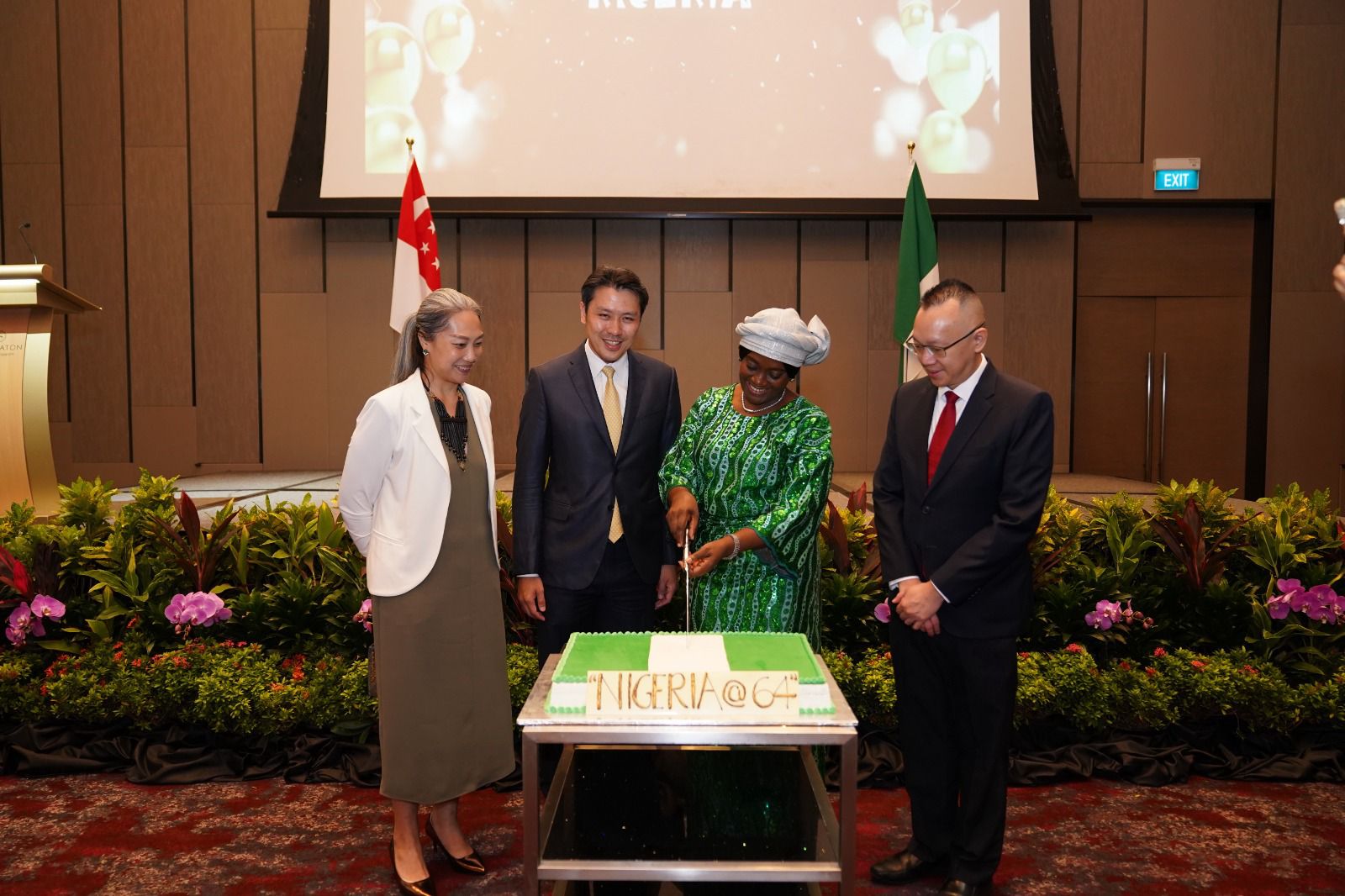
Central to the conversation was her interpretation of “Give to Gain” as both principle and practice. She described it as “a call to duty… to invest in training and educating the girl child, to allow opportunities across all fields, and to amplify women’s voices.” Referencing frameworks such as the United Nations Sustainable Development Goals, particularly SDG 5 on gender equality—she underscored that empowering women is not only a moral imperative but a strategic necessity for building resilient and prosperous societies.
She further highlighted the transformative role of Nigerian women across sectors, pointing to figures such as Ngozi Okonjo-Iweala, Amina Mohammed, and Chimamanda Ngozi Adichie as global exemplars of leadership. At the national level, initiatives led by the First Lady, Oluremi Tinubu, under the Renewed Hope Initiative were cited as evidence of sustained commitment to women’s empowerment through education, health, and economic inclusion.
Beyond individual achievements, she pointed to structural frameworks such as Nigeria’s National Gender Policy (2021–2026) and continental efforts by the African Union, including its Gender Equality and Women’s Empowerment Strategy. These initiatives aim to address systemic barriers—from unequal access to education to limited economic participation—while leveraging opportunities under agreements like the African Continental Free Trade Area to enhance women’s roles in trade and enterprise.
Turning to bilateral relations, Ms Francisca Kemi Omayuli noted that ties between Nigeria and Singapore have strengthened significantly since her assumption of duty in June 2024. High-level exchanges, including ministerial visits and participation in platforms such as the Africa-Singapore Business Forum, have deepened cooperation. The entry into force of the Investment Promotion and Protection Agreement in August 2025 marked a key milestone, alongside educational collaboration between Nigeria’s National Board for Technical Education and Singapore’s ITE Education Services in March 2026.
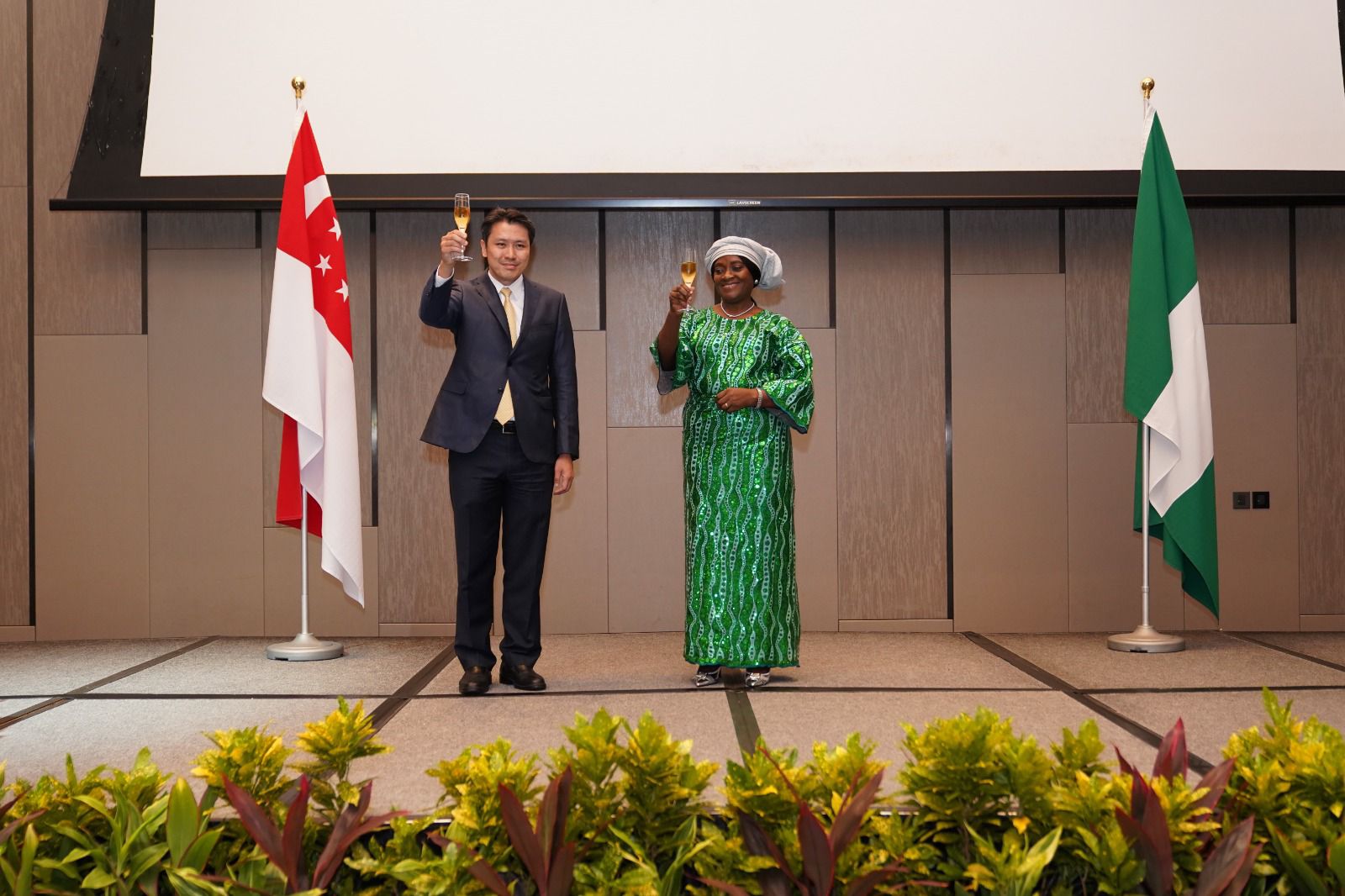
These developments, she observed, reflect a broader philosophy of diplomacy grounded in mutual benefit. She emphasised that international cooperation must be built on respect, shared learning, and recognition that every nation contributes valuable experiences to global progress. Within this framework, the principle of “Give to Gain” becomes a guiding concept for fostering balanced and inclusive partnerships.
In her concluding reflections, Ms Francisca Kemi Omayuli underscored that leadership—particularly for women—requires both intention and example. She highlighted the importance of integrity, empathy, and resilience, alongside the responsibility to create opportunities for others. Her call to action was clear: investing in the education and empowerment of girls generates a multiplier effect that benefits entire communities and strengthens national development.
Ultimately, her vision of diplomacy is anchored in dialogue, collaboration, and shared responsibility. As global challenges become increasingly complex, she reaffirmed the enduring relevance of inclusive engagement and collective action. In her view, when societies commit to giving—through policy, opportunity, and support—they gain not only equality, but a more sustainable and prosperous future for all.