A new report by Boeing, GenZero and Abatable reveals that ASEAN Member States could generate up to US$8.5 billion over the next decade by expanding the supply of carbon credits eligible under CORSIA. The study highlights how coordinated government policies and regional collaboration could strengthen sustainable aviation while supporting economic growth.
ASEAN Member States have the potential to generate up to US$8.5 billion over the next decade by supplying carbon credits eligible under the Carbon Offsetting and Reduction Scheme for International Aviation (CORSIA), according to a new report released by Boeing, GenZero and Abatable. The report outlines how the region can significantly expand its role in supporting international aviation decarbonisation while creating economic opportunities, generating employment and strengthening regional cooperation.
Currently, ASEAN contributes around 7% of the global supply of CORSIA Eligible Emission Units (CEEUs) through four projects in Cambodia and Lao PDR, producing approximately 2.6 million units. The report notes that this supply could increase eightfold to 20.8 million units within months if governments issue Letters of Authorisation (LoAs) for an additional 54 carbon projects that already meet CORSIA requirements. Looking further ahead, prioritising another 100 carbon projects could add more than 302 million CEEUs, potentially supporting around 32,000 jobs across the region over the next ten years.
To unlock this opportunity, the report recommends that ASEAN governments strengthen policy coordination by aligning CORSIA implementation with their Nationally Determined Contributions (NDCs) under the Paris Agreement, improving collaboration between transport and environmental authorities, identifying priority sectors for carbon project investment, piloting LoAs, and enhancing regional cooperation. According to the report, these measures would help ensure that carbon credit exports contribute to economic development without compromising national climate commitments.
The study also encourages airlines to establish clear carbon credit procurement strategies, conduct pilot transactions and diversify their sourcing of CEEUs while maintaining close engagement with government agencies. Several regional carriers have already taken early steps, including Singapore Airlines and its subsidiary Scoot, which retired 150,000 CEEUs for compliance in 2026, while Malaysia Aviation Group has developed a carbon credit procurement framework. Industry leaders from Boeing, GenZero and Abatable emphasised that collaboration between governments, airlines and market participants will be essential to building a credible and efficient CORSIA ecosystem.
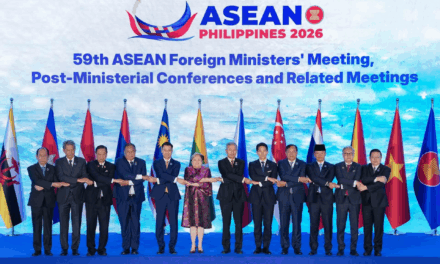
Commenting on the findings, Satvinder Singh, Deputy Secretary-General of ASEAN for the ASEAN Economic Community, said the study demonstrates the significant opportunities available for ASEAN Member States to support the implementation of CORSIA while advancing national climate objectives and delivering broader economic benefits. He added that stronger coordination between transport, environment and other relevant authorities would play a key role in supporting the region’s sustainable aviation and decarbonisation ambitions.
Source: The ASEAN Secretariat