New framework deepens trade, security and regional cooperation.
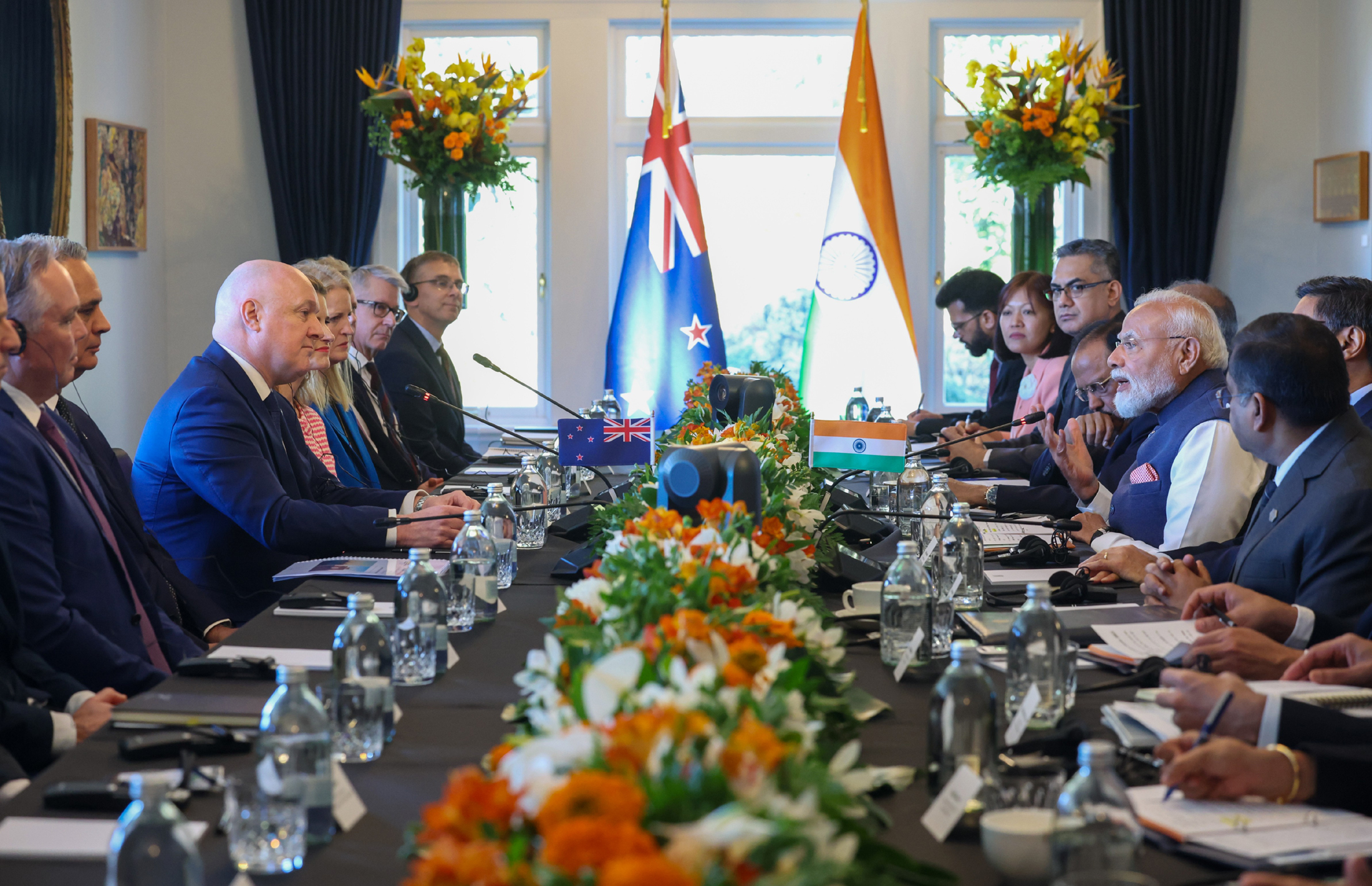
India and New Zealand have elevated their bilateral relationship to a Strategic Partnership, marking a significant milestone during the official visit of Prime Minister of India Shri Narendra Modi to Auckland on 10 and 11 July. Hosted by Prime Minister of New Zealand Rt Hon Christopher Luxon, the visit was the first by an Indian prime minister to New Zealand in 40 years.
During bilateral talks, Prime Minister Modi and Prime Minister Luxon endorsed the India-New Zealand Strategic Partnership: Roadmap to 2030, a four-year framework that will guide cooperation across diplomacy, defence, trade, education, agriculture, climate resilience and people-to-people exchanges.
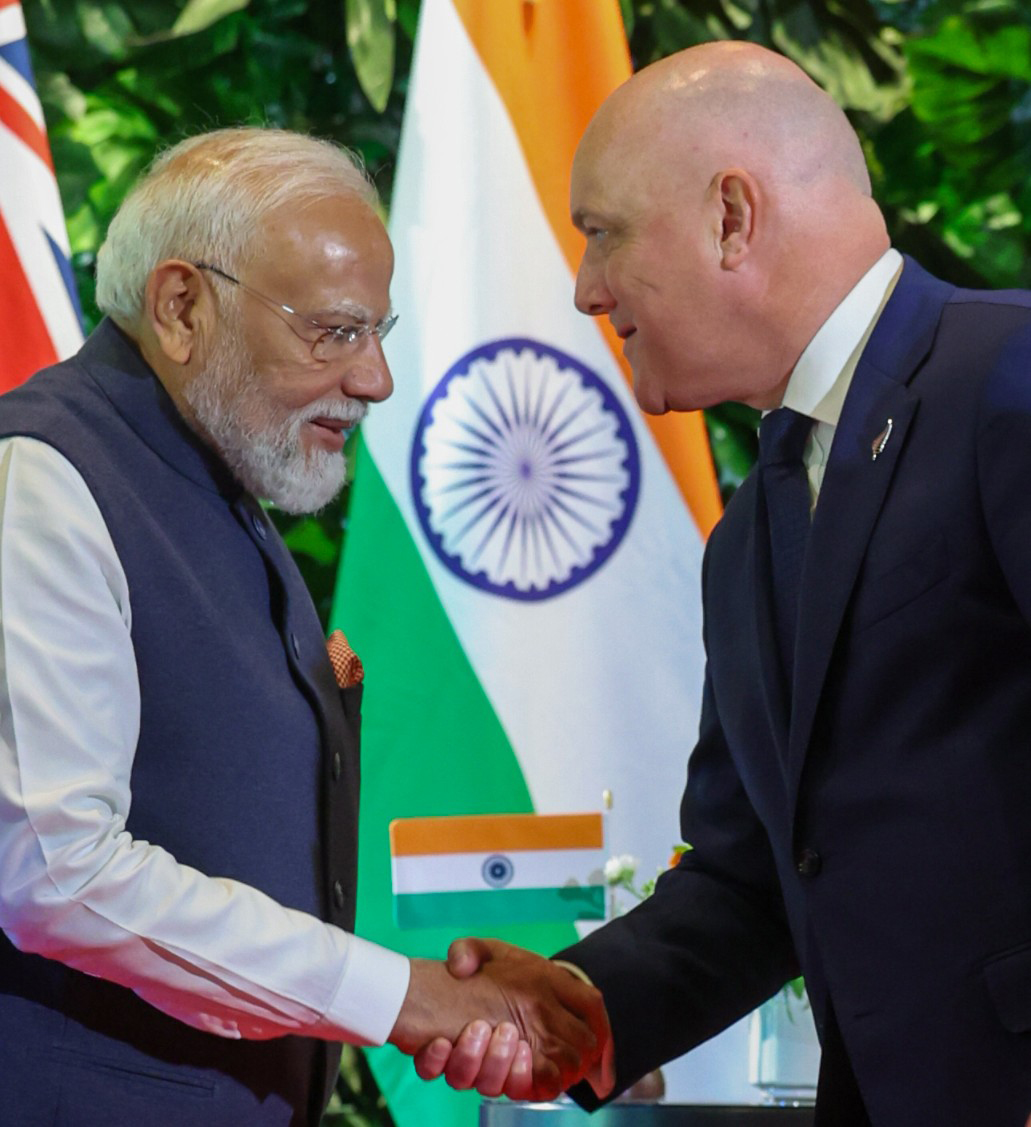
The leaders reaffirmed their shared commitment to a free, open, peaceful and prosperous Indo-Pacific. They agreed to deepen maritime cooperation through a new Maritime Cooperation Arrangement, an annual Maritime Security Dialogue, enhanced naval engagement, hydrography cooperation and a Mutual Logistics Support Arrangement. They also strengthened collaboration on counter-terrorism, cyber security, law enforcement and disaster management.
On the economic front, both leaders set an ambitious target of doubling two-way trade to NZ$7 billion by 2030. They welcomed the signing of a comprehensive India-New Zealand Free Trade Agreement and committed to its early entry into force and effective implementation. The agreement aims to reduce trade barriers, expand market access, encourage investment and strengthen cooperation across sectors including agriculture, innovation, clean energy and skills development.
Agriculture emerged as another priority, with the launch of an Agricultural Productivity Partnership, a Kiwifruit Action Plan and two Centres of Excellence in Nagaland and Uttarakhand. The two countries also signed a memorandum on animal husbandry and dairying to promote technical cooperation and knowledge sharing.
Tourism, education and cultural ties were also strengthened through a series of new agreements. The leaders encouraged airlines to commence direct non-stop flights between India and New Zealand and endorsed initiatives covering tourism, cultural cooperation, maritime heritage and sport. A Joint Action Plan on Sport will expand collaboration in coaching, sports science, athlete development and high-performance programmes.
Recognising the Indian community as an important bridge between the two countries, Prime Minister Modi and Prime Minister Luxon also pledged stronger collaboration between universities, research institutions and innovation ecosystems. They reaffirmed cooperation on climate resilience through the International Solar Alliance, the Coalition for Disaster Resilient Infrastructure and New Zealand’s participation in the Global Biofuels Alliance.
On regional and global issues, both leaders reaffirmed support for ASEAN centrality, the rules-based international order and reform of the United Nations Security Council, with New Zealand reiterating its support for India’s permanent membership of a reformed Council. They also called for dialogue and diplomacy to address conflicts in the Middle East and Ukraine while reaffirming a zero-tolerance approach to terrorism and closer cooperation against transnational crime.
The two prime ministers directed ministers and senior officials to implement the Roadmap to 2030 and maintain regular reviews, underscoring their shared commitment to advancing the newly established India-New Zealand Strategic Partnership.wly established Joint Working Group on Counter-Terrorism.
Prime Ministers Modi and Luxon directed officials to ensure the timely implementation of the Roadmap to 2030, with regular reviews to maintain momentum and advance the newly established Strategic Partnership.
Source: Prime Minister’s Office of India