The 17th FutureChina Global Forum’s Main Forum on 25 September brought together Singapore ministers, policymakers, economists and business leaders to discuss how ASEAN and China can build resilience and trust amid geopolitical fragmentation, industrial upgrading and rapid AI adoption.
The Main Forum of the 17th FutureChina Global Forum (FCGF) took place on 25 September 2026 at the Sands Expo and Convention Centre in Singapore, a day after the forum’s opening AI Track. Organised by Business China under the theme “Strengthening Resilience, Rebuilding Trust”, Day 2 featured an opening keynote, four panel discussions and a casual conversation, bringing together government leaders, business executives, academics and investors from Singapore, China and the wider region.
Lee Yi Shyan, Chairman of Business China, delivered the opening remarks.

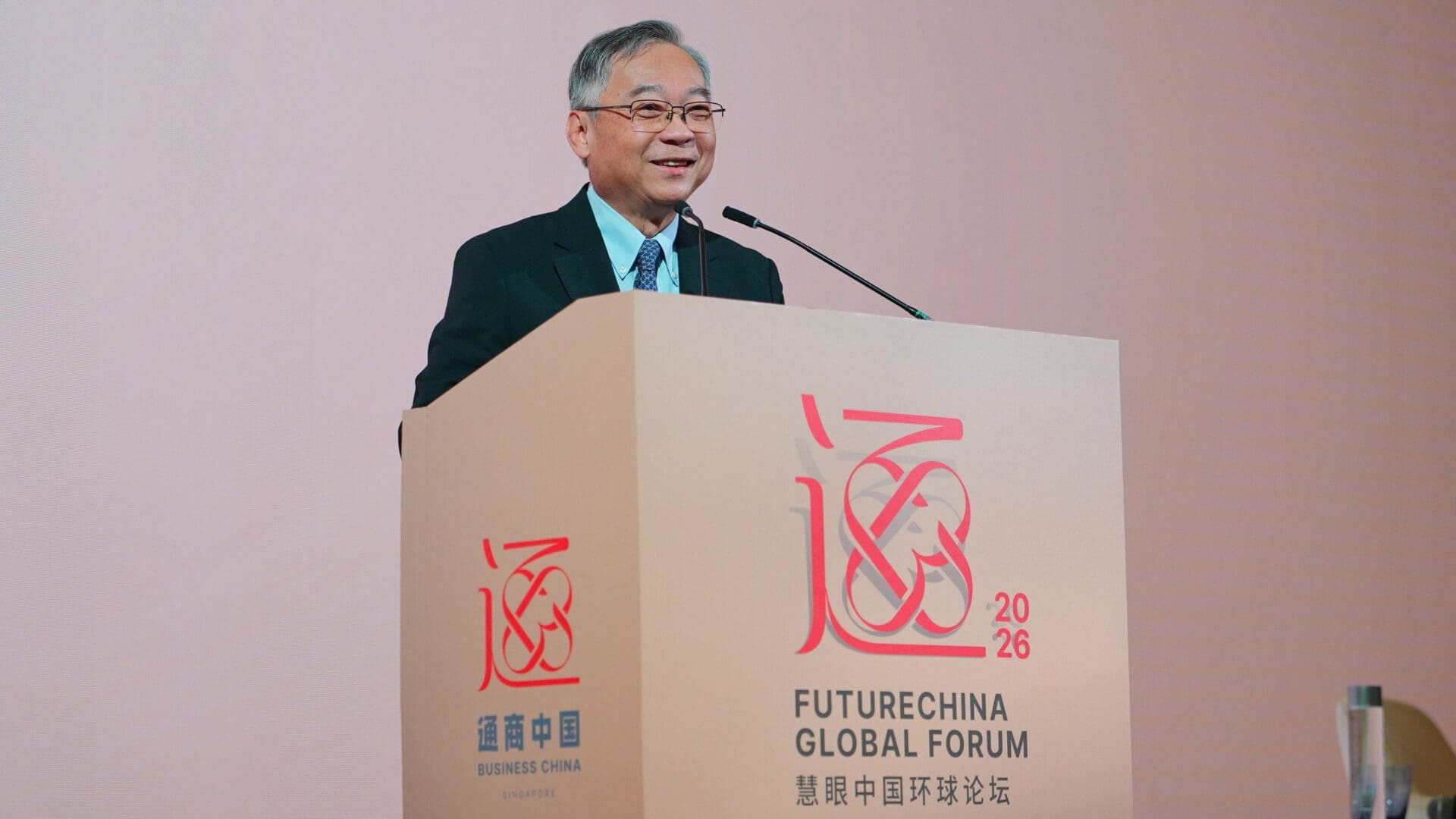
Singapore’s Deputy Prime Minister and Minister for Trade and Industry (Trade), Gan Kim Yong, then delivered the opening keynote as Guest of Honour.
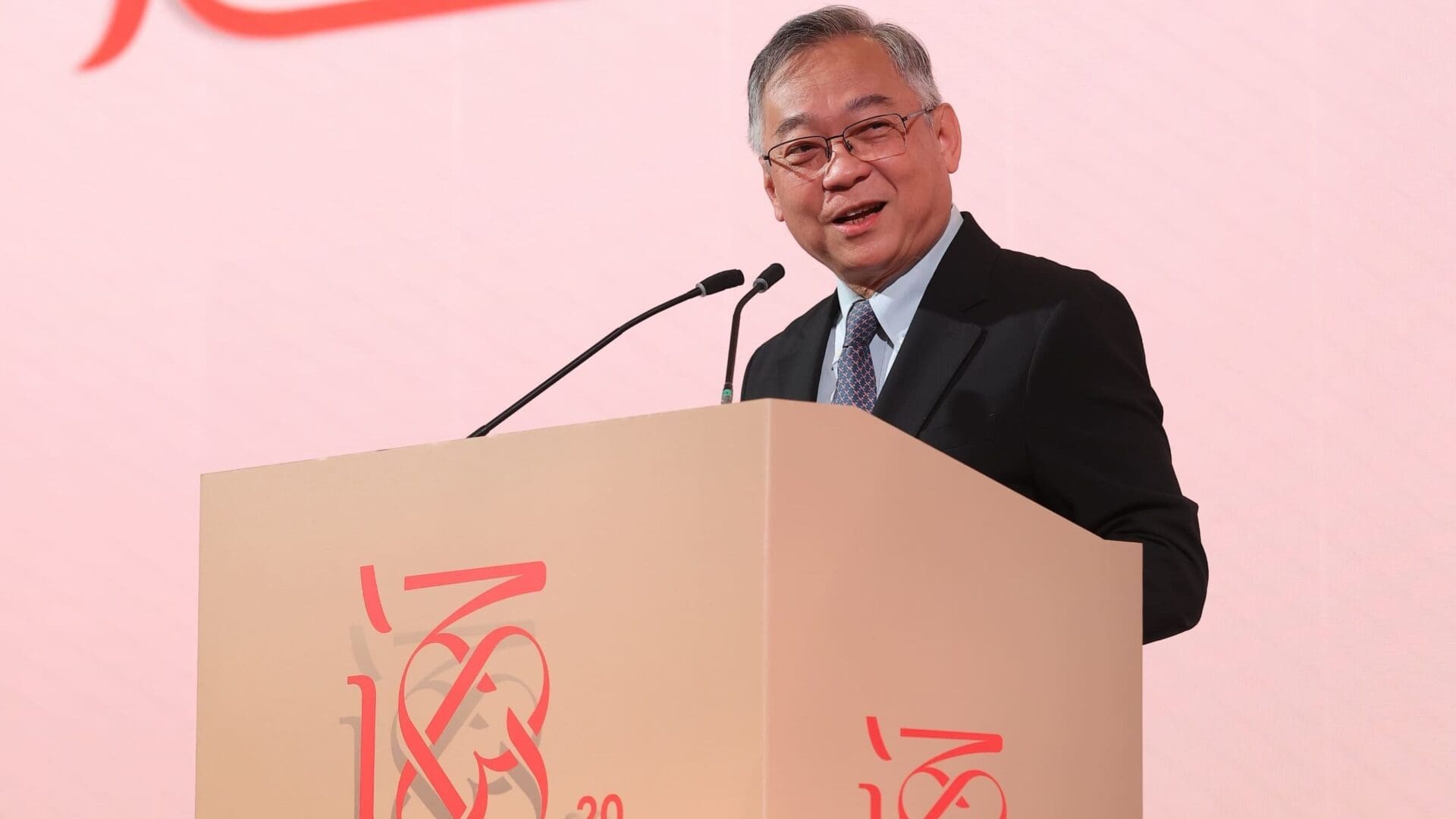
DPM Gan said that as geopolitical rivalry fuels defensive behaviour, market openness remains an important goal. Regional trade agreements and connectivity projects, he added, that now in delivering practical, tangible benefits helps businesses enter new markets and workers gain the skills for higher-value roles. Building on projects such as Suzhou, Tianjin and Chongqing, Singapore and China should deepen cooperation in AI and other emerging areas, while supporting a stronger ASEAN with more capable businesses, skilled workers and resilient supply chains.
He closed by stressing that trust is ultimately built through people. Bilingual and bicultural talent, market understanding and long-term relationships are key, and companies should invest in people as much as in markets and technology.
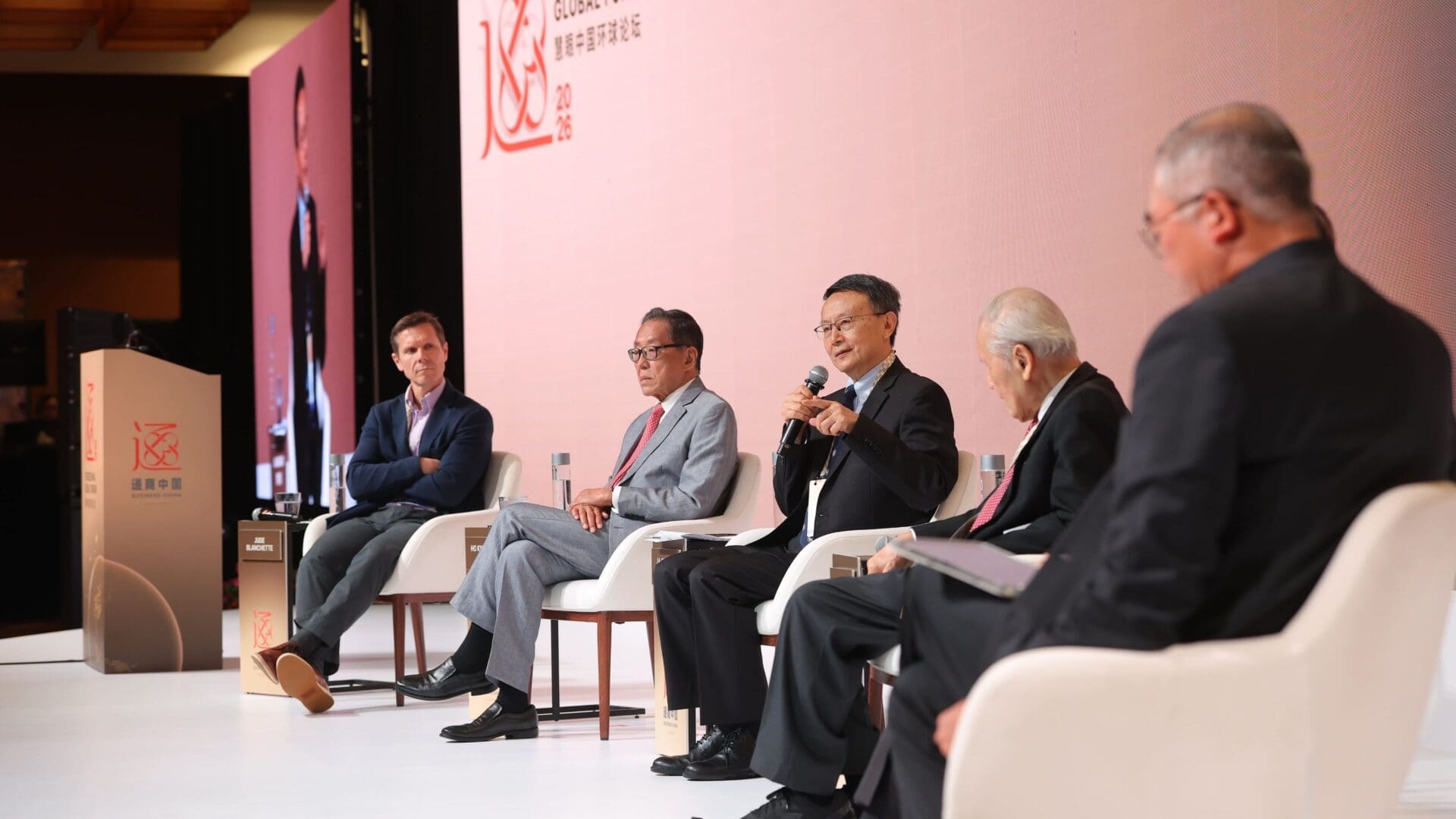
The Opening Plenary, “Strengthening Resilience, Rebuilding Trust”, explored cooperation and trust in the middle of a shifting global landscape.

Speakers included Jude Blanchette, Managing Director of Macro Advisory Partners and former Distinguished Tang Chair in China Research at the RAND Corporation; Ho Kwon Ping, Founder and Executive Chairman of Banyan Group; Jia Qingguo, Director of the Institute for Global Cooperation and Understanding at Peking University; Wang Gungwu, University Professor at the National University of Singapore; and Marty Natalegawa, former Foreign Minister of Indonesia and Chair of The Amity Circle. The session was moderated by Chia Kim Huat, Partner at Rajah & Tann Singapore.
Panellists identified US–China stability as the immediate priority for Asia. Against the backdrop of the Trump–Xi meeting, they noted that while main argument remain, more predictable ties would give businesses and governments greater room to plan. Globalisation, they said, is being reshaped rather than reversed, with China, Southeast Asia, India and the wider Global South assuming a bigger role in trade, investment and growth. AI emerged as a key fault line in US–China competition, with panellists debating whether increasingly separate AI systems will limit access to leading technologies and weaken cooperation on shared risks such as cyberattacks, or provide a necessary balance by preventing either power from dominating and weaponising AI. They also called on ASEAN to turn dialogue into practical resilience by helping businesses diversify supply chains, adopt technology and manage geopolitical shocks, particularly as Singapore prepares to chair ASEAN in 2027.
Zhai Jun, Special Envoy of the Chinese Government on the Middle East Issue, also spoke as Guest Speaker.
Panel 2, “ASEAN and China: Shaping Opportunity in a Multipolar World”, turned to how both sides can deepen practical cooperation.
The speakers were Stephen Olson, Visiting Senior Fellow at the ISEAS–Yusof Ishak Institute, and Lim Chin Chuan, Regional CEO for Northeast Asia at PSA Group. They were joined by Jane Sun, CEO of Trip.com Group, Wang Ke, Head of Greater China and CEO of OCBC Hong Kong, and Vikrom Kromadit, CEO of AMATA Corporation PCL. Christine Tan, Anchor at CNBC, moderated.
Panel 3, “China’s Economic Transition and Industrial Upgrading”, examined China’s next phase of innovation-led growth.
Speakers included Gao Feng, former Chief Information Officer of the China Banking Association, Fan Gang, Professor of Economics at Peking University and President of the China Development Institute, Daniel Zhang, Managing Partner at FirstLight Capital and former Chairman of Alibaba Group, as well as Foo Jixun, Senior Managing Partner at Granite Asia. Zhao Quanyin of Mediacorp moderated.
The discussion held that China’s industrial upgrading is moving faster than its economic rebalancing, and that the next phase is financial as well as industrial, requiring a shift from property, land and debt financing towards long-term risk capital and technology finance. Investors are watching national priorities and the next Five-Year Plan closely, while China’s K-shaped growth, with strong high-tech momentum but pressure on consumption, property and local-government finances, must translate into broader employment and income gains. Consumer recovery, panellists said, will depend on confidence rather than short-term stimulus alone.
Panel 4, “Beyond the Technology: Making It Count for People”, considered how AI can deliver meaningful benefits through collaboration, regulation, talent and investment.
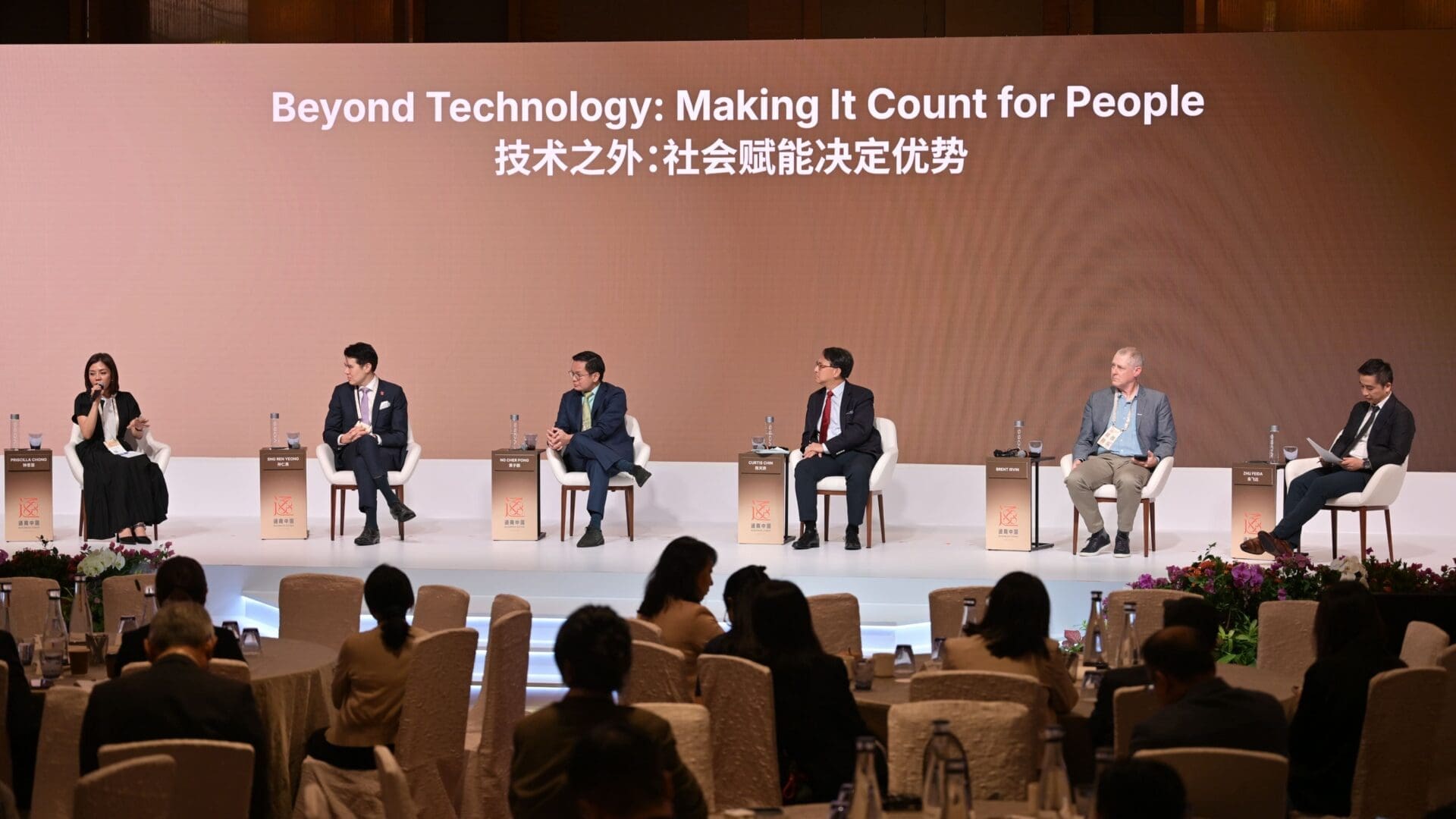
Speakers included Priscilla Chong, Managing Director, Singapore, at Amazon Web Services, Sng Ren Yeong, CEO of Temus, Ng Cher Pong, CEO of the Infocomm Media Development Authority of Singapore (IMDA), Curtis S. Chin of the Milken Institute, and Brent Irvin, General Counsel and Head of Global Corporate Affairs at Tencent. Zhu Feida of Singapore Management University moderated. Panellists stressed that AI’s value is measured at the point of use, when organisations redesign workflows around a clear problem. They cautioned that the workforce transition will not be painless, calling for shared employer and government responsibility for work-integrated reskilling. The skills in demand are becoming more human, including curiosity, critical thinking and judgement, and trust will become a defining source of value as AI grows more autonomous.
Panel 5, “Growth Drivers in China’s New Consumer Landscape”, looked at shifting demand, trade flows and the international expansion of Chinese firms.
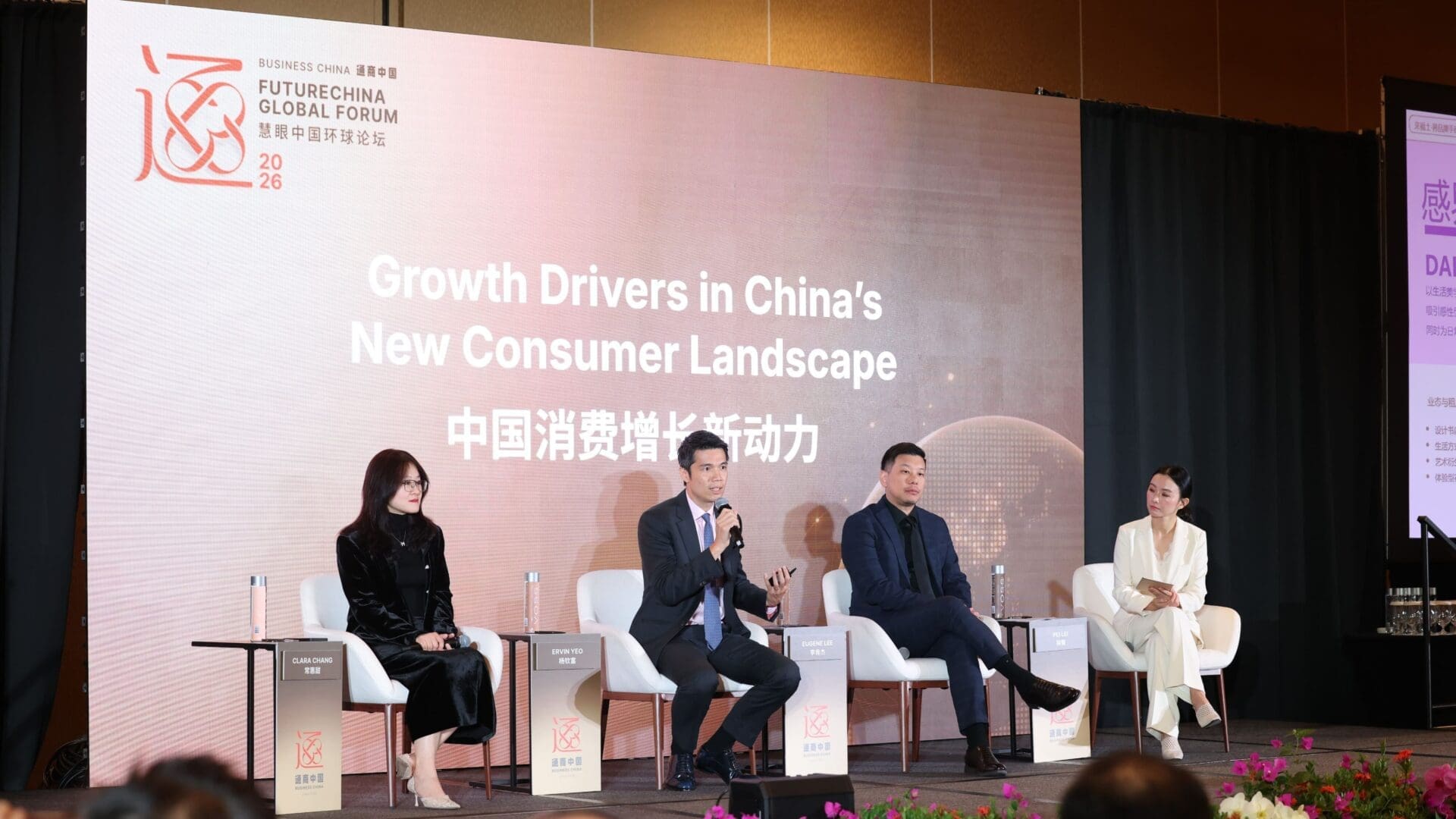
Speakers included Clara Chang, President of Hisense ASEAN, Ervin Yeo, Group Chief Strategy Officer of CapitaLand Investment, and Eugene Lee, Chief Marketing Officer of CHAGEE APAC. The session was moderated by Pei Lei, Anchor at Yicai Media Group, SMG. They said China’s consumer market is becoming more selective rather than simply weaker, with spending shifting from single products to complete solutions. Price wars and subsidies can lift demand in the short term but are not enough for durable growth, and China’s next consumer export will need to be built on more than manufacturing scale.
The Main Forum also featured a fireside chat with Chan Chun Sing, Coordinating Minister for Public Services and Minister for Defence, moderated by Lee Huay Leng, Editor-in-Chief of the Chinese Media Group at SPH Media, on the global issues and opportunities shaping Singapore, China and the region.
Source: FutureChina Business Forum