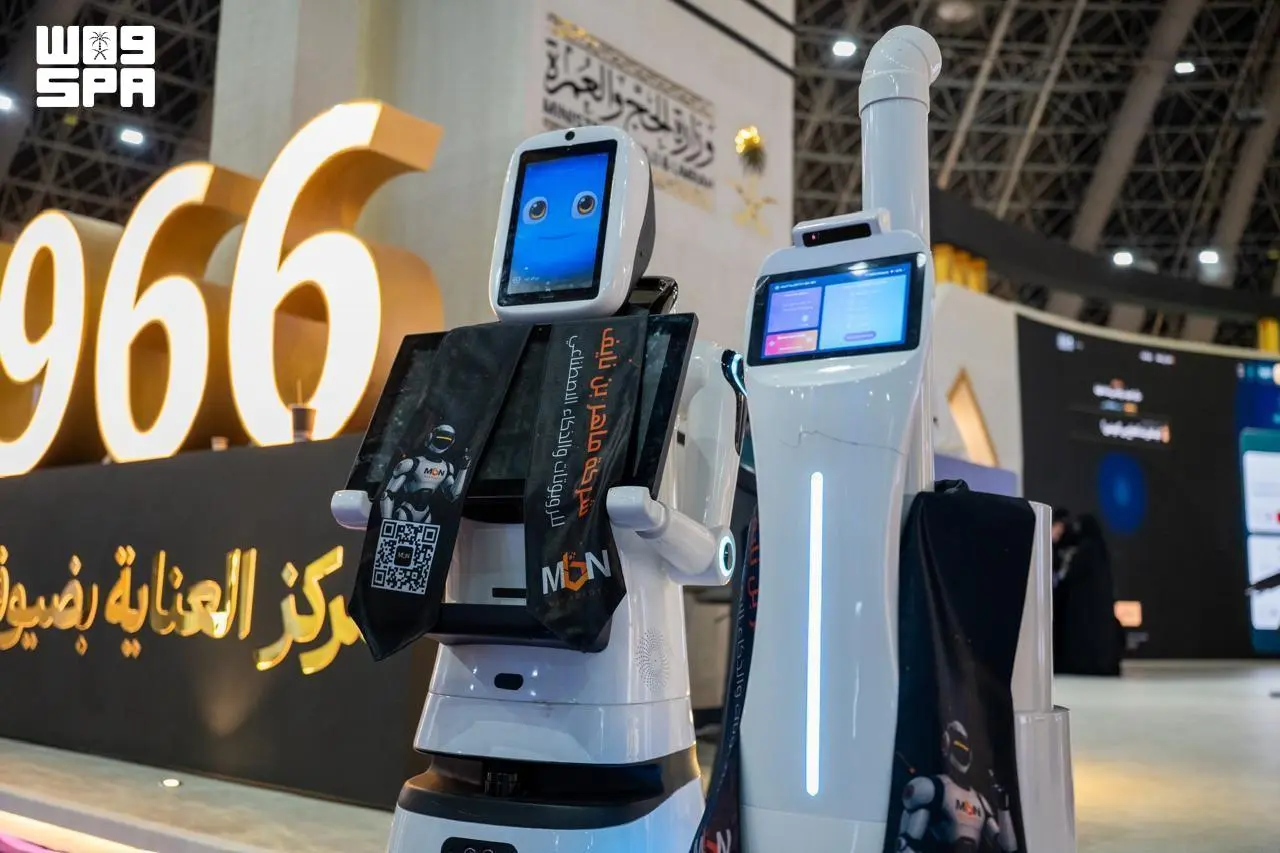
New technologies support pilgrim guidance, transport, cleaning, security, communication and facility management during Hajj.
Saudi Arabia showcased 11 robotic solutions and an electric transport bus at the sixth Hajj Conference and Exhibition in Jeddah, demonstrating the use of smart technologies to support Hajj services and improve operational efficiency. The exhibits covered several aspects of the pilgrim journey, including guidance, reception, communication, delivery, cleaning, sterilisation and security monitoring.
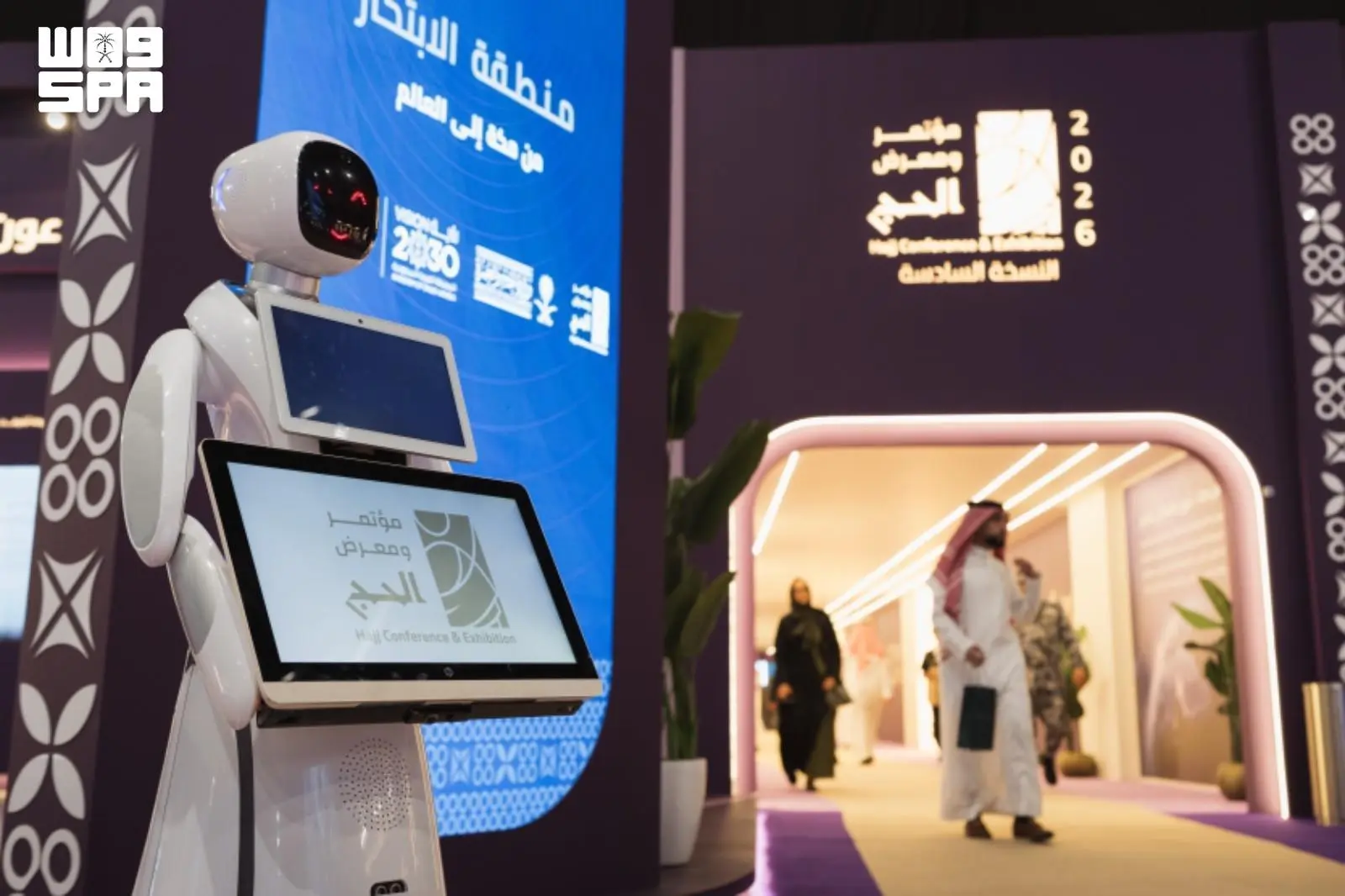
The robotic solutions were presented to Hajj service providers to demonstrate their potential applications in facilities and services catering to pilgrims. Among them, the Shaqardiya robot was designed to guide visitors to their destinations within airports and railway stations, with potential applications in hotels and hospitals.
The Azhal robot provided visitor reception services, including recognising previously detected faces and delivering interactive presentations. Meanwhile, the Muzhara robot featured two screens for displaying visual information and guidance simultaneously, allowing it to communicate instructions and introduce services in waiting areas.

For remote assistance, the Tawasol robot enabled live video calls and remote movement control. This allowed staff to communicate with beneficiaries and provide assistance from different locations.
The exhibition also featured robots designed to support logistics and facility operations. The Mersal robot transported documents, parcels and medicines between departments, delivered supplies to hotel rooms and carried restaurant orders. The Waiter robot provided autonomous delivery services in restaurants, hotels and hospitals, with obstacle-avoidance capabilities and automatic return-to-charging functions.
Cleaning technologies included a multi-function robot capable of sweeping, vacuuming and mopping commercial and industrial floors, with a suction capacity of 15 kilopascals. Another model was designed to clean windows and glass façades, including those of high-rise buildings, and automatically return to its starting point after completing its work.
For hygiene and public health operations, the Atara sterilisation robot was presented in four models. Two used spraying technology, while the other two employed ultraviolet lamps to accommodate different facility requirements.
Security applications included the Dir’aa indoor surveillance robot, which conducted warehouse patrols, detected fire alarms and recorded high-definition video. Its outdoor counterpart featured a 3D laser sensor, night-vision camera with up to 20x optical zoom and support for thermal imaging.
In addition to the robotic systems, the exhibition presented an enclosed electric bus with 17 seats, a 15-kilowatt motor and a 96-volt lithium battery with a capacity of 314 ampere-hours. Its features included fast charging, electric power steering, a 10-inch Arabic-compatible display, three air-conditioning units and two-point seat belts.
The exhibits highlighted potential applications of robotics and electric mobility in Hajj-related transport, visitor services, facility management and security operations.
Source: Saudi Press Agency (SPA)