New initiatives target investment, employment, infrastructure and income growth in northern districts.
The Johor state government is expanding the economic benefits of the Johor-Singapore Special Economic Zone (JS-SEZ) to northern Johor by strengthening regional supply chains and supporting local industries. The initiative, announced on 24 November 2026 at the Johor State Legislative Assembly sitting in Iskandar Puteri, aims to extend economic opportunities to northern districts through phased development under the Johor Economic Transformation Plan (JETP).
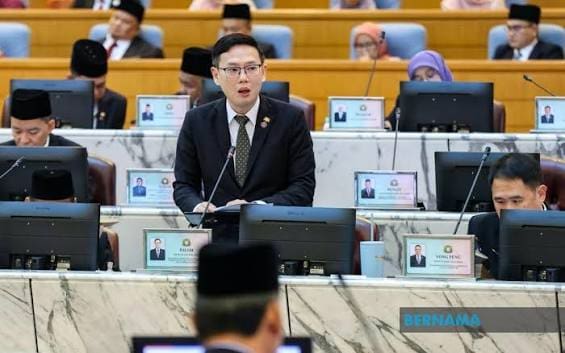
State Investment, Trade, Consumer Affairs and Human Resources Committee chairman Lee Ting Han said the government viewed northern and southern Johor as complementary parts of one economic ecosystem rather than separate development priorities.
“The state government does not view the development of northern and southern Johor as two separate agendas, but rather as parts of a single, complementary state economic ecosystem,” he said.
Lee was responding to a question from Mohd Azahar Ibrahim, assemblyman for Benut-Tenang (BN-Tenang), regarding short-, medium- and long-term measures to address disparities in economic development, infrastructure, employment and public amenities between the two regions.
He said manufacturing, agro-food processing, agriculture, logistics, trade and industrial support services had the potential to benefit from the JS-SEZ’s economic spillover, creating opportunities for small and medium enterprises (SMEs), local entrepreneurs and service providers.
In the short term, the government is prioritising the approximately 2,000-hectare Segamat Food Security Zone, RM32.12 million allocated for 27 agro-food projects in Johor in 2026, and the Segamat JETP Action Plan for 2026–2030.
Medium-term initiatives include developing the Segamat Inland Port and implementing the Segamat JETP Talent and Technical and Vocational Education and Training (TVET) Programme to improve logistics capabilities and develop local talent.
Other projects include Phase Two of IOI Coconut Oil Sdn Bhd, valued at RM130 million and expected to produce 360,000 metric tonnes annually from 2027, and a 866 MWp solar farm developed by Lestra-Hexa JV Sdn Bhd in Mukim Sermin, Segamat. The latter, valued at RM3.3 billion and equipped with a Battery Energy Storage System (BESS), is scheduled to begin construction in the first quarter of 2027 and commence operations in the fourth quarter of 2028.
Long-term development will follow the Johor State Structure Plan 2040, including its review, and projects under Rolling Plan 1 of the 13th Malaysia Plan for 2026. These include flood mitigation works along the Sungai Chaah and Muar River basins, the Muar-Tangkak-Segamat road project and tourism development initiatives.
Lee also reported improvements in household income. Johor’s median monthly gross household income rose by 12.1 per cent, from RM6,879 in 2022 to RM7,712 in 2024. Segamat recorded 21.3 per cent growth, narrowing its income gap with Johor Bahru from 35.4 per cent to 28.1 per cent.
The state government said economic progress would ultimately be assessed through improvements in living standards in all 10 districts of Johor.
Source: Bernama