The National Heritage Board breathes new life into Singapore’s oldest heritage trail, with untold stories of the Civic District’s communities and cultural vibrancy.
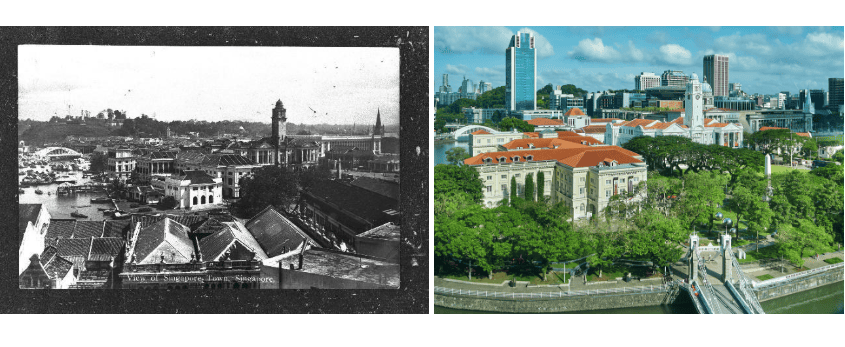
Singapore, 19 September 2025 — Behind the stately facades of the Civic District’s historical and cultural landmarks lie untold stories of the communities who once lived, worked, and played in the area. Stretching from the northern bank of the Singapore River to Fort Canning Park, Bras Basah Road, and the Padang, this district became a melting pot when Singapore’s founding drew waves of immigrants from across Asia and beyond. Here, newcomers from diverse backgrounds forged new lives and created tight-knit communities, transforming this area into the vibrant heart of Singapore.
The National Heritage Board (NHB)’s refreshed Civic District Heritage Trail explores these communities of Singapore through new research and stories about the civic centre’s early days. Through thematic routes, trail-goers will be able to discover what life was like for families living along Hill Street and explore the district’s history, not just in terms of governance and nation building, but also as a centre for leisure and entertainment.

The Civic District Heritage Trail began as Singapore’s first established heritage trail in 1999. It was reintroduced as the Jubilee Walk in 2015 to commemorate Singapore’s 50th anniversary of independence, by focusing on the narrative of collective national resilience. The current refresh celebrates the diverse communities and how they lived and played here, with stories less explored in its previous editions.
Mr Gerald Wee, Director (Education and Community Outreach), NHB, said: “As NHB’s first and oldest heritage trail, the Civic District Heritage Trail has its own rich history. This second refresh goes beyond the established civil functions of the area. It brings to light new narratives of the diverse communities that contributed to early Singapore from the city centre and delves further into a lesser-known side of the Civic District’s past as a leisure and entertainment hub.
We hope that this will spark renewed interest in the central role that the Civic District played in Singapore’s history, especially amongst the young who might only know the areas for what it is today.”
Uncharted sites and new stories
The refreshed Trail features new sites and stories, such as Masjid Al-Burhani, tucked just off the main road on Hill Street. With its clean lines and contemporary design, the mosque holds a deep-rooted history as a spiritual anchor of the Dawoodi Bohra community in Singapore, a Muslim denomination hailing from Gujarat, India. The refreshed Civic District Heritage Trail shines a light on the memories and stories of this small, yet historically significant community.
Opened in 1897, the original building that was located here stood as a place of worship and a central gathering point for the community, made up of skilled traders and merchants who came seeking new markets and opportunities. Presently, the site remains a key place of worship for the Dawoodi Bohra community.
Next to Masjid Al-Burhani stands a striking building with green-tiled roofs and classical Chinese architectural details with modern twists. Formerly a site that was home to Wee Ah Hood, a prominent pepper and gambier Teochew merchant in the mid-1800s, Wee’s mansion became the premises of the Singapore Chinese Chamber of Commerce & Industry (SCCCI).
Founded in 1906, the Chamber was where leaders hailing from different hometowns and dialect groups – Hokkien, Teochew, Cantonese and Hakka – came together to represent the collective interests of the Chinese business community. The Chamber was instrumental in facilitating relations with the imperial Chinese and British governments and later played a key role in Singapore’s political and economic development. Today, the SCCCI remains a steadfast institution in supporting the local business community.
Civic District is a well-loved leisure and entertainment district
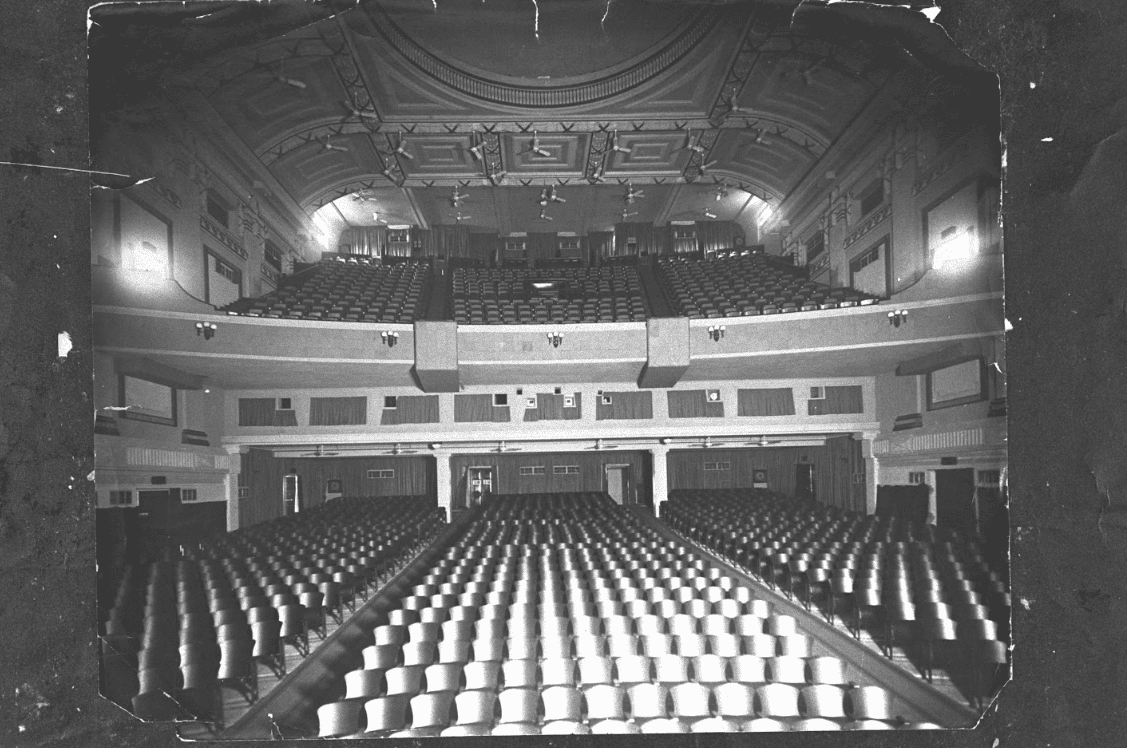
The Trail also delves deeper into the District’s reputation as a vibrant leisure and entertainment district back in the day. When it first opened in 1930, the Capitol Theatre was one of the biggest crowd-pullers as the largest and best-equipped cinema in the East. The ambitious project was financed by wealthy businessman Mirza Mohamed Ali Namazie, a Persian descendant who had also commissioned a block next to the theatre, Namazie Mansions, later more often referred to as “Capitol Building”. After the war, the Capitol Theatre was sold to Shaw Organisation and became the company’s flagship cinema. The theatre also hosted live performances by local and international musicians and artistes, and high-profile events such as Miss Singapore beauty pageants.
For many Singaporeans growing up in the 1950s to 1980s, the Civic District was a vibrant place where families and friends gathered for dining, recreation, and shopping. Brian Ang, whose father established Kwang Sia in the 1950s at 104 Hill Street, recalled that, “The best thing about growing up at Hill Street was that all the families along the street had many children. You were never short of friends. We would also look forward to festivals like the seventh month, where the Teochew and Hokkien merchants in the area would pool their funds to put up a wayang show along the streets.”
Another retail destination was the elegant colonial-era building turned hotel, which later became known as Stamford House after it was purchased by the Lalwani family in 1963. The family of merchants operated a vibrant department store known as Bobby-O, which was the go-to spot for everything from jewellery and tailored clothes to hi-fi equipment and watches. For Shalini Lalwani, descendant of the Lalwani family who also grew up at Eu Court, the Civic District held fond memories for her. “During the March school holidays, I would organise the ‘Annual Eu Court Sports Day’ for my siblings and neighbours. We would have all kinds of races along the corridor, and the winner would get a trophy made from a carton wrapped in foil! I would also sponsor $5 as cash prizes.”
Discover the stories of Singapore’s Civic District through a variety of tours
10 As part of the refresh, three thematic routes will allow trail-goers to embark on different journeys based on their interests:
● Seeking Fortunes, Forging New Lives (1 hour on foot), 1km – Explore how immigrants from around the world arrived in Singapore after its founding in 1819, seeking opportunities and building new lives.
● Journey to Nationhood (0.5 hour on foot), 550m – This route will trace the key milestones of Singapore’s journey to nationhood that occurred at the Civic District, from post-World War II to independence.
● Functions of the Civic District (1.5 hours on foot), 2.2km – Discover the key government functions and cultural institutions housed in Singapore’s Civic District through the centuries.
The Civic District Heritage Trail’s companion guide and map can be downloaded from https://www.roots.gov.sg/places/places-landing/trails/Civic-District-Heritage-Trail. The map will be made available in all four languages from December 2025. Limited printed copies of the companion guide will also be available at selected sites such as the Asian Civilisations Museum, Fullerton Hotel Singapore, the Arts House at the Old Parliament, Victoria Theatre and Victoria Concert Hall, and Capitol Singapore.
As an SG60 offering, guided tour options will also be introduced as a component of The Civic District Heritage Trail. The guided tours, which will be offered for a limited duration, will offer the public more ways of experiencing the trails. These will be available on weekends starting from 27 September 2025 till end-December 2025.