With shifting trade alliances and a young, fast-growing population, Africa is emerging as one of the world’s most promising investment destinations — but long-term success requires navigating its complex risks
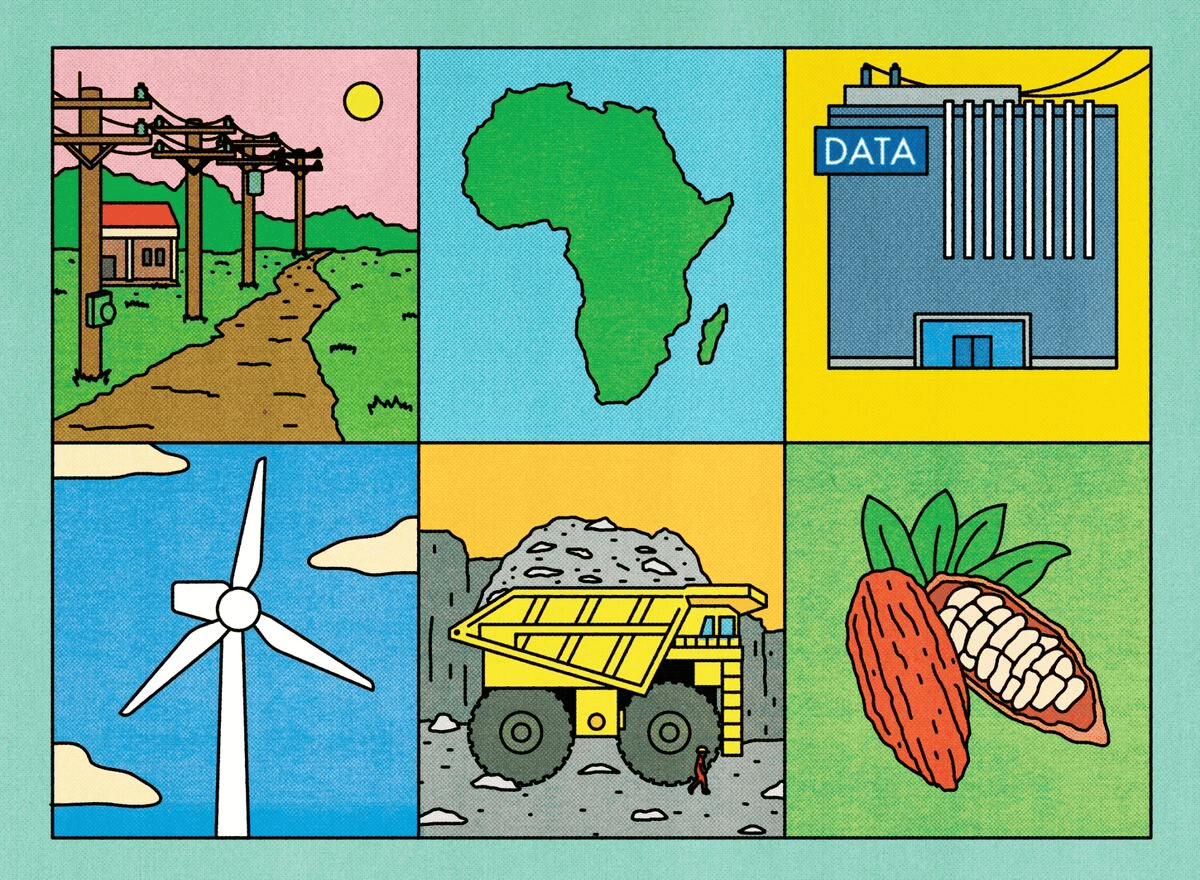
Global investors are increasingly turning their attention to Africa’s 54 nations, drawn not only by their abundant natural resources but also by the continent’s growing influence in the realignment of global trade. Over the past year, tens of billions of dollars have poured into sectors ranging from agriculture to data centres, as countries and corporations reposition themselves amid a reshaping of global supply chains. The wave of investment has been accelerated by US President Donald Trump’s tariffs, which have prompted governments and businesses alike to seek new trade partnerships and production bases beyond the traditional power blocs.
In the first half of 2025 alone, China signed $30.5 billion worth of construction contracts with African nations, including major railway projects in Nigeria and port developments in Egypt. This figure represents nearly five times the amount committed during the same period last year, according to research by Australia’s Griffith University and China’s Green Finance & Development Center. At the same time, government bodies and private investors from Asia, Europe and the Middle East are also deepening their engagement with the continent. Several countries, such as Egypt and Kenya, have become particularly attractive, benefiting from reciprocal tariff rates of just 10% with the United States — a sharp contrast to India’s 50%.
The appeal is easy to understand. Africa is home to the world’s youngest population and some of its fastest-growing economies. The International Monetary Fund projects that the region will expand more rapidly than any other over the next five years. The African Continental Free Trade Area, officially launched in 2021 and expected to be fully operational by 2035, is set to become the largest free-trade bloc in the world, connecting a market of more than a billion people and unlocking access to a combined GDP of $3.4 trillion. Reflecting its rising global profile, Johannesburg will in November host the G20 Leaders’ Summit — the first time in history that an African nation has done so. Even in entertainment and sports, Africa’s visibility is rising once again, with Formula One considering a return to the continent after more than three decades.
Yet the opportunities come with significant challenges. The African Development Bank estimates that the continent faces an infrastructure financing gap of up to $108 billion a year, underscoring shortfalls in transport networks, power generation and logistics. Policy uncertainty, skills shortages, high youth unemployment and growing debt burdens continue to weigh on several economies, reminding investors that success in Africa demands careful navigation and patience. As Akin Dawodu, Citigroup Inc.’s head of banking for sub-Saharan Africa, notes, “Successful engagement in Africa necessitates a nuanced, long-term perspective.”
To help investors better understand where and how to deploy their capital, Bloomberg Economics has developed a comprehensive scorecard assessing 19 African countries across key criteria such as economic strength, fiscal health, governance, infrastructure and external vulnerability. Drawing from World Bank and IMF data, the so-called “Africa Investment Risk-o-Meter” uses dozens of indicators — from GDP per capita to logistics performance — to provide a comparative view of investment risk across the continent. The countries included represent not only Africa’s largest economies but also those that stand out for their rich natural resources, established financial hubs or growing business and tourism sectors.
Complementing this data-driven assessment, Bloomberg Businessweek engaged with investment promotion agencies across Africa and tracked deal flows in key industries to produce its inaugural Investor’s Guide to Africa. While the list of investable countries is by no means exhaustive, it captures the momentum of deep-pocketed investors now making inroads into the world’s second-most-populous continent. Despite the structural challenges and the need for long-term vision, Africa’s trajectory is unmistakable. It is, as Dawodu aptly puts it, “a critical and exciting frontier for global capital.”
Source: Bloomberg