Malaysia shifts from tech consumer to digital producer under MD2030 plan
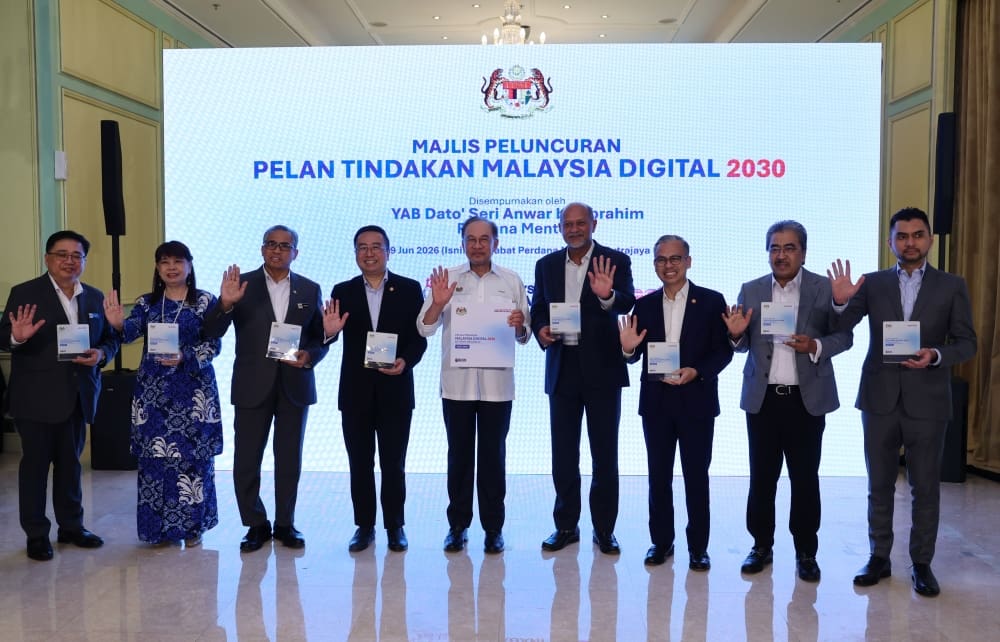
Prime Minister Datuk Seri Anwar Ibrahim officially launched the Malaysia Digital 2030 (MD2030) action plan on June 29, 2026, in Putrajaya, marking what he described as the nation’s decisive strategic pivot from pure technology consumption to proactive digital production on the global stage. Digital Minister Gobind Singh Deo, when later detailing the plan’s core operational framework, stated that MD2030 sets bold yet achievable targets for the end of the decade. According to Mr. Gobind, these include raising the digital economy’s contribution to the national GDP to 30 per cent, generating half a million high-value digital jobs, achieving RM4.5 billion in public sector savings through automation, and pushing government online service delivery to a 95 per cent completion rate, all aligning with the overarching “Towards an AI Nation 2030” vision.
Explaining the multi-ministerial governance structure, Mr. Gobind noted that MD2030 operates across seven distinct strategic pillars. Chief Secretary Shamsul Azri Abu Bakar, the minister specified, leads the Government pillar, concentrating on revamping public service delivery through the GovTech Malaysia initiative. The Economy pillar, Mr. Gobind added, is entrusted to Investment, Trade and Industry Minister Datuk Seri Johari Abdul Ghani, whose mandate includes cementing Malaysia’s status as a regional digital hub and accelerating the export of “Made by Malaysia” digital products. For Infrastructure, Communications Minister Datuk Fahmi Fadzil is tasked by the plan with bridging connectivity gaps and developing sustainable digital ecosystems, including data centres, cloud computing nodes, and smart city frameworks. Addressing workforce readiness, Mr. Gobind pointed to Human Resources Minister Datuk Seri R. Ramanan, who will helm the Talent pillar to formulate agile reskilling policies. Meanwhile, the minister highlighted that Women, Family and Community Development Minister Datuk Seri Nancy Shukri leads the Society pillar, utilising the Malaysian Digital Inclusion Index to empower rural communities. Mr. Gobind confirmed he personally oversees the Trust and Security pillar to operationalise the National Data Commission and draft the National Digital Trust Strategy. Finally, Science, Technology and Innovation Minister Datuk Chang Lih Kang, he said, drives the Innovation pillar to streamline the research-to-commercialisation pipeline.
In his concluding address, Mr. Gobind asserted that the MD2030 launch signals Malaysia’s firm readiness to evolve into a respected producer of digital innovations. He reiterated his ministry’s commitment to ensuring this nationwide transformation is anchored in uncompromising data security, public trust, and robust governance, executed through seamless whole-of-government coordination with supporting agencies such as the National AI Office (NAIO).
Source: BERNAMA