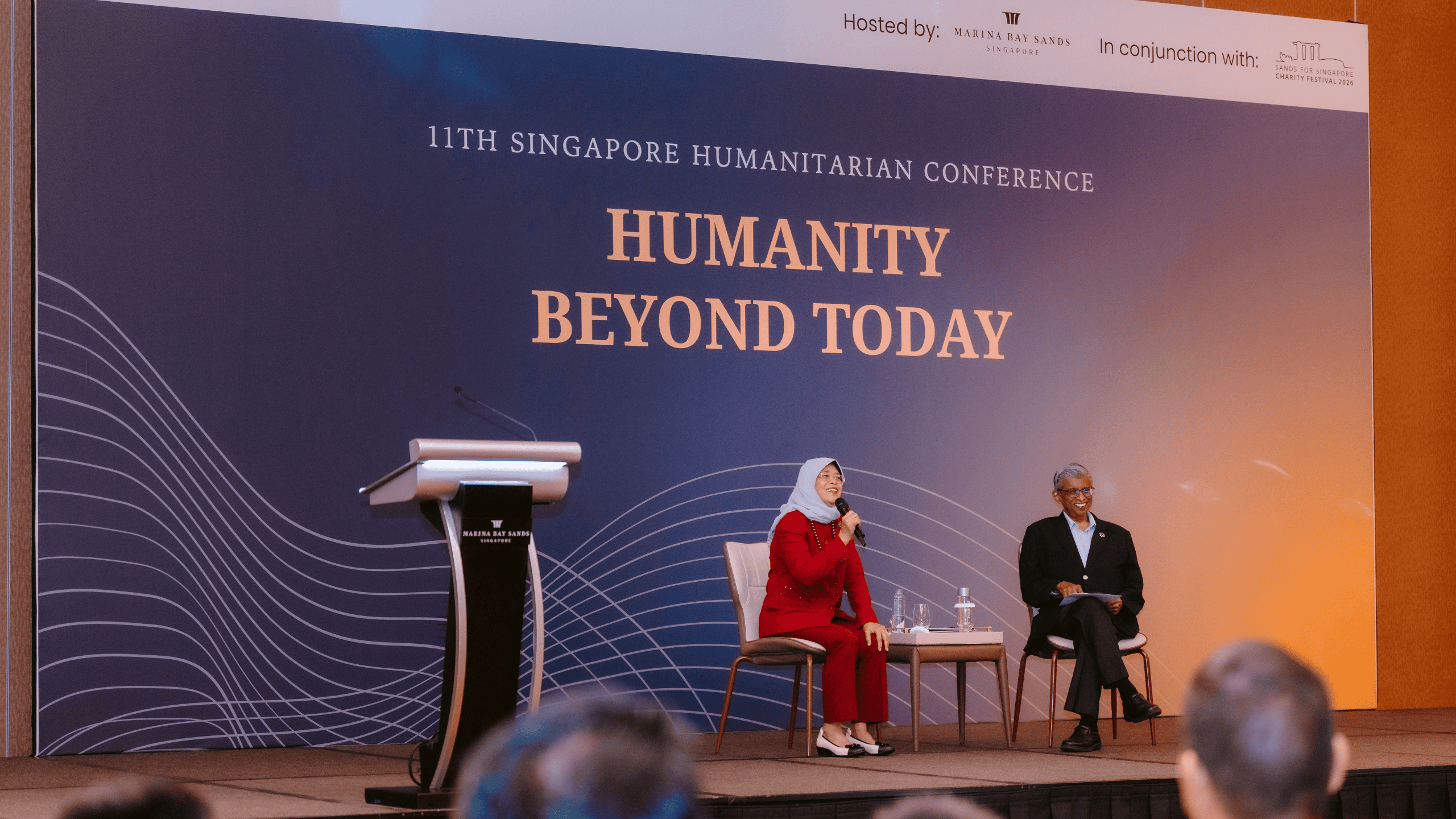
At the 11th Singapore Humanitarian Conference, Singapore Red Cross CEO Mr Benjamin William tells Sun Media why realism, regional focus and youth-driven innovation are reshaping humanitarian action in an era of unprecedented challenges.
In an interview with Ms Nomita Dhar, Editor-in-Chief of Sun Media Singapore, Mr Benjamin William, Secretary-General/CEO of the Singapore Red Cross, reflected on the evolving demands of humanitarian work, the importance of preparation, resilience and community, and the strategic direction of the Singapore Red Cross.
The discussion took place at the Singapore Humanitarian Conference, which returned for its 11th edition on Saturday, 15 August 2026, at the Marina Bay Sands Expo & Convention Centre. Organised by the Singapore Red Cross as the flagship event of Humanitarian Week 2026, the conference brought together humanitarian practitioners, policymakers, academics, volunteers, youth leaders, partners and members of the public under the theme “Humanity Beyond Today”.
Centred on the intersecting pressures shaping humanitarian action, this year’s conference explored trust, humanitarian diplomacy and compassion fatigue. Through keynote addresses, panel discussions and interactive experiences, participants examined the continued relevance of humanitarian principles and International Humanitarian Law, while considering how organisations and individuals can strengthen humanitarian action in an increasingly interconnected and media-driven world.
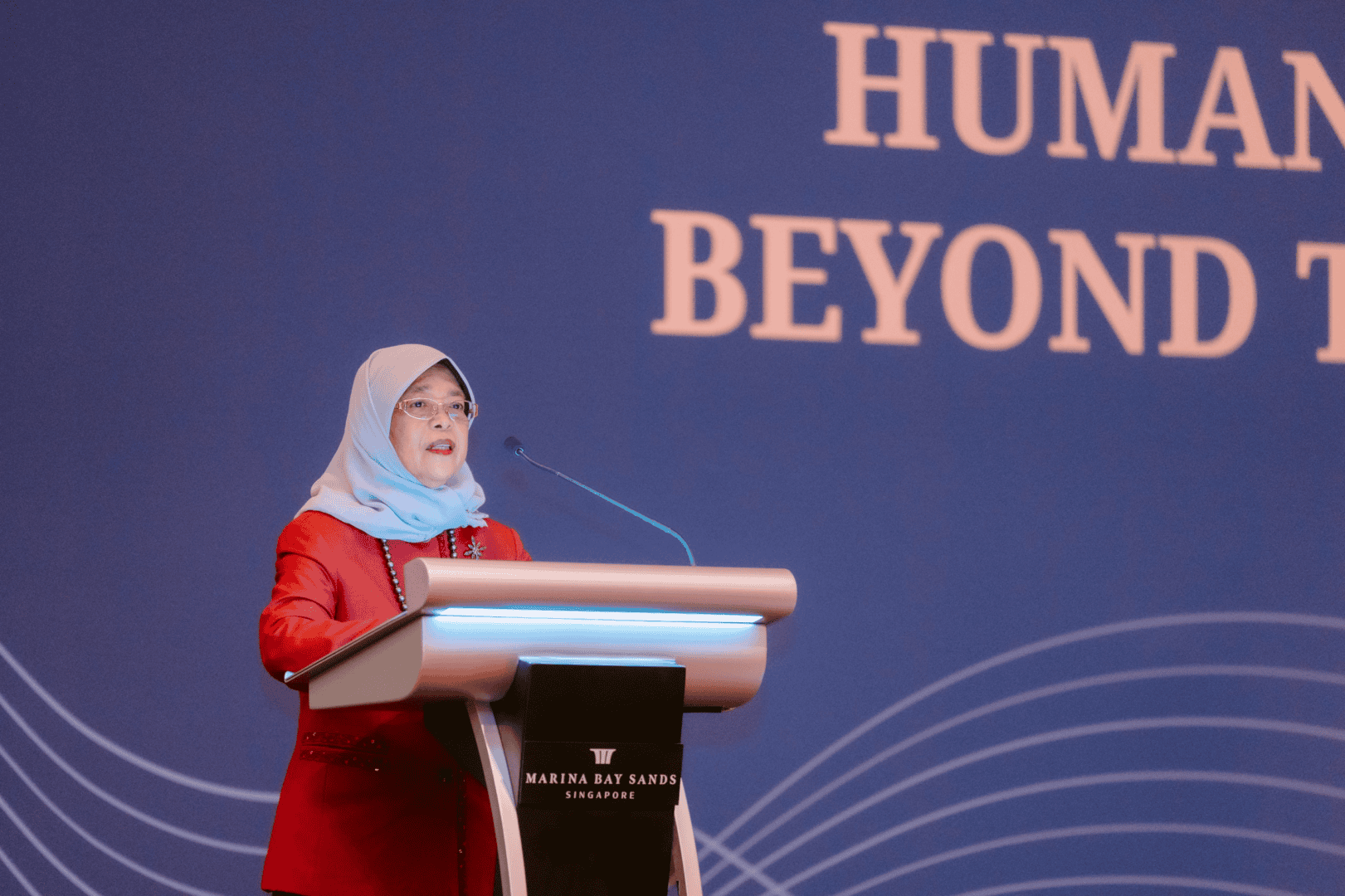
The event’s Guest of Honour was Mdm Halimah Yacob, Chancellor of the Singapore University of Social Sciences and former President of the Republic of Singapore, who delivered the keynote address and set the tone for a day of meaningful conversations on the future of humanitarian action.
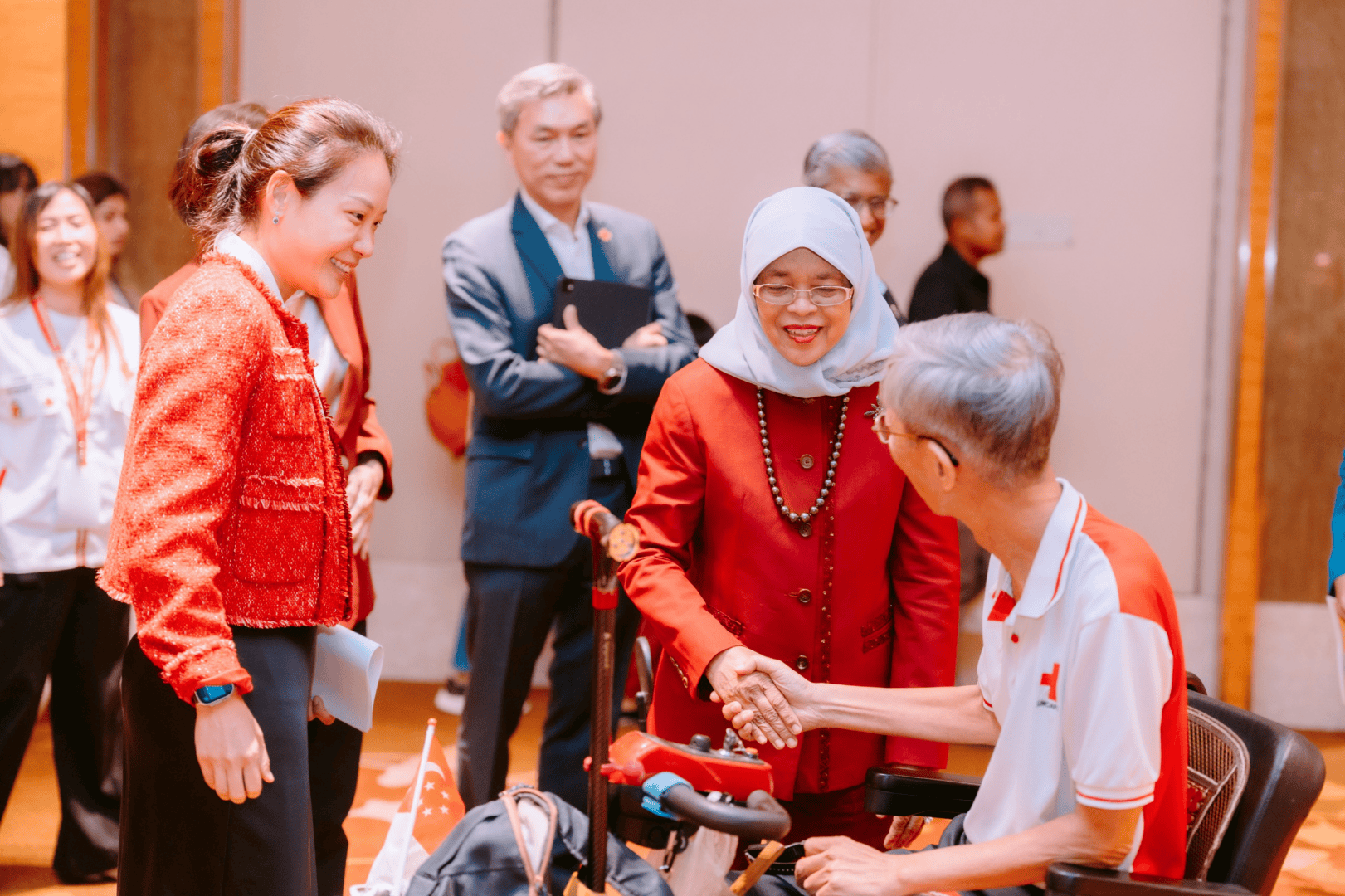
Ms Nomita: Congratulations on a wonderful start to the conference. What are your three main takeaways from this interaction this morning?
Mr William: Before the three main takeaways, I think the context of the conference is important. After 12 years, the conference is taking place at a very momentous time in the humanitarian sector. The challenges we are facing are, in some ways, unprecedented. Whether it is respect for humanitarian law, the number of conflicts going on, climate change and its impact, or even natural disasters, we are suddenly seeing the number and severity of humanitarian disasters increasing.
So in that context, I think this conference has some important takeaways. Number one, to me, is what Mdm Halimah mentioned about bringing social power to the fore. We always talk about economic power and political power, but somehow other social power seems to have been forgotten. And social power has come in different forms throughout the morning sessions: whether it is technology, whether it is the fundamental principles, whether it is humanitarian law. I think that is number one.
Number two is working together, collaboration. I have always believed in this idea of the one billion coalition, which basically means that the problems in the world are so intense that there is no way one organisation or one individual can handle them. But we need to come together. And I think today’s session emphasised time and again how collaboration is very important.
The third takeaway I have is in terms of not standing still, but looking ahead. And here, looking ahead, I think there are two big areas. One is: how can we bring the youth on board, the young people on board, to see that the humanitarian problems are their issues as well? It is not just the previous generation’s issues. They are going to face them, and it is only going to get more intense.
And number two, the second aspect of looking ahead is: how can we bring technology and innovation into the humanitarian sector, because it is too minuscule compared to investment in the military sector.
Ms Nomita: In terms of diplomacy, Red Cross has been playing a very important role; it is diplomacy of the heart. Is it easy for you to work across nations? What are the difficulties?
Mr William: We are a small team. Looking at China’s numbers, it was quite mind-boggling. So how does Singapore Red Cross, with its little numbers and size, fit in in the largest scheme of things, where there are bigger players as well?
So I believe we have to be realistic. The important thing is that we have to be realistic. But realistic has two elements. One is, you know that you cannot do certain things that bigger players can do. Your capacity, your capability, your resources are limited. But it also means that you do not say, “I am too small, so I do not do anything.”
So I think that is the role that Singapore Red Cross has taken. We have looked at ourselves, we say these are the resources that we have. And we have tried to maximise it in terms of working with our other national societies.
For example, we do not pretend that we have the resources or the expertise to solve all the problems of the world. Yes, we respond to disasters all over the world. But in terms of capacity building, we have focused on Southeast Asia and small states. Besides Southeast Asia, we work with Bhutan and Maldives. These are small states where we feel that we have the resources to make a significant impact.
So I think this is the way to move forward. Gone are the days where you must work globally. Southeast Asia is one ecosystem, but whether it is Latin America or Southeast Asia, I think more and more countries have to look and say what they can do, but not sit down and wring their hands and say we cannot do anything.
Ms Nomita: Talking about Latin America, Singapore Red Cross recently gave a helping hand to Venezuela and Colombia. Tell me about that.
Mr William: As I just mentioned, our focus in terms of capacity building is Southeast Asia and the small states. But every now and then, when there is a major disaster around the world, we also see what we can do. Not always, but there are many factors. One of the factors is that the needs are so great that they need support from outside.
That was the case of Venezuela. It was very obvious. The ambassador had several conversations with me. So together with the embassy’s support, we launched a public appeal, and we have actually had a very good response from the Singapore public, including people living in Singapore. And we have raised a considerable amount of funds which we hope will make a difference in the response in Venezuela.
Now, whether it is going to solve the problem, of course not. It will be a drop in the bucket.
Ms Nomita: But it will still be a drop in the bucket.
Mr William: Absolutely.
Ms Nomita: I went to the booths and I see that you are doing many things. In your experience, what are the areas your work has been most impactful locally?
Mr William: Locally? Number one is our work with lonely seniors. This is about 12 or maybe close to 15 years ago. We sat down and said, who are the most vulnerable in Singapore? And at that time we decided it was the seniors. This is before the government started talking intently about the ageing population.
And then as we drilled down, not all the seniors need help. There are many multimillionaires and millionaires, but the lonely seniors. And we found that those who live alone actually mostly come from economically challenged situations.
So we started building that programme. I think that has been the most impactful. For example, we have the home monitoring, which is 24-hour home monitoring. Our volunteers respond even in the middle of the night.
We did not start the programme, but right now we are the only organisation that still sustains the programme.
Ms Nomita: Excellent. And this is also something you can share with other countries. I am not too sure whether they are doing the same, but because our island is contained, it is easy to see results. Perhaps this can be replicated in other countries.
Mr William: A number of our other national societies have shown interest, but modified, because of course ours is close quarters. Many of them are all over the place, but some of the principles apply. So that is one.
Number two is a programme we came across accidentally, because as we were working with disadvantaged families, we recognised the kids who live in the one-room flats, and we realised that not many of them were actually being mentored or helped.
And so we started a small programme called the Young Hearts Programme. That is a very intense programme. Small group, but it is very intense. It is not like your Mendaki tuition or your SINDA tuition, because there is a lot of investment that goes into it: emotional, social, and financial.
That programme I am very happy with. You may not see the success of it immediately, but hopefully we will see it in the next few years as some of them come out and break the poverty cycle.
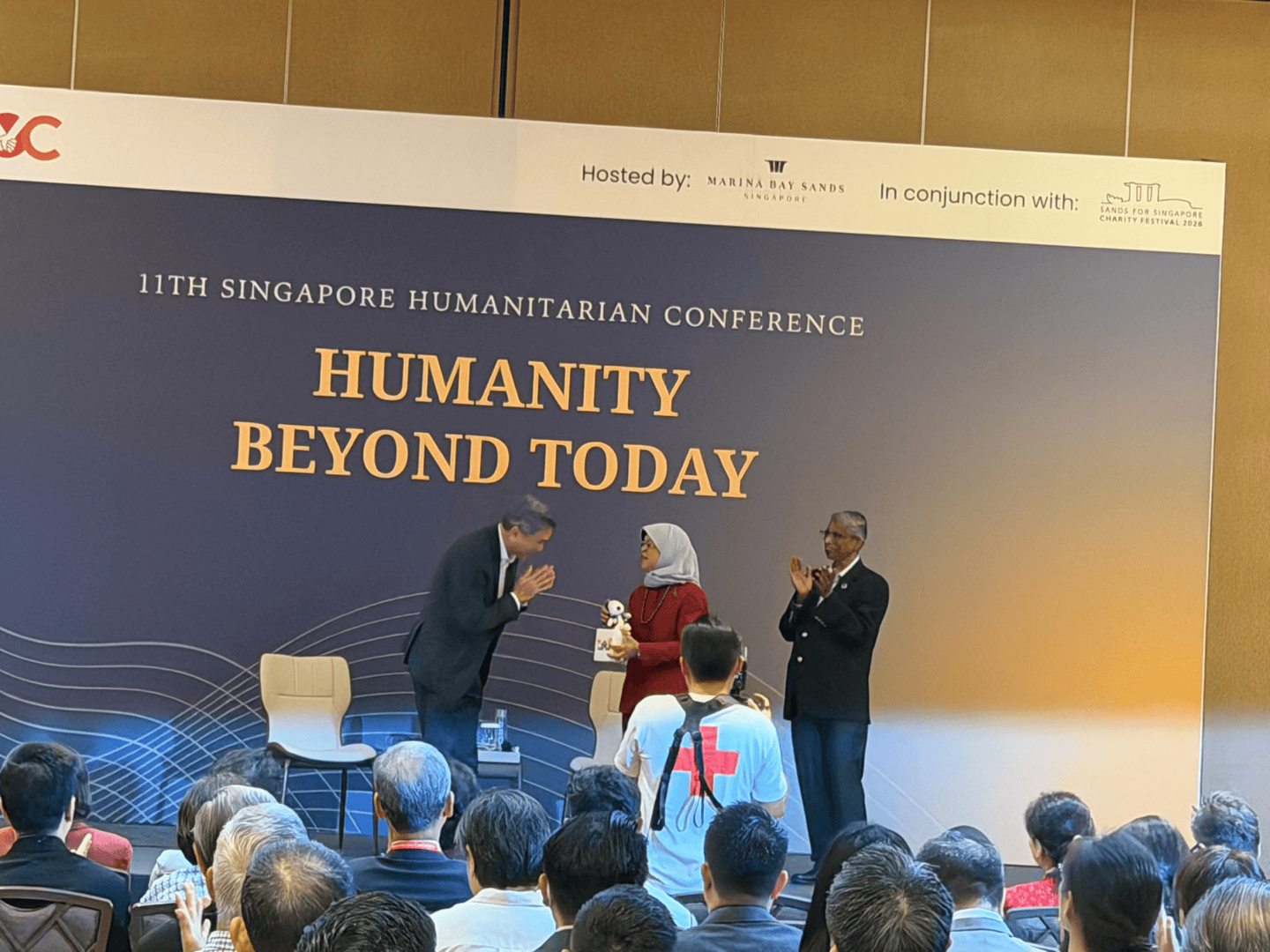
Ms Nomita: Wonderful. In international disasters, when the Singapore team gets in, what is your first port of call? Do you work through the embassies or the Red Cross? And what are the difficulties our very small team faces when they are trying to help out?
Mr William: There are certain common factors, but almost every disaster is different. The first step when we come across a disaster is to make an assessment as to whether we are going to respond. There are a number of factors that we look at.
Then after we decide we are going to respond, we have to decide whether we are going to launch a public appeal or we are just going to make a donation for the relief from our disaster funds. So there are two phases to it. One is the relief phase and one is the rehabilitation phase.
The relief phase, we always work with the Red Cross Red Crescent Society on the ground. That is a bit more straightforward. Sometimes we have other partners that we know, then we work with them, but it is still quite straightforward.
It is the rebuilding phase that is much more complicated because if we work only with the Red Cross Red Crescent, often it becomes a bottleneck. So we have to look for other partners and then we have to make sure that the partners are reliable and credible. These are some of the challenges.
Often we may work with the embassy, that means the embassy of the country in Singapore or our embassy in that country, to help us to assess and identify organisations we can work with. Or we work with the Red Cross Red Crescent on the ground to also see what we can do.
The other area of challenge is to make sure that we work on projects that are not abandoned immediately after. In some disaster response sites, they have built a beautiful hospital, but after that nobody uses the hospital.
So one easy way is we do not build a new school or a new hospital which did not exist before. Because when you do a rebuilding, there is a principal, there is a teacher, and all that already there, or there is a doctor.
But if you could not do it till new, then you have got to make sure that your partner you are building with actually can run the hospital later.
Ms Nomita: True. I heard you say that for us to get the young generation involved, we should make it trendy and we should introduce K-pop. So what do you have in mind?
Mr William: I do not know. But since you have thought of it, I am sure it has got you sweating as well.
We have been doing some of this already. We have moved away from drills and things like that. We do drone training now, we do mental well-being, we do VR and AR, we are promoting social media among the young, making them our social media ambassadors.
Ms Nomita: So we are halfway through the conference. Did you pass or did you accept?
Mr William: I do not know. I am quite happy.
Ms Nomita: It is the impact that counts. Everybody seems to be very involved, very charged, and congratulations.
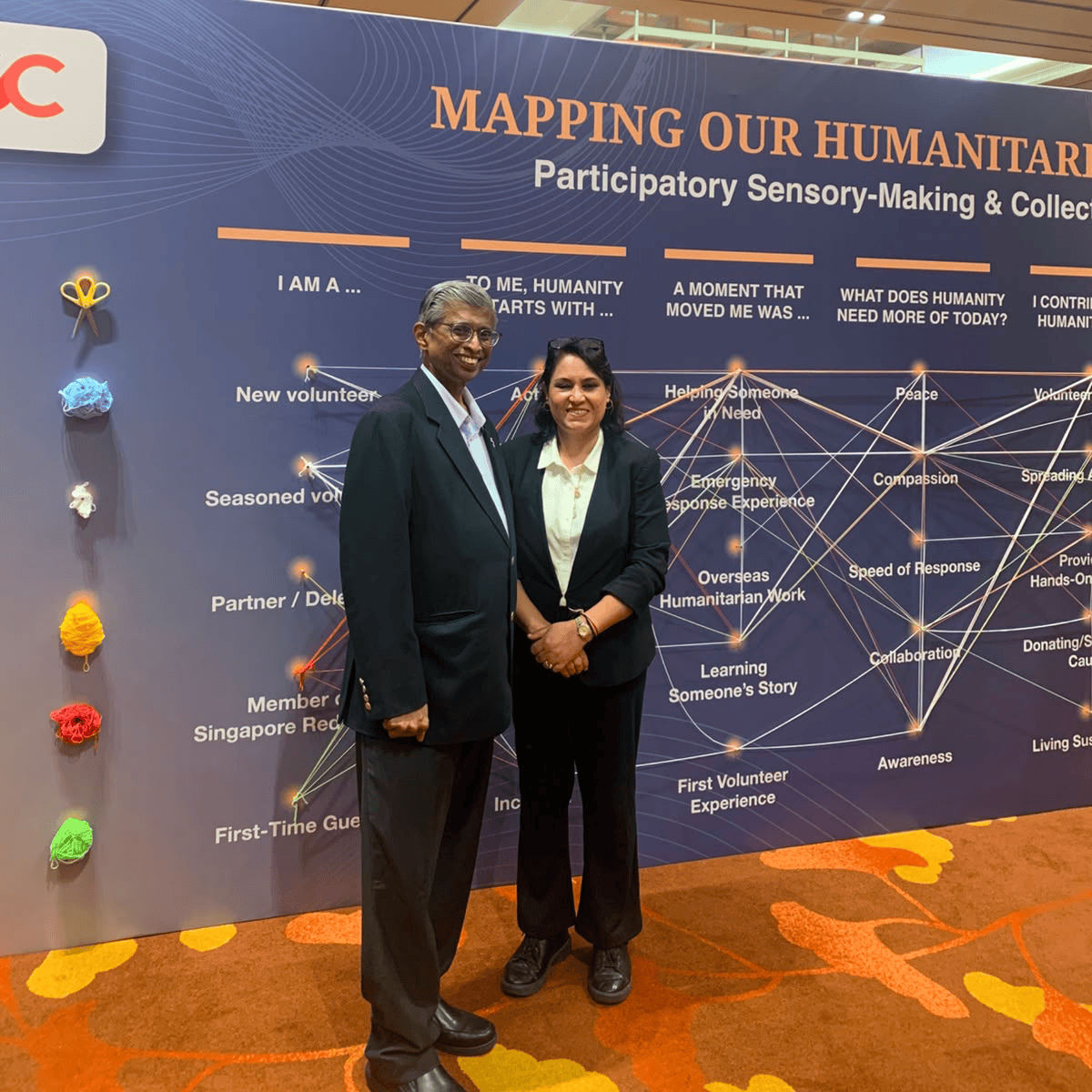
As the 11th Singapore Humanitarian Conference drew to a close, the core message was clear: humanitarian action must not stand still. It requires deeper collaboration, long-term planning beyond relief, and a readiness to meet new realities with both commitment and modern tools. With leaders like Mr William steering the Singapore Red Cross, and the continued support of partners, volunteers and the public, the humanitarian sector is better positioned to navigate an increasingly complex world while staying true to its founding principles of humanity, impartiality and neutrality.
Source: IN Diplomacy Reporter