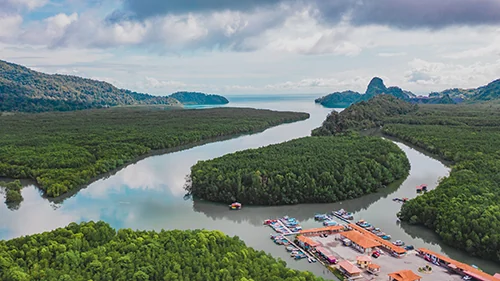
Discover the geological wonders, mangrove ecosystems and centuries-old cultural heritage of Kubang Badak BioGeoTrail, where natural conservation and community traditions come together.
Kubang Badak BioGeoTrail, located within Langkawi UNESCO Global Geopark in Kedah, Malaysia, offers visitors an opportunity to explore the island’s geological, natural and cultural heritage. Recognised in the Heritage category at the PATA Gold Awards 2021, the destination showcases the importance of preserving natural environments, safeguarding local traditions and supporting the livelihoods of surrounding communities.
The area is characterised by extensive mangrove forests, a geologically diverse river estuary and historical settlements. Its name, Kubang Badak, is believed to originate from a local legend about a powerful creature resembling a rhinoceros (badak) that protected the village from harm.
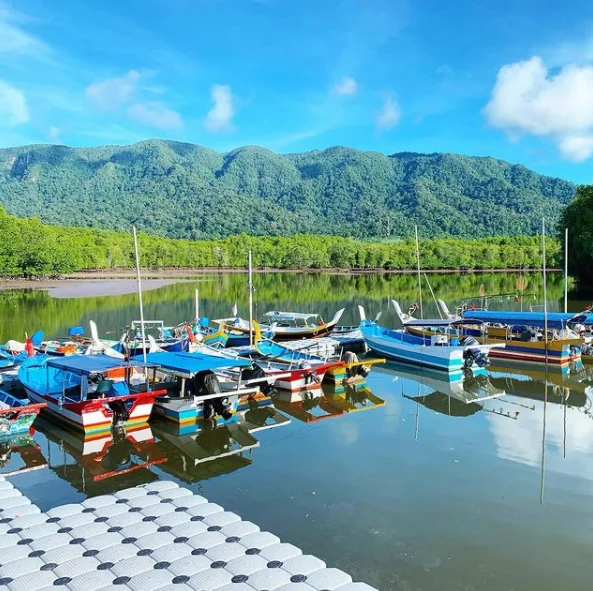
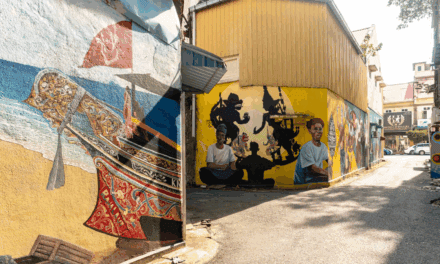
The history of its community dates back to the 18th century, when an early Thai settlement was established in the area. Its geographical proximity to the Thai border has influenced the local community’s language, arts, customs and traditions. Many villagers remain fluent in Thai and maintain cultural connections with neighbouring Thai communities.
Fishing and the harvesting of marine resources have traditionally supported the livelihoods of local residents. In recent years, tourism and related services have also become increasingly important sources of income. Visitors can explore the area through guided boat cruises, which provide access to several geological and cultural attractions along the BioGeoTrail.
Bukit Menora: A Geological Landmark with Cultural Significance
Located near Sungai Siam, Bukit Menora is an example of a geological formation known as a mogote. The term refers to an isolated, steep-sided hill formed from limestone, marble or dolomite.
Beyond its geological significance, Bukit Menora is believed to have served as a centre for communal activities among the early Thai settlers during the 18th century. Its name is associated with Menora, a traditional Thai dance-drama performed as part of cultural and entertainment gatherings.
Other traditional performances, including Mak Yong and Mek Mulung, are also associated with the cultural heritage of northern and eastern Peninsular Malaysia. These performing arts continue to reflect the region’s longstanding cultural exchanges and traditions.
Kampung Siam: Preserving the History of Charcoal Production
Kampung Siam offers a glimpse into the area’s industrial and community history through the remnants of traditional charcoal kilns. Charcoal production was once an important economic activity for the local Thai community, providing fuel for various purposes.
The industry gradually declined towards the late 1980s as alternative energy sources, including coal and natural gas, became more widely available. Following restrictions imposed by the Kedah State Forestry Department on charcoal production across Langkawi, the kilns were no longer used for their original purpose.
Today, these approximately century-old structures remain as historical reminders of the village’s former livelihood and the changing economic activities of its residents.
Gua Pinang Geosite: Tracing Langkawi’s Ancient Coastline
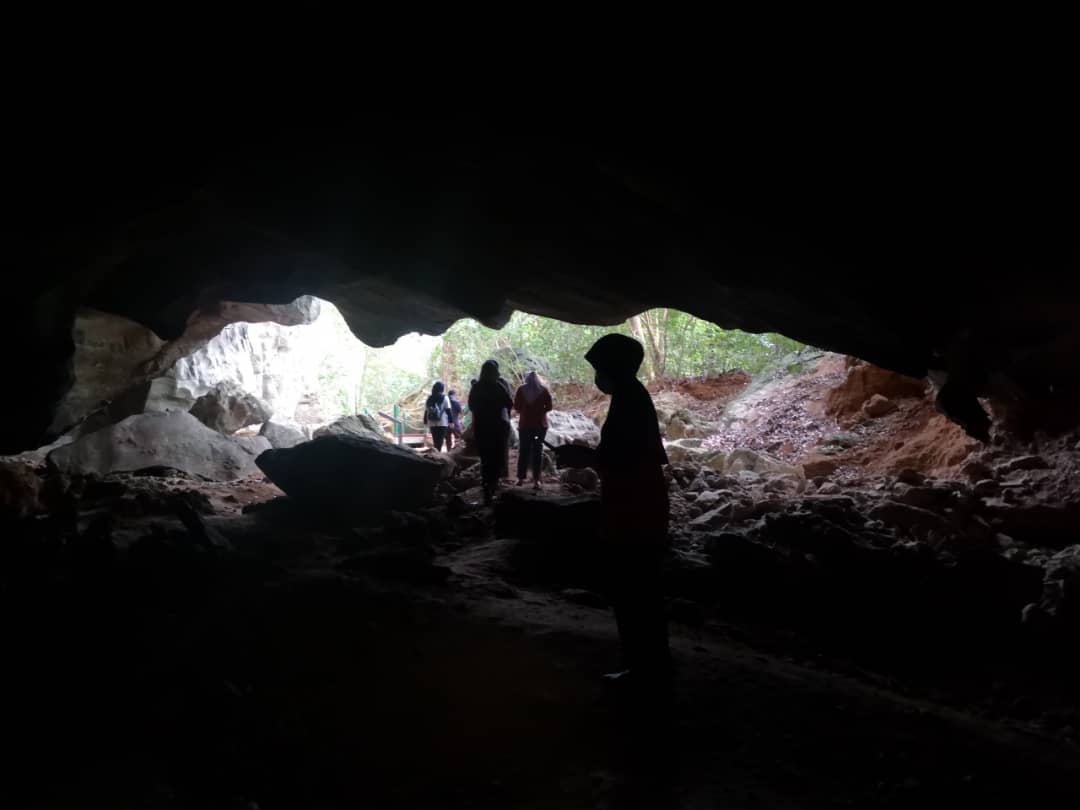
Gua Pinang is an ancient sea cave that provides evidence of significant geological changes in Langkawi. Formed by wave activity approximately 6,000 years ago, the cave dates back to a period when sea levels were estimated to be around 15 metres higher than today.
Evidence of this geological history can be observed along the cave walls, where deposits of oyster and cockle shells remain. These formations offer insights into the area’s former marine environment and changes in sea level over thousands of years.
The cave is also home to specialised wildlife that has adapted to its dark environment. Some of these organisms exhibit distinctive characteristics, including reduced vision, loss of body pigmentation and slower metabolic rates, demonstrating how species evolve to survive in isolated cave ecosystems.
Pulau Jemuruk: Discovering Cambrian Fossils
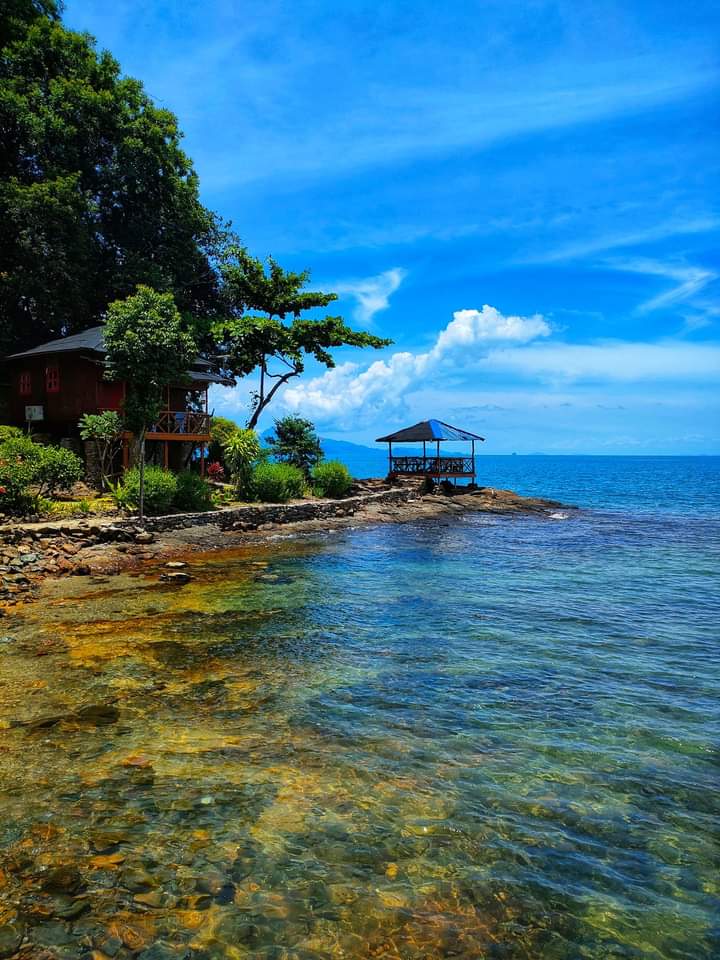
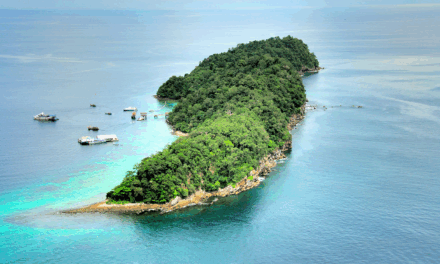
Pulau Jemuruk is another significant geological attraction within Kubang Badak BioGeoTrail. The island contains some of Langkawi’s oldest rock formations, representing the uppermost layers of the Machinchang Formation.
Mount Machinchang, also known as Mat Chinchang, forms part of this ancient geological landscape and is recognised as the second-highest peak in Langkawi.
The island’s sedimentary rocks and fossil discoveries provide valuable evidence of the region’s geological past. Beyond its scientific importance, Pulau Jemuruk also supports the livelihoods of local communities, who collect marine resources such as snails and oysters for food.
Tanjung Buta: A Window into 500 Million Years of Geological History
Tanjung Buta is another notable site within the Machinchang Formation and an important location for fossil discoveries. Among its most significant findings is a trilobite fossil marker estimated to be approximately 500 million years old, belonging to the family Saukiidae.
Trilobites were marine arthropods that lived millions of years ago, making their fossils valuable indicators of ancient marine environments.
In addition to its fossil heritage, Tanjung Buta features several distinctive coastal geological formations, including abrasion platforms, sea caves and small pocket beaches consisting of sand and pebbles.
Discovering Langkawi’s Natural and Cultural Heritage
Kubang Badak BioGeoTrail brings together geological discoveries, ecological diversity and cultural traditions within one destination. From ancient sea caves and fossil-bearing rock formations to historic charcoal kilns and traditional Thai heritage, each site offers a different perspective on Langkawi’s natural and human history.
The BioGeoTrail also demonstrates how tourism can contribute to local economic development while encouraging the conservation of natural and cultural resources. Through guided experiences and community participation, visitors gain a deeper understanding of the people and environments that shape the destination.
For travellers seeking experiences beyond Langkawi’s beaches and popular attractions, Kubang Badak offers an opportunity to discover another side of the island, one defined by geological history, living traditions and the communities that continue to preserve its heritage.
Source: Tourism Malaysia