Launched at Golden Village, Suntec City, the second edition of the Indian Film Festival returned with a seven-week programme, as India’s High Commissioner shared insights with INDiplomacy on its evolving scope and outreach
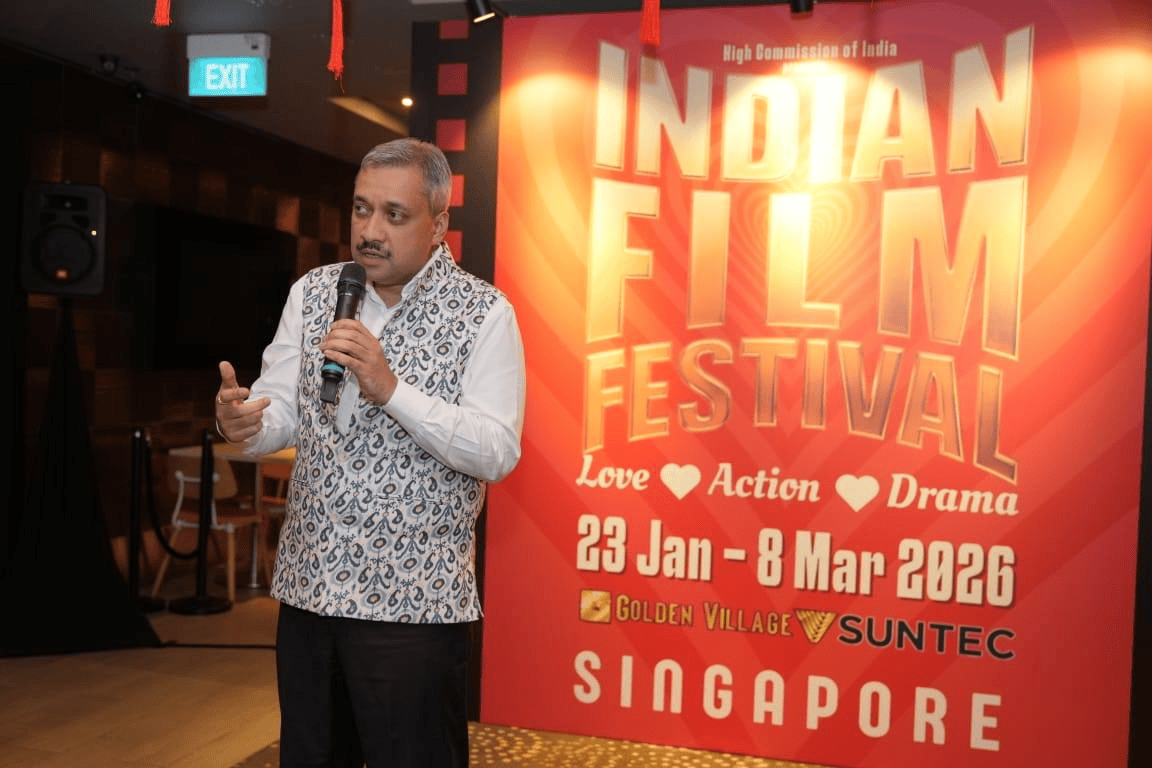
The Indian Film Festival 2026 was officially launched in Singapore yesterday at Golden Village, Suntec City, marking the beginning of a seven-week celebration of India’s rich and diverse cinematic journey. The opening ceremony was attended by members of the diplomatic corps and friends of India, underscoring the festival’s growing cultural significance in Singapore’s multicultural landscape.


Image by India High Commission in Singapore
The evening featured a special screening of the iconic Hindi film Dilwale Dulhania Le Jayenge, a landmark title that has shaped generations of Indian cinema audiences worldwide. Following its official launch, the festival will be open to the public from 23 January to 8 March 2026, offering an extended period of engagement for film enthusiasts across the city.
In an exclusive interview with IN Diplomacy, H.E. Dr. Shilpak Ambule highlighted that the second edition of the festival represents a natural progression from introduction to expansion. While the inaugural edition focused on establishing the platform and building awareness, this year’s festival is longer in duration, broader in scope, and more assured in its curation.
INDiplomacy: This is the second year of the Indian Film Festival. How does this year’s edition differ from the inaugural festival?
H.E. Dr. Shilpak Ambule:
The second edition of the Indian Film Festival represents a natural evolution from introduction to expansion. While the inaugural festival focused on establishing the platform and building awareness, this year’s edition is longer in duration, broader in scope, and more confident in its curation.
With screenings spread over seven weeks, the festival moves beyond a limited showcase to become a sustained cultural presence in Singapore’s calendar. The programming also reflects greater depth — balancing iconic classics with contemporary cinema and award-winning independent films, offering audiences a richer and more representative picture of Indian cinema.
INDiplomacy: What are the highlights or new elements introduced for the festival this year?
H.E. Dr. Shilpak Ambule:
One of the key highlights this year is the stronger emphasis on regional and independent cinema, alongside much-loved mainstream films. Audiences will experience films in multiple Indian languages, including Tamil, Hindi, Malayalam, Assamese, Odia, Manipuri, Gujarati, and Marathi — many of which are rarely screened overseas.
Another important element is the extended festival timeline, which allows viewers to engage with cinema at a more relaxed pace and encourages repeat attendance. The inclusion of socially relevant films, women-led narratives, and nationally recognised titles adds further depth and variety to the programme.
IN Diplomacy: Who is the festival hoping to reach in its second edition, and how has audience targeting evolved?
H.E. Dr. Shilpak Ambule:
In its second edition, the festival is consciously reaching beyond the Indian diaspora to engage Singapore’s wider multicultural audience, including young people, students, film enthusiasts, and families.
Audience targeting has evolved from community-based outreach to a more inclusive, mainstream cultural invitation. The diverse film selection — from classics familiar to many, to internationally acclaimed regional cinema — is designed to appeal to both first-time viewers of Indian films and seasoned cinephiles.
IN Diplomacy: What was the thinking behind advertising the festival across buses, train stations, and billboards?
H.E. Dr. Shilpak Ambule:
Cinema is a public art form, and the decision to advertise across buses, MRT stations, and billboards reflects our intent to bring Indian cinema into the shared public space of the city.
These high-visibility platforms allow the festival to reach people in their everyday lives — during commutes, walks, and daily routines — rather than limiting awareness to traditional cultural or niche channels. It also signals that the Indian Film Festival is not a closed or exclusive event, but one that belongs to the wider cultural fabric of Singapore.
IN Diplomacy: How do you expect passers-by to engage with the festival through this form of advertising?
H.E. Dr. Shilpak Ambule:
We expect this form of advertising to spark curiosity and recognition. A striking poster on a bus or station often becomes a moment of discovery — prompting people to pause, take a photo, search online, or discuss it with friends and family.
Even brief exposure builds familiarity with the festival’s identity and dates, making it more likely that audiences will plan a visit later. Over time, this repeated visual presence helps position the Indian Film Festival as a recognisable and anticipated cultural event, rather than a one-off screening series.