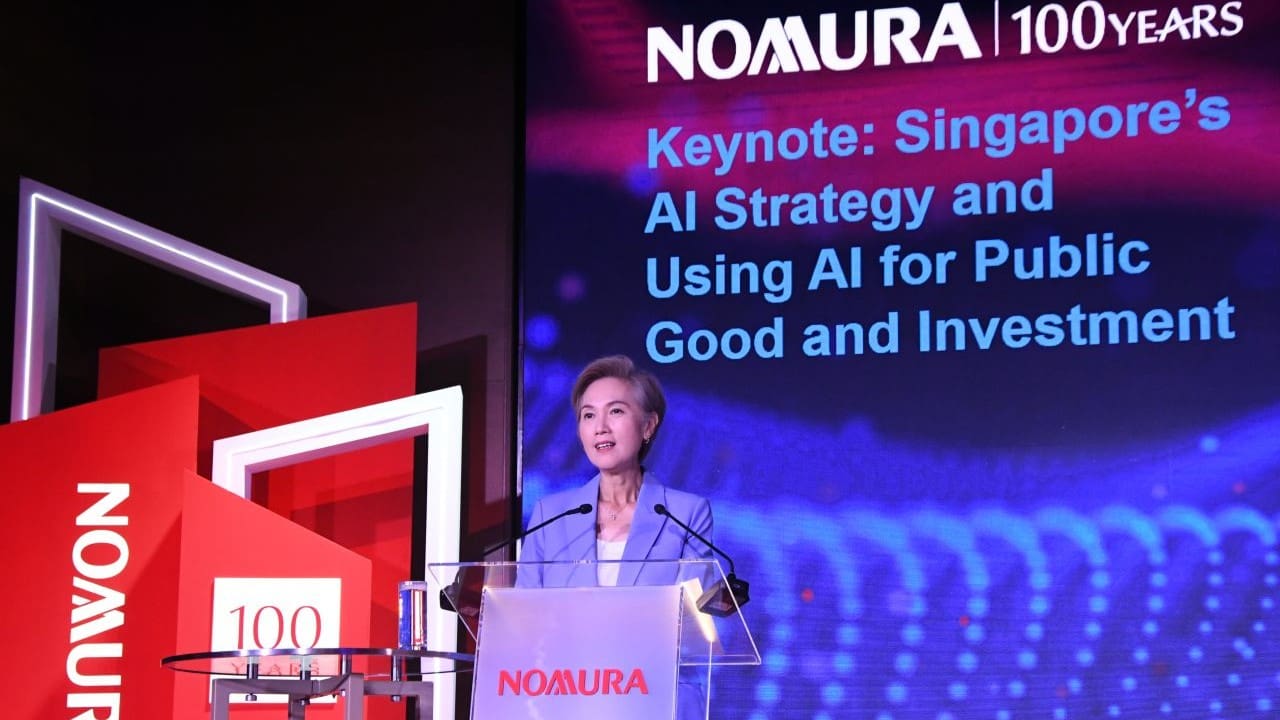
Speaking at the Nomura Investment Forum Asia, Minister Josephine Teo outlined Singapore’s next phase of AI development, focusing on infrastructure, workforce readiness and sector-wide transformation.
Singapore is stepping up its artificial intelligence ambitions with a renewed focus on large-scale economic transformation, positioning the city-state as a leading AI hub for Southeast Asia and beyond.
Delivering the keynote address at the 23rd Nomura Investment Forum Asia, Ms. Josephine Teo outlined the government’s updated approach to AI development, highlighting new national missions aimed at accelerating adoption across critical sectors of the economy.
Ms. Teo said Singapore’s AI ecosystem has matured sufficiently to pursue more ambitious goals under the updated National AI Strategy. The initiatives will support the work of the National AI Council, chaired by Lawrence Wong, with a focus on moving AI beyond isolated pilot projects towards sector-wide transformation.
Four priority sectors have been identified: connectivity, advanced manufacturing, healthcare and finance. Together, these industries contribute more than 40 per cent of Singapore’s GDP and are viewed as key drivers of future economic growth.
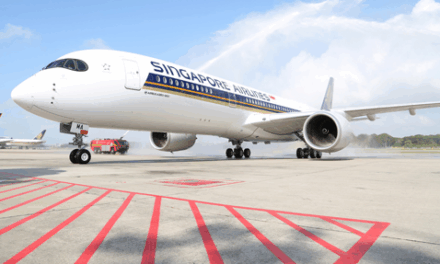
In aviation, Singapore is exploring AI applications to optimise passenger flows, baggage handling and aircraft movements as preparations continue for Terminal 5, which is expected to significantly expand the nation’s air hub capacity. In manufacturing, the government sees growing potential in physical AI and intelligent robotics to enhance predictive maintenance, digital twins and industrial productivity.
The financial services sector is also expected to benefit from AI-enabled compliance systems, fraud detection tools and autonomous agents capable of supporting increasingly complex financial operations.
To support these ambitions, Singapore is expanding its digital infrastructure. Ms. Teo noted that the country already hosts one of the region’s highest concentrations of data centres and plans to increase capacity beyond its current 1.4 gigawatts. Investments in submarine cable connectivity are also expected to catalyse at least S$10 billion in subsea infrastructure development.
Alongside infrastructure investments, the government is prioritising AI governance and workforce development. Through initiatives such as the National AI Impact Programme, Singapore aims to train 100,000 “AI bilingual” professionals and support 10,000 businesses, including small and medium-sized enterprises, in adopting AI technologies.
Addressing broader geopolitical challenges, Ms. Teo acknowledged concerns over growing digital fragmentation but stressed the importance of maintaining international partnerships. She highlighted ASEAN’s emergence as a major digital growth engine, with the region’s digital economy projected to reach US$1 trillion by 2030.
Positioning Singapore as a gateway to regional opportunities, Ms. Teo invited global investors and technology firms to participate in the country’s expanding AI ecosystem, leveraging Singapore’s infrastructure, talent and trusted regulatory environment to scale solutions across ASEAN and international markets.
Source: MDDI