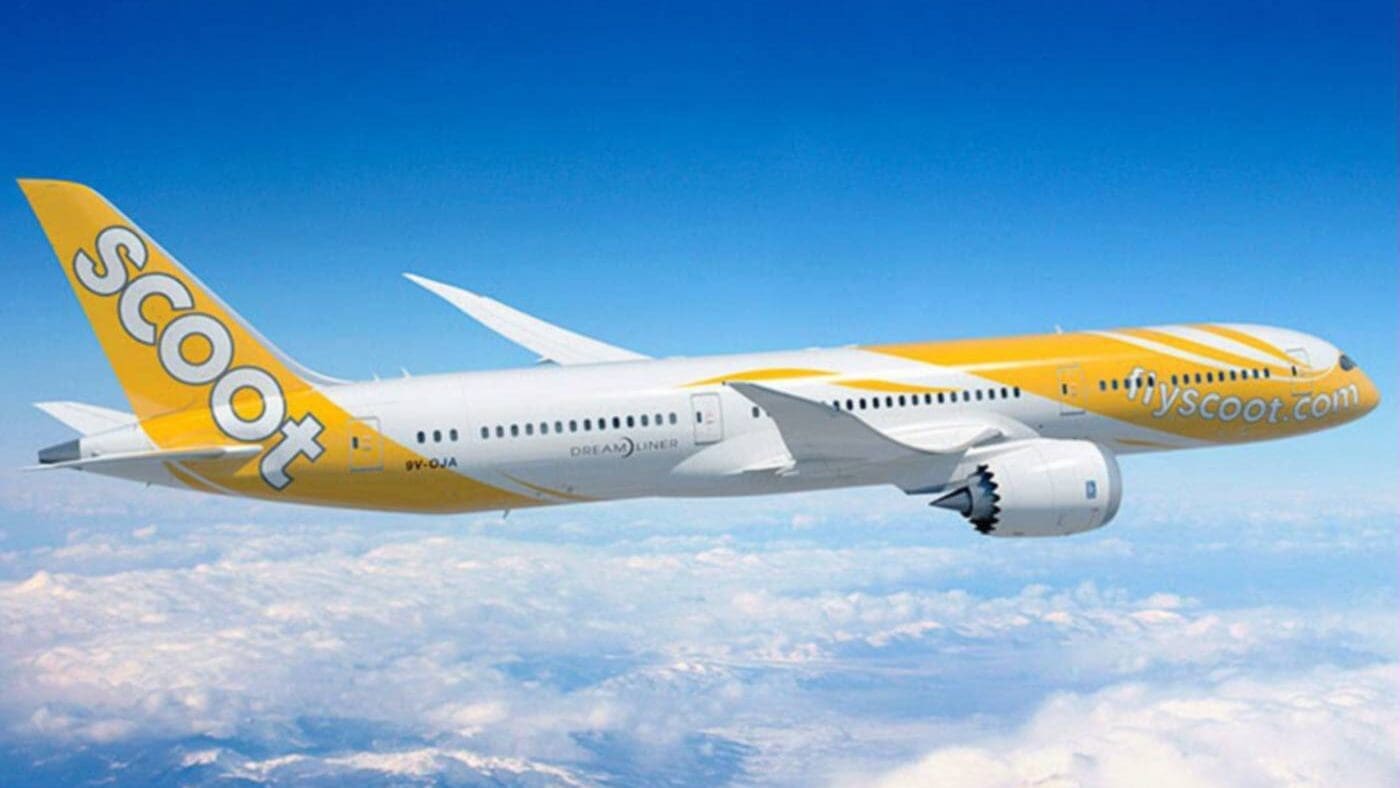
Malaysia continues to play a strategic role in Scoot’s regional network, with the low-cost carrier operating 130 weekly flights to 12 destinations amid robust demand for leisure and business travel. The airline is also expanding across Southeast Asia through new routes, fleet investments and digital innovation.
Malaysia remains one of the most important markets for Scoot, the low-cost subsidiary of the Singapore Airlines (SIA) Group, supported by sustained demand for both leisure and business travel. Speaking to Bernama, Scoot Chief Commercial Officer Mr. Calvin Chan said the airline currently operates 130 weekly flights connecting Singapore with 12 destinations across Malaysia, making it the foreign airline serving the highest number of destinations in the country. For the financial year ended 31 March 2026, Scoot carried more than 2.2 million passengers on its Malaysian routes, representing a 14 per cent year-on-year increase.
According to Chan, Malaysia’s strategic importance extends beyond point-to-point travel, serving as a vital source of connecting passengers into the wider Singapore Airlines Group network via Singapore. Strong tourism demand, fuelled by the Visit Malaysia 2026 campaign, has further strengthened travel between the two countries. In the first two months of 2026 alone, Malaysia welcomed 3.4 million visitors from Singapore, accounting for nearly half of all international tourist arrivals during the period. Scoot’s Malaysian network currently covers Ipoh, Kota Bahru, Kota Kinabalu, Kuala Lumpur, Kuantan, Kuching, Langkawi, Melaka, Miri, Penang, Sibu and Subang.
Looking ahead, Chan said Southeast Asia will remain Scoot’s primary growth engine, driven by rising disposable incomes, expanding airport infrastructure and increasing demand for affordable short-haul travel. Over the past year, the airline has expanded its regional footprint by launching new services to Chiang Rai, Palembang, Medan, Tokyo Haneda, Belitung and Pontianak, while increasing flight frequencies to destinations including Bali, Jakarta, Lombok, Manado, Phuket, Sibu, Changsha, Okinawa and Vienna. Scoot now operates a network of 85 destinations across 18 countries and territories with a fleet of more than 60 aircraft.
To support future growth, Scoot continues to invest in both fleet renewal and technology. The airline recently expanded its Airbus A320neo family orderbook to 20 aircraft, with additional deliveries beginning from 2028, enabling greater flexibility to launch new routes and strengthen regional connectivity. Meanwhile, its Embraer E190-E2 aircraft allows the carrier to serve secondary cities and airports with infrastructure constraints, complementing its Airbus A320 and Boeing 787 fleets. Chan added that Scoot is also enhancing operational efficiency and customer experience through digitalisation and artificial intelligence, including upgrades to its AI-powered virtual assistant Marvie, expanded self-service airport capabilities and AI-driven operational systems.
Scoot also reaffirmed its long-term commitment to Malaysia through its three-year strategic partnership with Tourism Malaysia, signed in August 2025. The collaboration, which runs until 2028, aims to promote Malaysia across key international markets, including Singapore, China, Australia and Indonesia, through joint marketing initiatives. As demand continues to grow, Chan said Scoot will evaluate further opportunities to expand its presence in Malaysia based on market demand, operational considerations and its broader network strategy.
Source: BERNAMA