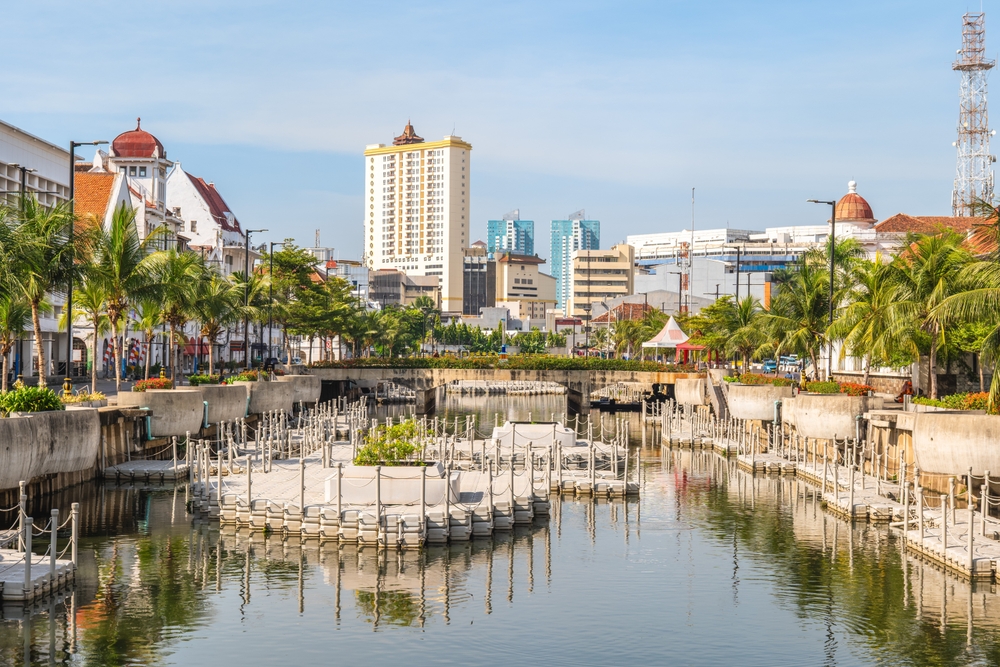
Historic district blends heritage, culture and modern creativity.
Jakarta Old Town, locally known as Kota Tua Jakarta, remains one of the Indonesian capital’s best-known heritage destinations. Once the administrative centre of Batavia during the Dutch colonial period, the district has evolved into a cultural precinct where restored historic buildings, museums and public spaces preserve Jakarta’s rich past while supporting tourism and community activities today.
At the heart of Jakarta Old Town is Fatahillah Square, the district’s main gathering place and an ideal starting point for exploring the area. Surrounded by heritage buildings, the square is often animated by street performers, photographers and local communities, particularly on weekends, creating a lively atmosphere that complements its centuries-old surroundings.
Overlooking the square, the Jakarta History Museum occupies the former Batavia City Hall and offers an introduction to the city’s transformation from a colonial trading centre into Indonesia’s modern capital. Its exhibitions provide valuable historical context before visitors continue exploring the rest of Kota Tua Jakarta.
Just across the square, Café Batavia occupies one of the area’s oldest heritage buildings. Known for its colonial-era interiors and views of Fatahillah Square, it has become one of Jakarta Old Town’s most recognisable landmarks while demonstrating how historic buildings can continue serving contemporary purposes.
The district’s cultural appeal extends beyond its architecture. The Wayang Museum preserves Indonesia’s traditional puppet theatre, while the Museum of Fine Arts and Ceramics showcases works spanning different artistic movements and historical periods. Together, these museums reflect the diversity of Indonesia’s cultural heritage within a compact, walkable neighbourhood.
Visitors interested in Indonesia’s economic development can continue to the Bank Mandiri Museum and the Bank Indonesia Museum, where carefully restored buildings house exhibitions tracing the country’s financial and monetary history. Nearby, Toko Merah, distinguished by its striking red façade, remains one of the most photographed colonial landmarks in Jakarta Old Town.
A short walk north leads to the Maritime Museum and Syahbandar Tower, which highlight Jakarta’s centuries-long relationship with maritime trade. Together, they illustrate how the city’s strategic coastal location helped establish it as one of Southeast Asia’s most important trading ports.
Beyond its museums and historic landmarks, Kota Tua Jakarta continues to thrive as a vibrant public space. Visitors can rent traditional onthel bicycles, join guided heritage walks, explore multiple museums, enjoy street photography or relax at cafés while experiencing the district’s unique atmosphere at a leisurely pace.
Jakarta Old Town is easily accessible via the KRL Commuter Line through Jakarta Kota Station as well as several TransJakarta routes. Morning and late afternoon generally offer the most comfortable conditions for exploring on foot, while weekdays are typically less crowded than weekends.
As conservation and revitalisation efforts continue across the district, Jakarta Old Town demonstrates how preserving historic landmarks can strengthen a city’s identity while creating new opportunities for cultural tourism, education and community engagement. Today, Kota Tua Jakarta stands not only as a reminder of Jakarta’s past, but also as an enduring symbol of how heritage can continue to inspire future generations.
Source: Indonesian Ministry of Tourism