The plan sets ten national priorities, growth targets and stronger monitoring through 2030.
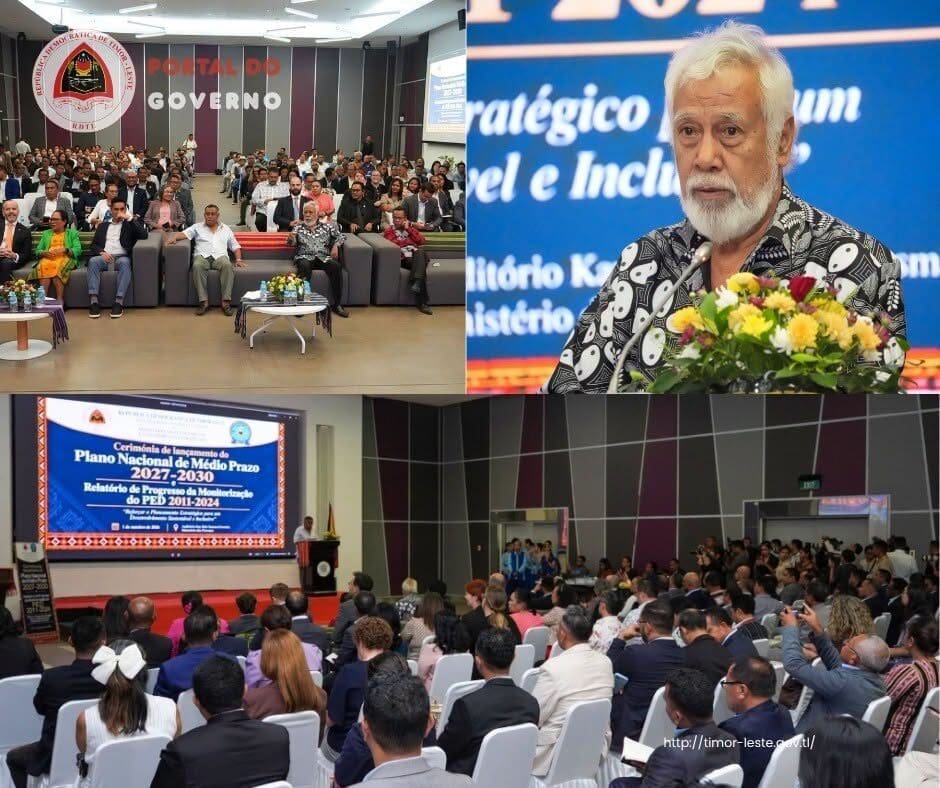
The Government of Timor-Leste launched the National Medium-Term Plan (PMP – acronym in Portuguese) 2027–2030 and the Monitoring Progress Report for the Strategic Development Plan (PED – acronym in Portuguese) 2011–2024 on 1 October 2026 at the Ministry of Finance in Dili. Prime Minister Kay Rala Xanana Gusmão presided over the ceremony. The new plan will guide the final phase of the Strategic Development Plan 2011–2030 and set priorities for the next four years.
Approved by the Council of Ministers on 2 September, the plan identified ten national priorities under four pillars: economic diversification, infrastructure, social and human capital development, and institutional development. These priorities will guide annual budgets and receive direct monitoring from the Council of Ministers. Prime Minister Gusmão described the documents as “a national moment of accountability and the renewal of a political commitment”.
The progress report assessed 199 short- and medium-term targets under the Strategic Development Plan. It found that 106 targets, or 53.3%, had been completed or reached an advanced stage. Another 43% had been partially implemented, while around 3% showed limited implementation. Reported achievements included a childhood vaccination rate of 98%, a national literacy rate of 72.4%, electricity access reaching more than 99% of cities and hamlets, the operation of Tibar Bay Port, ongoing modernisation of Presidente Nicolau Lobato International Airport, and the Timor-Leste Submarine Cable for direct connection to international digital networks.
Economic development remained a central focus of the 2027–2030 plan. The Government targeted annual non-oil GDP growth of 6% by 2030 and 7.5% thereafter. It also aimed to create between 5,000 and 7,000 new formal private-sector jobs each year and increase the private sector’s share of total investment by 15 to 20 percentage points of non-oil GDP. Planned measures included a credit guarantee scheme and blended finance mechanism intended to generate US$40 million in additional loans for micro, small and medium-sized enterprises. Public-private partnerships were also planned for housing, digital infrastructure and renewable energy, alongside the creation of the National Development Bank.
Prime Minister Gusmão stressed the role of businesses and investment in reducing dependence on State spending. “We now need Timorese businesses to produce more, invest more, and employ more people. We also need responsible foreign investment that brings capital, skills, and access to markets,” he said. The plan will connect with the annual budget cycle from 2027, with the Ministry of Planning and Strategic Investment and the Ministry of Finance coordinating its integration into the budget process.
Source: Government of Timor-Leste