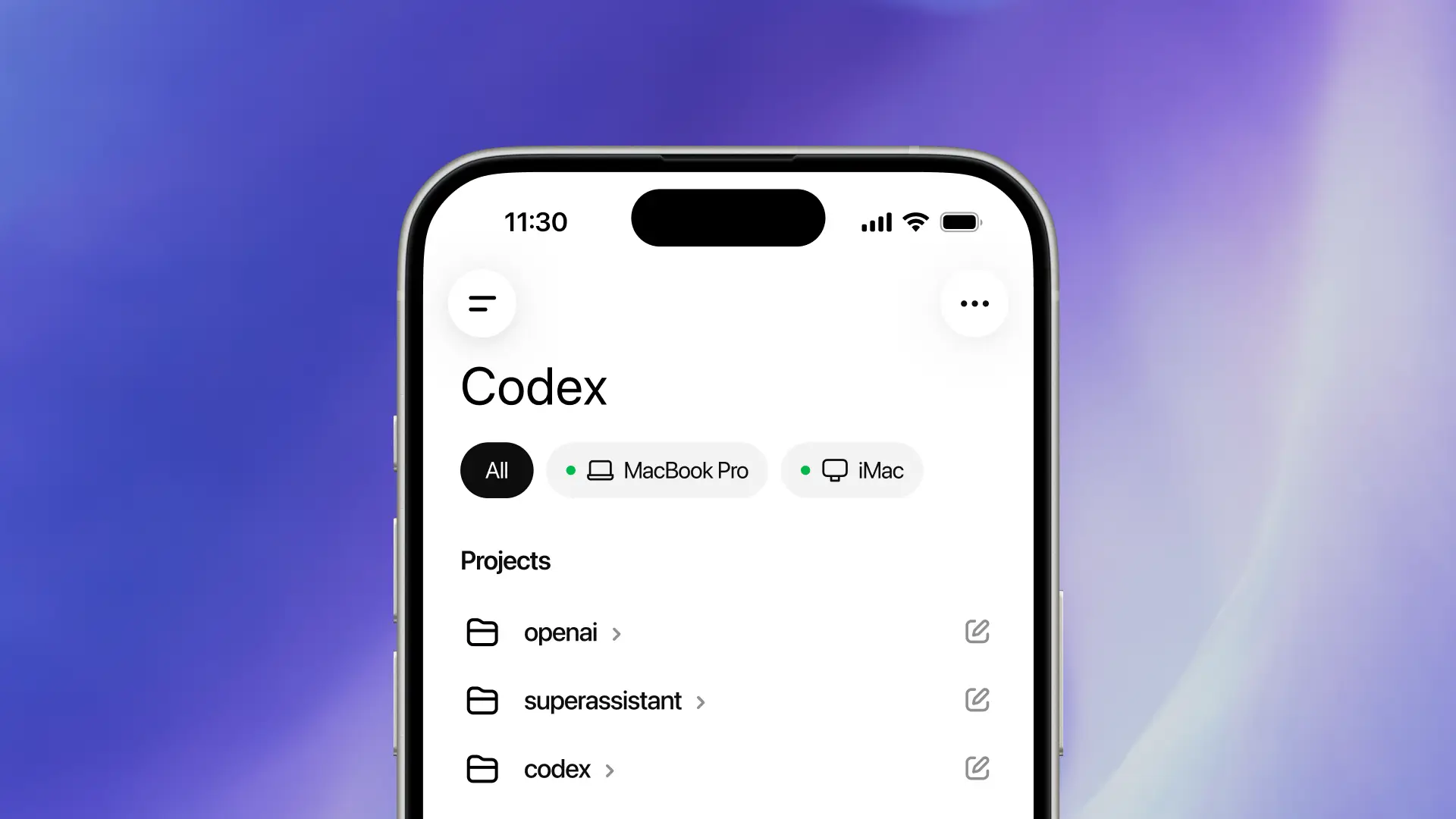
New mobile integration allows developers to monitor, guide, and manage Codex tasks from anywhere in real time.
OpenAI has announced that Codex is now available inside the ChatGPT mobile app, allowing users to manage coding tasks, approve actions, and monitor AI-driven workflows directly from their smartphones.
The update reflects the growing role of AI agents in handling long-running software and development tasks across laptops, remote servers, and enterprise environments.
OpenAI said more than four million people are now using Codex every week, with users increasingly relying on the AI system to assist with coding, debugging, testing, and project management.
The new Codex mobile experience allows users to connect their phones to machines where Codex is actively running, including laptops, dedicated Mac mini systems, and managed remote environments.
From the mobile app, users can review live terminal output, approve commands and permissions, monitor screenshots and test results, review code differences and updates, switch AI models, start new development tasks, and continue ongoing project threads.
OpenAI emphasized that files, credentials, permissions, and local configurations remain securely stored on the connected machine rather than on the mobile device itself.
The company said the system uses a secure relay infrastructure that keeps trusted devices connected without exposing them directly to the public internet.
OpenAI highlighted several real-world examples where mobile access to Codex could improve productivity. Developers can begin investigating software bugs while away from their desks, approve decisions during commutes, monitor customer support investigations, or capture new development ideas instantly from their phones.
The system is designed to keep AI-driven tasks moving continuously while still allowing human oversight whenever needed.
OpenAI also announced that Remote SSH support is now generally available, allowing Codex to connect directly to managed enterprise environments through SSH configurations.
This enables developers to work inside secure remote systems while accessing those environments across authorized ChatGPT devices.
Several additional enterprise-focused features were also introduced, including programmatic access tokens for CI pipelines and automation, Hooks support for validation and repository customization, and HIPAA-compliant Codex usage for eligible healthcare organizations using ChatGPT Enterprise.
Hooks can be used for security scanning, memory creation, validators, and customizing Codex behavior within specific projects.
Codex inside the ChatGPT mobile app is rolling out in preview on both iOS and Android across all plans, including Free and Go subscriptions, in supported regions worldwide.
Support for Windows-based Codex mobile connectivity is expected to arrive soon.
Remote SSH and Hooks are now available across all plans, while programmatic access tokens are limited to Enterprise and Business users.
Source: OpenAI