Indonesia and Singapore reviewed progress across six bilateral economic working groups and reaffirmed commitments to strengthen trade, investment, digital connectivity, and sustainable growth ahead of the 2026 Leaders’ Retreat
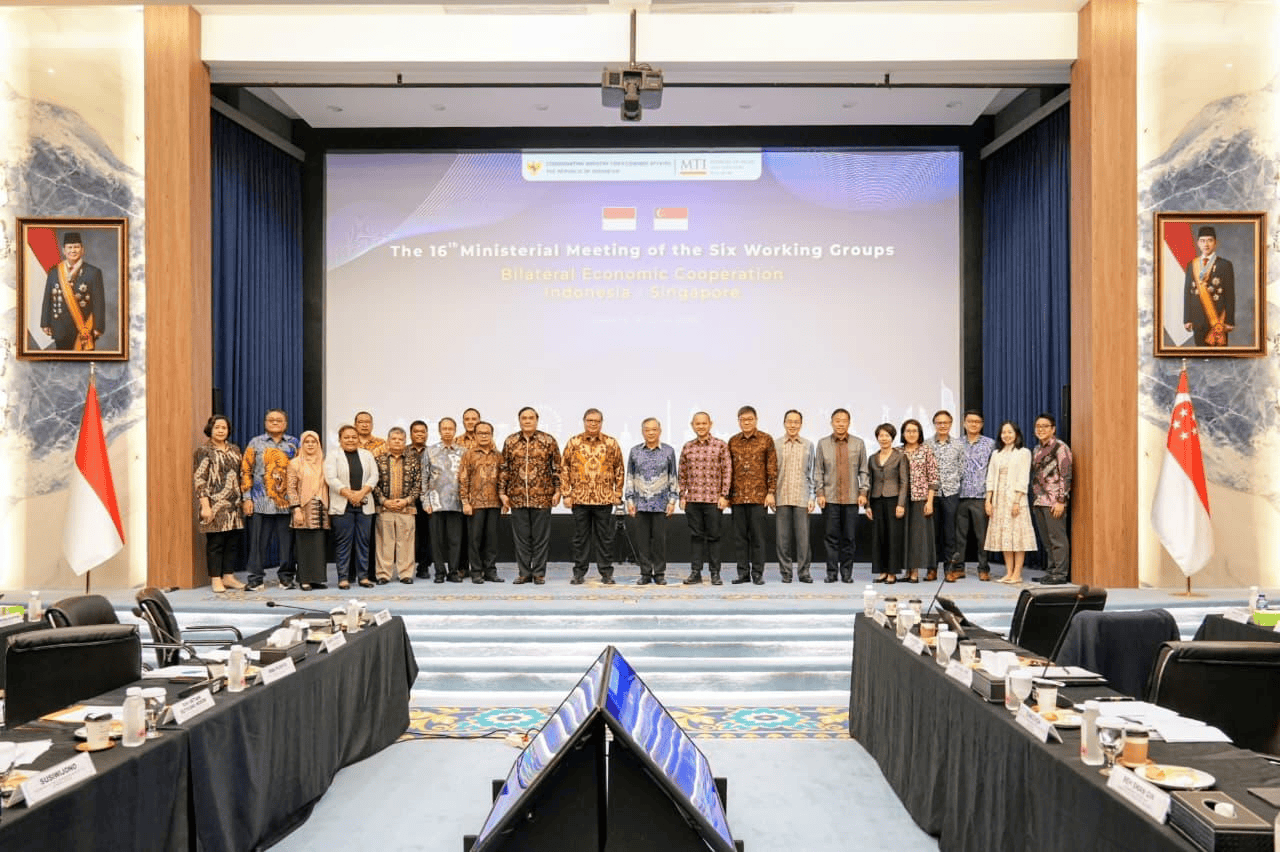
Jakarta, 9 June 2026 — Indonesia and Singapore convened the 16th Ministerial Meeting of the Six Bilateral Economic Working Groups (6WG) in Jakarta to review progress and strengthen cooperation across key sectors including investment, transport, tourism, agribusiness, manpower development, and the Batam-Bintan-Karimun (BBK) region.
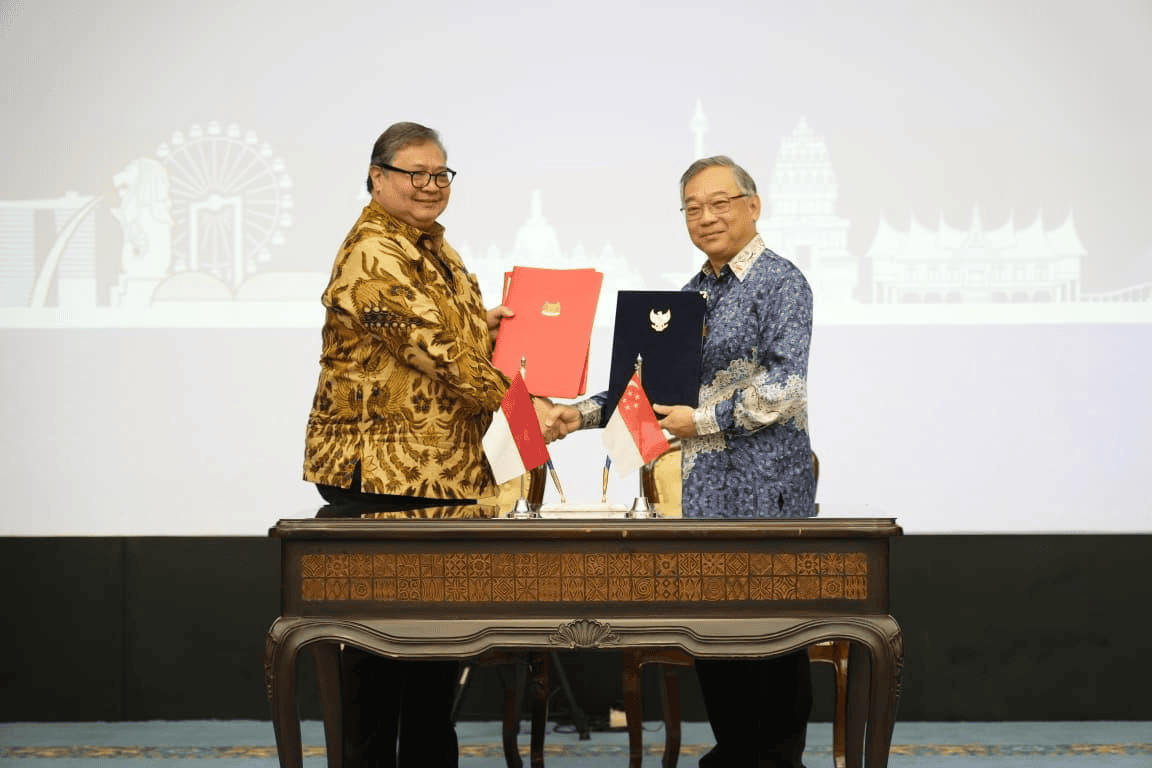
The meeting was co-chaired by Coordinating Minister for Economic Affairs Airlangga Hartarto on behalf of Indonesia and Deputy Prime Minister and Minister for Trade and Industry Gan Kim Yong on behalf of Singapore. It followed the 13th Senior Officials Meeting of the 6WG held in May 2026 and served as a platform to evaluate ongoing projects and identify new opportunities for bilateral cooperation.


Source: Coordinating Ministry for Economic Affairs Republic of Indonesia
Discussions highlighted continued progress in the development of the BBK region and Special Economic Zones. Investment realization in the BBK region increased from USD 4.61 billion in 2024 to USD 5.71 billion in 2025. The expansion of Batam Free Trade Zones from eight to twenty-two islands has officially taken effect, while Nongsa Digital Park continued to strengthen its position as a regional digital hub through the operation of multiple data centers. Both sides also noted that the construction of an undersea cable connection linking Indonesia and Singapore is targeted for completion by the end of 2026.
In the investment sector, Kendal Industrial Park reached full capacity and entered an expansion phase. Indonesia and Singapore also reviewed progress in green energy cooperation, including the development of one of Indonesia’s largest solar power projects in Central Sulawesi.
Human capital development remained a key area of cooperation. The two countries reaffirmed support for initiatives such as the Tech programme and the Youth Mobility Programme, which aim to strengthen digital talent connectivity and support the growth of the digital economy. In addition, thirteen high-potential young Indonesian farmers are scheduled to participate in an agricultural training programme in Singapore under the implementation of the Agribusiness Work Plan 2026–2030.
On transport connectivity, Indonesia and Singapore noted that air links now cover seventeen city routes, supported by the launch of new Scoot services to Belitung and Pontianak. Both governments also discussed opportunities to strengthen cooperation between Garuda Indonesia and Singapore Airlines under the existing bilateral Air Services Agreement framework.
The ministers also reviewed developments in tourism cooperation. In 2025, approximately 2.44 million Indonesians visited Singapore, while 1.5 million Singaporeans travelled to Indonesia. Ongoing initiatives include the development of cruise tourism, destination-twinning programmes around Labuan Bajo, and private sector-led collaboration in the meetings, incentives, conferences, and exhibitions (MICE) industry.
Minister Airlangga underscored the importance of the 6WG mechanism as a practical and results-oriented platform for advancing bilateral trade and investment. He noted that Indonesia and Singapore continue to benefit from complementary economic strengths that reinforce the long-term relevance of the partnership in an increasingly complex global environment.
Deputy Prime Minister Gan reaffirmed Singapore’s commitment to strengthening economic cooperation across multiple sectors and welcomed the positive trajectory of bilateral relations. He noted that economic cooperation between the two countries has continued to grow stronger and deliver tangible outcomes.
The meeting also reviewed the broader economic relationship between the two countries. Singapore remained Indonesia’s third-largest trading partner at the end of 2025, with total bilateral trade reaching USD 32.8 billion, reflecting growth of 3.9 percent over the past five years. Singapore also maintained its position as Indonesia’s largest foreign investor, recording USD 17.4 billion in investment in 2025. Over the last five years, Singaporean investment in Indonesia totaled USD 75.5 billion and contributed to the creation of more than 820,000 jobs across various sectors.
At the conclusion of the meeting, the ministers signed the Joint Report to Leaders on the Six Bilateral Economic Working Groups, which will be submitted during the Indonesia-Singapore Leaders’ Retreat 2026. They also witnessed the signing of the Terms of Reference for the Study on Batam, Bintan and Karimun’s Technology Sector under the Working Group on BBK and Other Special Economic Zones.
Source: Coordinating Ministry for Economic Affairs Republic of Indonesia