From historic landmarks and sacred sites to protected forests and marine ecosystems, Con Dao offers a distinctive journey through Viet Nam’s heritage and natural beauty.
Off Vietnam’s southern coast lies Con Dao, an archipelago of 16 islands where dramatic landscapes and a deeply significant history exist side by side. Once known for its former penal colony, the islands have evolved into a destination celebrated for their protected forests, marine ecosystems and quiet coastal beauty. Con Son, the largest island, welcomes visitors with a charming town, French colonial architecture and a scenic beachfront promenade, while the surrounding islands offer opportunities to explore some of Vietnam’s most remarkable natural environments.
Nature is at the heart of the Con Dao experience. Much of the archipelago forms the Con Dao National Park, encompassing thousands of hectares of tropical forest and marine waters. Visitors can hike through forested landscapes towards mountain viewpoints, discover secluded beaches and explore coral reefs around islands such as Tai Islet, Bay Canh Islet and Cau Islet. The surrounding waters are home to an impressive variety of marine life, including sea turtles, dolphins and the rare dugong, while the islands also provide habitats for distinctive bird and wildlife species.
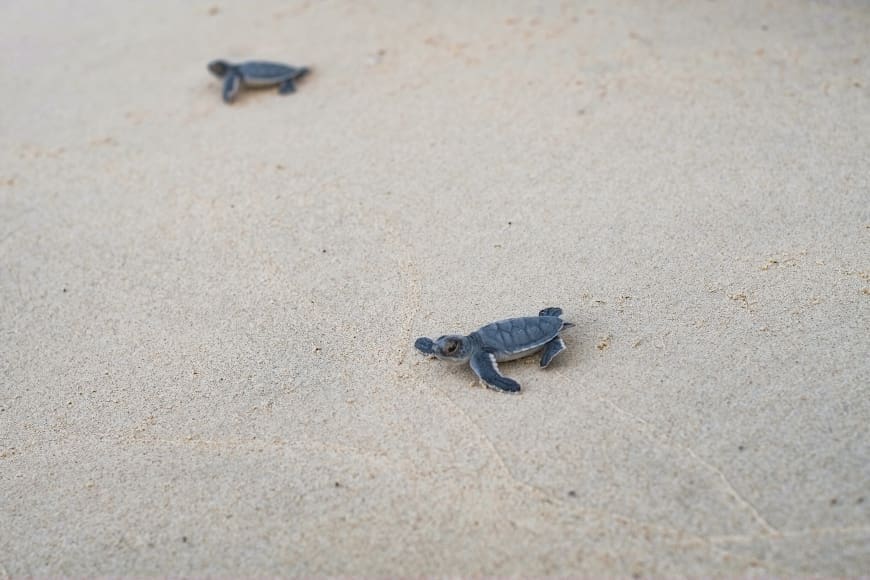


One of Con Dao’s most memorable conservation experiences is witnessing its sea turtle programme. Bay Canh Islet is an important nesting site, particularly during the breeding season between April and October. Visitors may have the opportunity to observe conservation activities and, under appropriate programmes, participate in releasing hatchlings towards the sea. The islands are particularly significant for Vietnam’s turtle population, with a large proportion of the country’s nesting sea turtles returning to Con Dao each year. These conservation efforts demonstrate how tourism and environmental protection can exist alongside one another.
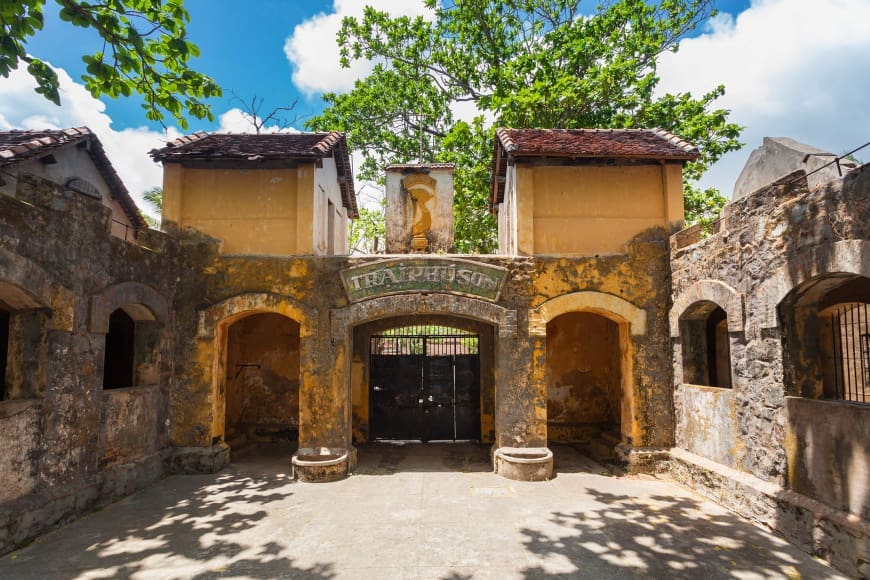
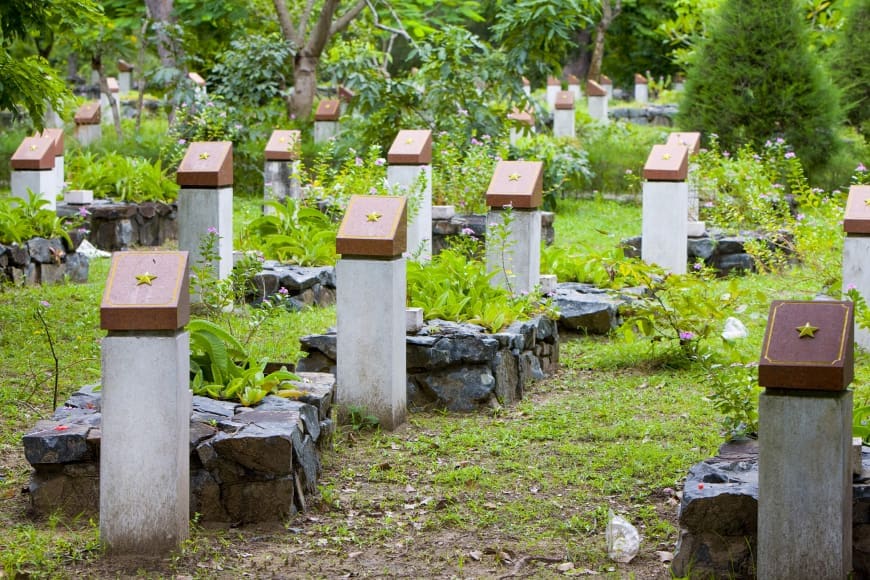
Yet Con Dao’s beauty cannot be separated from its history. For more than a century, the islands served as a penal colony, leaving behind sites that offer a sobering insight into Vietnam’s past. At the Con Dao Museum, photographs and artefacts document the islands’ history, while the former prison complex and its notorious ‘tiger cages’ reveal the harsh conditions endured by prisoners during the colonial and wartime periods. At Hang Duong Cemetery, where more than 1,900 graves are located, visitors can pay their respects to those who lost their lives, including Võ Thị Sáu, a Vietnamese resistance figure who was executed at the age of 19.

Beyond its historical landmarks, Con Dao also carries a profound spiritual significance. Van Son Pagoda, perched above the island after a climb of more than 200 steps, offers panoramic views across the surrounding landscape, while An Son Temple is associated with Lady Phi Yen, a revered historical figure. Combined with beaches such as Lo Voi, An Hai and Dam Trau, these sites reveal the many dimensions of Con Dao: a place of remembrance, spirituality, adventure and ecological discovery. For travellers seeking more than a conventional island escape, Con Dao offers an experience where the beauty of nature is inseparable from the stories that have shaped the islands.
Source: Viet Nam National Authority of Tourism